
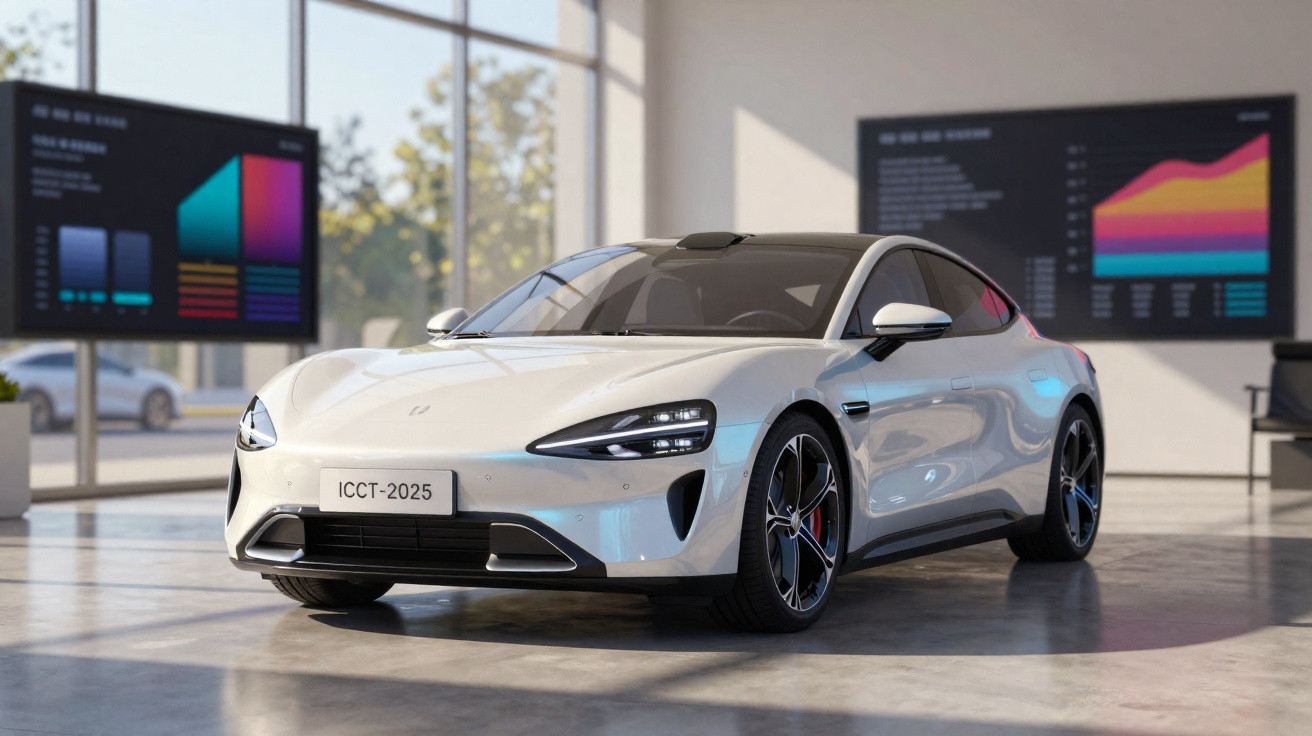
It may seem contradictory. Battery prices have been steadily falling, as have electric car prices. Even so, the median price of electric cars has risen over the past five years.
That is one of the central findings of a joint study by the International Council on Clean Transportation (ICCT) and the Fraunhofer ISI Institute, which examined more than 100,000 passenger-car configurations available in Germany between 2020 and 2025.
The reason lies in how the market offering has changed. While the real-world prices of comparable models declined, many larger, more expensive electric cars in higher segments entered the market. This pushed up the value at the middle of the range.
Electric cars: cheaper, yet more sophisticated
To assess the genuine change in pricing, the researchers tracked individual models over time and removed the impact of inflation. They also accounted for changes in attributes including weight, power output, battery capacity and driving range.
The findings are unequivocal: in real terms, prices for comparable electric cars fell by around 18% between 2020 and 2025. By contrast, prices for combustion-engined models rose by roughly 2%, again after inflation had been taken into account.
Over the same period, the average global cost of batteries dropped by between 35% and 37% in real terms. In nominal terms, without allowing for inflation, the fall was more limited, at between 21% and 24%.
Battery costs and electric-car list prices
The reduction in battery costs was therefore not fully passed on through list prices. According to the researchers, the increase of around one third in average range indicates that part of this progress was used for larger batteries, improvements to the cars, or to offset research and development costs for electric platforms.
Why did the median price rise?
The median is the figure positioned exactly at the centre of a distribution: half of the configurations cost less, while the other half cost more. Unlike the average, it is less affected by a small number of exceptionally expensive models.
It was this median figure that increased. Despite the fall in the real prices of comparable models, the nominal median price of electric cars offered in Germany rose by 42%, from around €38,000 in 2020 to €54,000 in 2025.
Combustion-engined cars also recorded an increase, although a considerably smaller one. Their nominal median price moved from approximately €41,000 to €46,000, representing a 15% rise.
The gap is mainly explained by the reshaping of the market offering. During the period assessed, the number of available electric models grew from 38 to 159. However, much of this expansion was concentrated in the medium and upper-medium segments, which are dominated by bigger and inherently more expensive cars.
By 2025, the medium and upper-medium segments accounted for 73% of available electric models. Supply in the city-car and supermini segments remained more restricted, with 19 electric models compared with 35 combustion-engined alternatives.
The conclusion is that a market can become more competitive while appearing more expensive at the same time. Real prices for comparable electric models fell, but the market offering also shifted towards larger cars with more equipment, more technology or greater range. This lifted the nominal median price across the available range.
Electric cars have become cheaper when like is compared with like. What is still missing is a wider choice of affordable models in the lower segments.


Comments
No comments yet. Be the first to comment!
Leave a Comment