
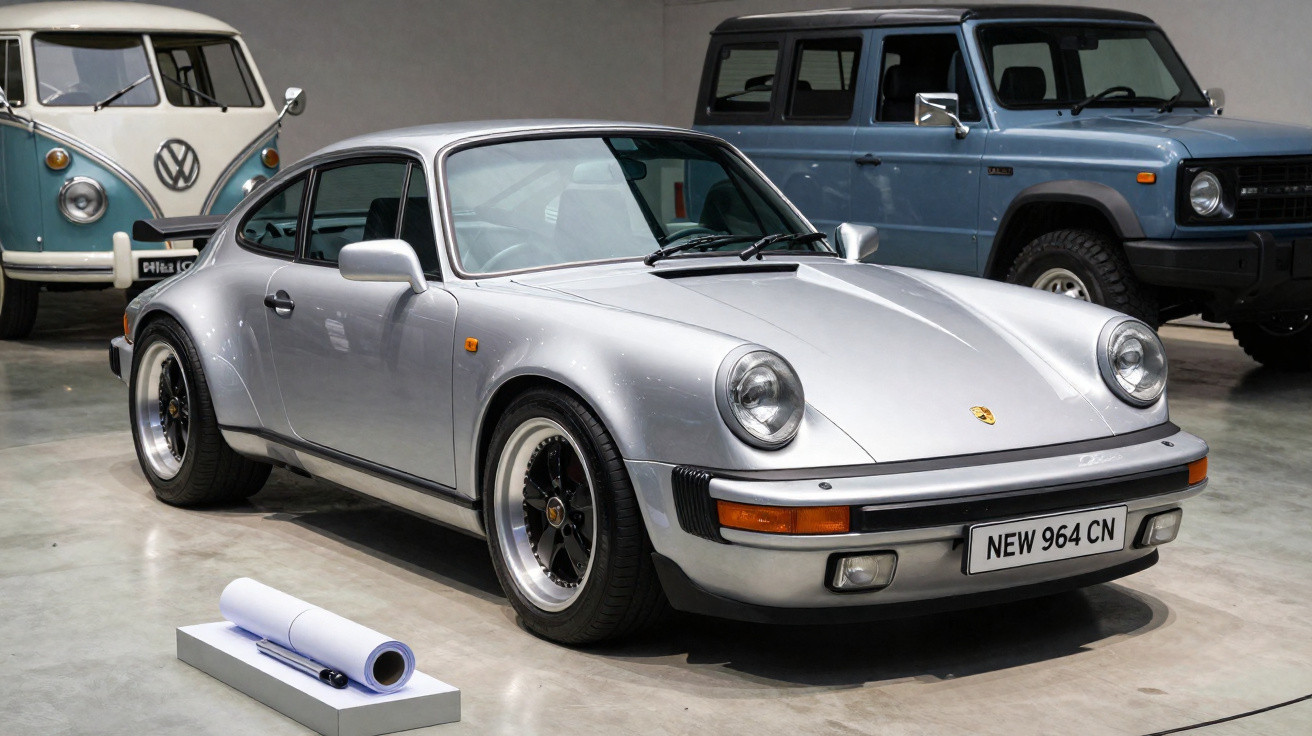
When we think of China’s automotive industry, electric cars and emerging brands competing in an increasingly crowded market are usually what come to mind. Yet Chinese factories are not solely turning out new models: they are also developing ways to keep some of the world’s best-known classics on the road.
In Baoying, around three hours from Shanghai, one company is manufacturing complete bodyshells and replacement panels for some of motoring history’s most iconic models.
Its catalogue includes the Volkswagen “Bread Loaf”, the Toyota AE86 and Land Cruiser, the original Ford Bronco and the 1967 Mustang. Porsche’s 911 (964) generation and the legendary Mercedes-Benz 300 SL Gullwing will soon join them.
Keeping classic cars on the road
Jiangsu Juncheng Vehicle Industry Co. is behind this work, having identified an opportunity in an area that many manufacturers stopped investing in long ago.
The process starts well before the first sheet of metal is pressed. Whenever the company chooses to reproduce parts for a new model, it must first create the dies used for stamping.
These are initially machined from high-strength steel using CNC equipment, before skilled technicians refine them by hand. It is a process that brings together modern technology and traditional craftsmanship.
From stamping dies to replacement body panels
Only once this stage has been completed can volume production begin. Bonnets, doors, side panels and even small metal brackets are recreated with a high degree of precision.
Is the quality good?
China and quality have not always gone hand in hand, but any doubts over the standard of these reproductions appear to be addressed by the following two examples.
First is the account from Larry Chen, an automotive photographer and Hagerty contributor, who visited the company’s facilities. He highlights the considerable attention to detail and the quality standards applied there. Watch the video:
The classic car market itself also seems to endorse the standard of work carried out by the Chinese company. Recently, a Ford Bronco bodyshell made by the firm was used in a restomod project in the United States. The vehicle was ultimately sold for roughly 400,000 dollars (around 368,000 euros at the current exchange rate).
For purists, this may sound like another “nail in the coffin” for the European, American and Japanese automotive industries. However, initiatives of this kind could prove vital to the future of the vehicle restoration sector.
As manufacturers cease making parts for older historic models and original components become scarce, the ability to reproduce structural parts to a high standard becomes essential to keeping many of these cars on the road.




Comments
No comments yet. Be the first to comment!
Leave a Comment