
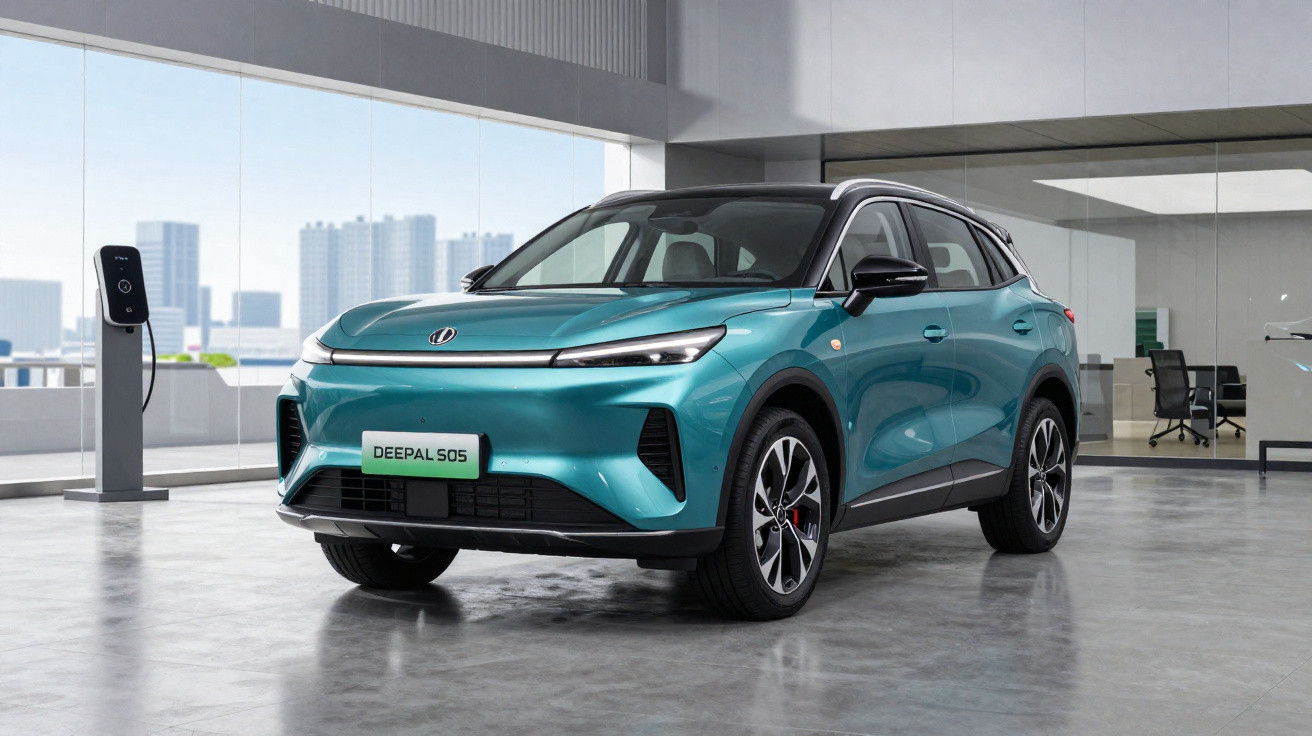
Changan has expanded the domestic Deepal S05 line-up with the all-wheel-drive AWD variant. It now sits at the top of the electric SUV range and arrives in Portugal priced from €42,990.
The RWD, rear-wheel-drive version, with 268 kW (364 hp), had already put the Deepal S05 on Portuguese buyers’ radar. The AWD model adds a second electric motor on the front axle, bringing a substantial increase in output.
Its stated combined power output is 435 kW (591 hp), representing a major uplift of more than 200 hp over the rear-wheel-drive model. Torque has also risen sharply, from 290 Nm to 502 Nm. The performance improvement is clear: the standard 0-100 km/h sprint takes 5.5 seconds, exactly two seconds less than in the single-motor version.
Changan also highlights the improvement in the maximum gradient this AWD SUV can tackle, increasing from 30% to 40%. It further emphasises the model’s added capability on more demanding surfaces and in adverse weather conditions.
Changan Deepal S05 AWD intelligent drive with three modes
Another key development is the traction management. Changan’s AWD system is “proactive”, adapting to the driving style and providing three separate operating modes:
- Eco/Comfort: Prioritises the rear motor to reduce energy use, engaging the front axle only if grip is lost or the accelerator is pressed hard;
- Sport: Retains permanent all-wheel drive with a 50:50 torque split;
- Snow: A mode exclusive to this version, which adjusts torque delivery to make it smoother and prevent wheelspin on icy or snowy surfaces.
When does it arrive?
The Changan Deepal S05 AWD is already available in Portugal, with prices starting at €42,990 (€34,950 + VAT for businesses). The RWD version is the more affordable option, with an entry price of €36,990 (€30,073 + VAT for businesses).
The standard warranty lasts seven years or 160,000 kilometres. The traction battery, meanwhile, is covered for eight years or 200,000 kilometres, provided it retains a minimum state of health of 70%.


Comments
No comments yet. Be the first to comment!
Leave a Comment