
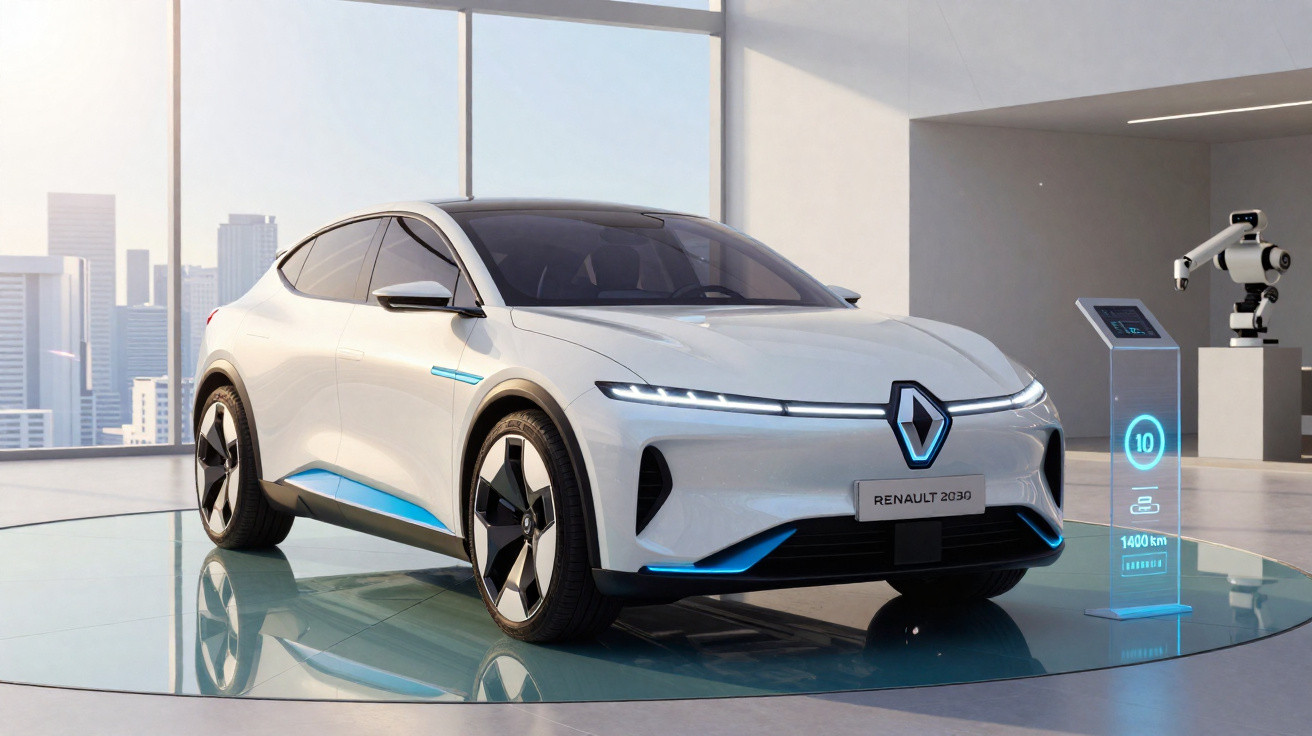
Renault is resetting its direction: rather than pursuing an electric-only drive, the group is backing a flexible mix – with extraordinary ranges and ultra-fast charging.
The French carmaker is comprehensively revising its strategy through to 2030. It is moving away from the rigid ambition of selling “electric cars only” towards a more pragmatic balance of electric and hybrid vehicles. At the same time, Renault intends to make major advances in software, battery technology and automated manufacturing, with pledges that sound like science fiction: 1,400 kilometres of range and batteries fully charged in ten minutes.
A new direction: 50% electric and 50% hybrid instead of an electric-only mandate
Renault had originally planned to sell only fully electric cars in Europe from 2030. That target has now been softened. The group realistically expects many buyers to switch to fully electric vehicles more slowly than anticipated, while policymakers are also easing their requirements.
By 2030, Renault is targeting a European mix of 50% electric cars and 50% hybrids.
At the same time, the company remains committed to its broader objective of substantially cutting emissions from its vehicle fleets. Beyond Europe, electric and hybrid vehicles are expected to account for roughly half of sales by 2030 – a clear indication that combustion engines are gradually losing relevance in other markets too.
To manage this transition, Renault has announced an ambitious model launch programme: 36 new vehicles over four years, including 16 fully electric models. The group will therefore renew virtually every segment, from commercial vehicles and compact models to SUVs.
Battery drive: 1,400 km range and charging as quick as a fuel stop
The most eye-catching element of the strategy lies in its battery plans. Renault has outlined several technological advances that could fundamentally change perceptions of electric cars.
- Charging time: New batteries are intended to recharge in just 10 minutes.
- Range: So-called range extenders are expected to deliver up to 1,400 kilometres.
- Emissions: The fleet figure is set to fall to 25 g CO₂ per kilometre.
The thinking is that electric-car drivers should neither be tied to a plug socket nor continually worry about running out of charge. Rapid charging in the time it takes for a coffee break, coupled with distances more commonly associated with diesel saloons today, is intended to win over the remaining sceptics.
Precisely how Renault plans to achieve these 1,400 kilometres has yet to be set out in detail. Industry observers expect a combination of more efficient battery cells, improved thermal management, optimised aerodynamics and, potentially, small auxiliary units serving as range extenders in certain models.
Software Defined Vehicle: the car becomes a computer on wheels
A second major pillar of the strategy is the “Software Defined Vehicle”, or SDV. The concept is that the engine will no longer be the car’s sole core; software code will become just as central. Functions can then be controlled, activated and updated far more extensively through software.
Renault wants to equip its vehicles so that over-the-air updates become as routine as they are on a smartphone.
An electric Trafic van with over-the-air updates is due to launch this year. New features, bug fixes and improvements to energy management would then be delivered in the background, without the need for a workshop appointment.
The group expects this to provide, among other benefits:
- Faster development: The cycle for new models is intended to fall below two years.
- Longer useful life: Vehicles should remain current for longer as their software evolves.
- Better maintenance: Data from the vehicle will enable predictive repairs.
Data security remains an especially sensitive issue. Putting software at the centre also requires protection from cyberattacks and compliance with clear data-protection rules. This matter of trust is particularly important for fleet customers and commercial operators running connected delivery vans, for example.
What “Software Defined Vehicle” means in everyday use
For drivers, everyday life with an SDV could look like this:
| Situation | Possible SDV function |
|---|---|
| New driver-assistance system becomes available | Purchase it through an app and install the update wirelessly overnight |
| Brake wear is emerging | The vehicle flags the need for workshop attention at an early stage |
| A longer holiday journey is planned | The sat-nav optimises charging and route planning using real-time data |
For Renault, the SDV concept is also a competitive weapon. Chinese manufacturers are launching new models at breathtaking speed. To keep pace, carmakers must create platforms on which software changes can happen faster than a conventional redesign of the metalwork.
Industry 4.0: 350 humanoid “Calvin” robots in Renault plants
Renault is also increasing automation on the production side. Over the next 18 months, 350 humanoid robots called “Calvin” are to be deployed in the group’s factories. They were developed by the French company Wandercraft.
The robots are intended to take on physically demanding tasks and boost manufacturing in France by around 20%.
These humanoid units are particularly suited to repetitive tasks or work with difficult ergonomics, such as lifting parts, positioning body panels and carrying out jobs in awkward postures. This should reduce the burden on people and allow them to focus on work requiring greater dexterity, inspection and problem-solving.
Renault is following examples such as BMW and Hyundai, both of which already rely heavily on highly automated manufacturing and robotics. The aim is to lower the cost per vehicle, particularly in the fiercely contested compact electric-car segment, where margins are narrow.
Opportunities and risks of the robot drive
Using humanoid robots offers several potential benefits:
- reduced physical strain for employees
- more stable production volumes even when staff are absent
- greater precision in repeated tasks
At the same time, familiar questions remain. What will happen in the long term to lower-skilled jobs on the production line? How can safe collaboration between people and robots be ensured? And how much dependence on complex technology can a factory tolerate before it becomes vulnerable?
What buyers gain from Renault’s new strategy
For customers in German-speaking countries, the strategic shift matters in several ways. Anyone considering an electric car but still uncertain could benefit from future Renault models that:
- provide ranges suited to longer journeys,
- enable significantly shorter charging times,
- remain technically up to date for longer thanks to software updates.
Hybrids will remain in the line-up, acting as a form of safety net for those unwilling to move to pure electric mobility overnight. This pragmatic approach is likely to appeal especially to commuters who often drive electrically but want the reassurance of a combustion-engine component when needed.
Anyone intending to keep a car for longer than three or four years will benefit from the software focus: features can expand throughout the vehicle’s life, resale value should tend to rise, and maintenance can be planned more accurately.
Key technology terms explained
Range extender: This refers to systems that increase a vehicle’s driving distance without the driver actively refuelling or recharging. It may be a small combustion engine that feeds the battery as a generator, or particularly intelligent energy-management systems that use the available capacity extremely efficiently.
Over-the-air update: Software updates are installed wirelessly, much like they are on smartphones. The car does not need a workshop visit; instead, it downloads the new version through the mobile network or Wi-Fi.
Software Defined Vehicle: A vehicle whose key functions are largely controlled by software. This makes it possible to adjust or expand configurations, assistance systems, comfort features and even powertrain characteristics afterwards.
For the market, Renault’s new plan means one thing above all: the race to create the next generation of practical electric cars is entering its next phase. Anyone looking to buy now should watch the rapid pace of development, because range, charging times and software functions could change more quickly over the coming years than at any earlier point in automotive history.


Comments
No comments yet. Be the first to comment!
Leave a Comment