
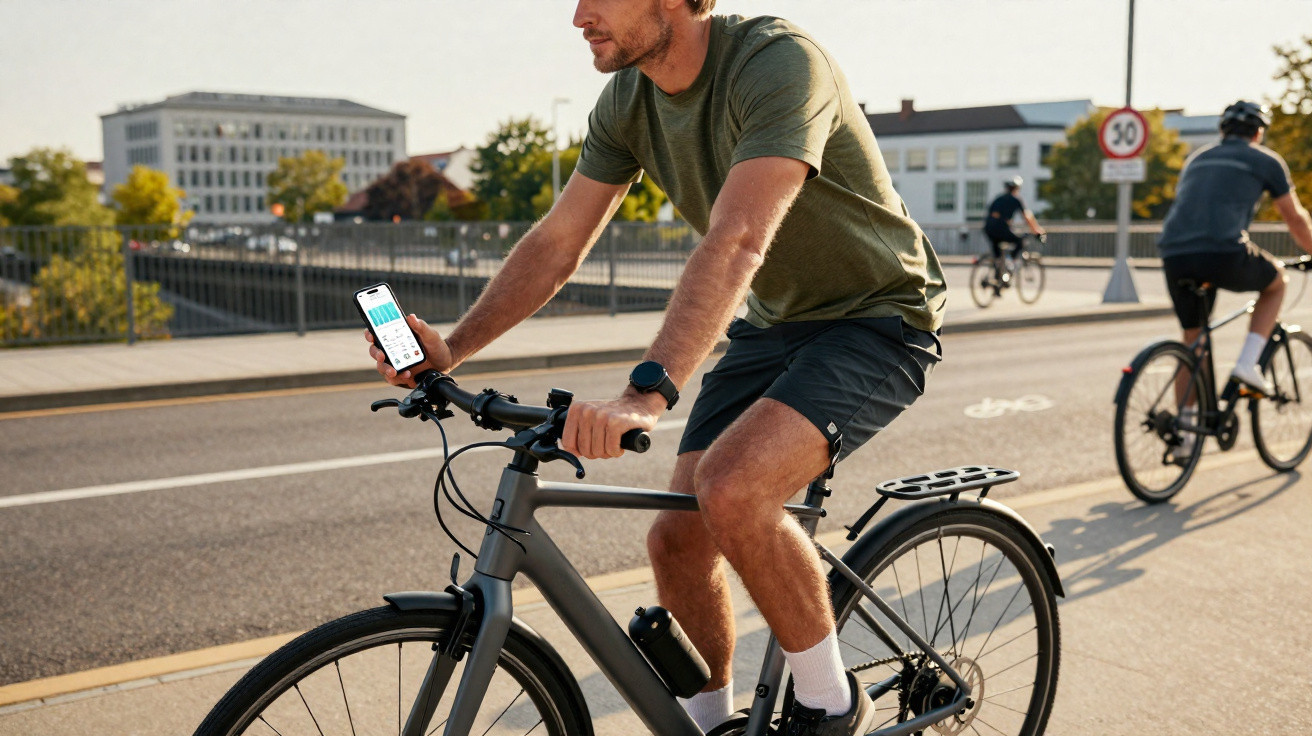
Riders report that their bikes feel noticeably different following updates. The backlash is vocal, and it shows no sign of fading.
I saw a commuter cruising beside the Spree at dawn, with wisps of fog rising from the water, when he reached 26 km/h and the motor’s push suddenly softened, as though a hand at his back had relaxed. He looked at the display in puzzlement before focusing again on the route, pedalling slightly harder. Later, while sitting in a café, he received a service alert on his phone: fresh firmware was available for his mid-drive. He casually installed it, but the next incline on his journey home seemed marginally steeper. By the afternoon, messages were flying around his riding group. “Silent nerf?” one person wrote. “Limp mode?” another asked. Reports like these are mounting around one brand: Bosch eBike Systems. So, what has changed?
Riders sense a limit as Bosch eBike Systems comes under pressure
Throughout Europe and the US, e-bike owners are comparing experiences of subtle, yet palpable, reductions in assistance. The timing is particularly frustrating: cities are increasingly adopting cycling, while buyers spent their own money on performance. Bosch is central to the conversation because its motors are fitted to so many high-end bikes, including nimble commuters and heavy-duty cargo models. Publicly, the company refers to compliance with current legislation and built-in safety measures. Privately, however, riders are interpreting the signs as a gradual move towards stricter limits on speed, torque or boost.
A Munich courier told me that his usual route became “stickier” after a standard service appointment, when the bike shop connected his bike to the Smart System for a security update. He had not measured its wattage; he simply felt that once he passed 25 km/h, coasting turned into effort and brief climbs demanded one more gear. The same sentiment appears across social platforms, with thousands of comments in Reddit discussions and Facebook groups. Some riders share hill-climb times from before and after an update, with a few seconds seemingly taken from the enjoyment. Others upload firmware-note screenshots that refer to safety rather than speed.
The rationale is straightforward. EU legislation limits assisted speed to 25 km/h and continuous rated power to 250 W, while manufacturers face intense scrutiny over anything resembling tuning. As e-bike numbers rise, insurers, urban planners and safety bodies are raising concerns. A firmware profile that reduces torque sooner, or heat-management software designed to safeguard batteries, makes sense in the present climate. It is not necessarily a conspiracy; it may simply be risk management and the reality of laboratory testing. Yet when that reality affects a favourite climb, emotions run high.
Keeping your Bosch e-bike responsive as regulations tighten
First, establish what your bike is really doing. Review the firmware version on your display, read the release notes and understand the ideal cadence range for every assistance mode. Many Bosch systems provide their strongest support at around 70–95 rpm, so try spinning faster uphill instead of pushing heavily on the pedals. Keep the drivetrain exceptionally clean, set tyre pressure to suit the load you are carrying and perform a quick torque-sensor calibration where your bike allows it. These small practices add up, helping the bike retain a crisp feel.
Avoid questionable dongles and “de-restrictors”. Newer motors may detect tampering and activate reduced assistance that can continue on later rides, as well as leave service flags visible to your dealer. We have all experienced the point when a tailwind once felt magical but now feels merely… fine. You are not imagining it, and you are certainly not the only one. Let’s be honest: nobody really does that every day. If you regularly ride close to the limit and depend on a particular riding feel, speak to your shop before applying an update.
A number of shops are discreetly helping customers adapt, while some are direct about the difference between what is legal and what simply feels preferable.
“We don’t push updates that cut performance beyond the legal limit,” a Bosch spokesperson told me. “Recent releases focus on safety, battery longevity, and tuning detection.”
- Check update notes and ask about changes to torque, cadence ranges and thermal behaviour.
- Test every mode on an identical route, recording average speeds and how much effort it feels to require.
- If the bike feels unusual, keep a record of the temperature, wind, tyre pressure and cargo weight.
- Understand your area’s legal limit and how the display indicates that threshold.
- Ask your dealer about the schedule for any over-the-air update and its policy on rollbacks.
What happens next for e-bike limits
Policy advances more slowly than a bicycle, but it is still advancing. Cities seek quieter roads, fewer collisions and predictable vehicles travelling among pedestrians and scooters. Brands want fewer warranty claims and stronger battery longevity through hot summers and freezing winters. Riders want liveliness. This conflict suggests a near future of clearer labels, optional “class” systems similar to those in the US, and perhaps geofenced restrictions for shared fleets rather than privately owned bikes. If Germany’s largest player continues to favour durability and compliance, competitors will do likewise. That need not remove the enjoyment. Transparent notes, real-world testing, and open conversations with shops can keep trust intact. The next update will do more than alter a torque profile: it will influence how we ride alongside one another.
| Key point | Detail | Why it matters to the reader |
|---|---|---|
| What is actually changing | Firmware adjusts torque curves, thermal protection and anti-tuning triggers | Understand why your bike may feel different after servicing |
| Why German brands are cautious | Compliance with EN 15194, insurer pressure, battery longevity and warranty risk | See the incentives influencing your riding experience |
| How to keep it lively | Cadence awareness, drivetrain maintenance, mode testing and dealer discussions | Practical ways to preserve a zippy feel without breaking the rules |
FAQ:
- Are e-bike motors about to be limited by new law? No new EU cap has arrived this season, but enforcement and testing are becoming stricter, and updates may reflect this.
- Did Bosch push an update that slows my bike? Bosch states that its updates focus on safety, durability and compliance. Some riders notice less assistance near the limit, which can feel like a slowdown.
- Will a tuning dongle fix the issue? Tuning can lead to limp modes, error codes, invalidated warranties and possible legal issues. It generally causes more trouble than speed.
- Can my dealer roll back firmware? Policies vary between shops. Some refuse for liability reasons, while older versions may be unavailable. Ask before you update.
- How do I know if my bike is in a reduced-support state? Check for warning symbols, error codes or continuing cutbacks after riding under high load. Your dealer can inspect the logs if necessary.

Comments
No comments yet. Be the first to comment!
Leave a Comment