
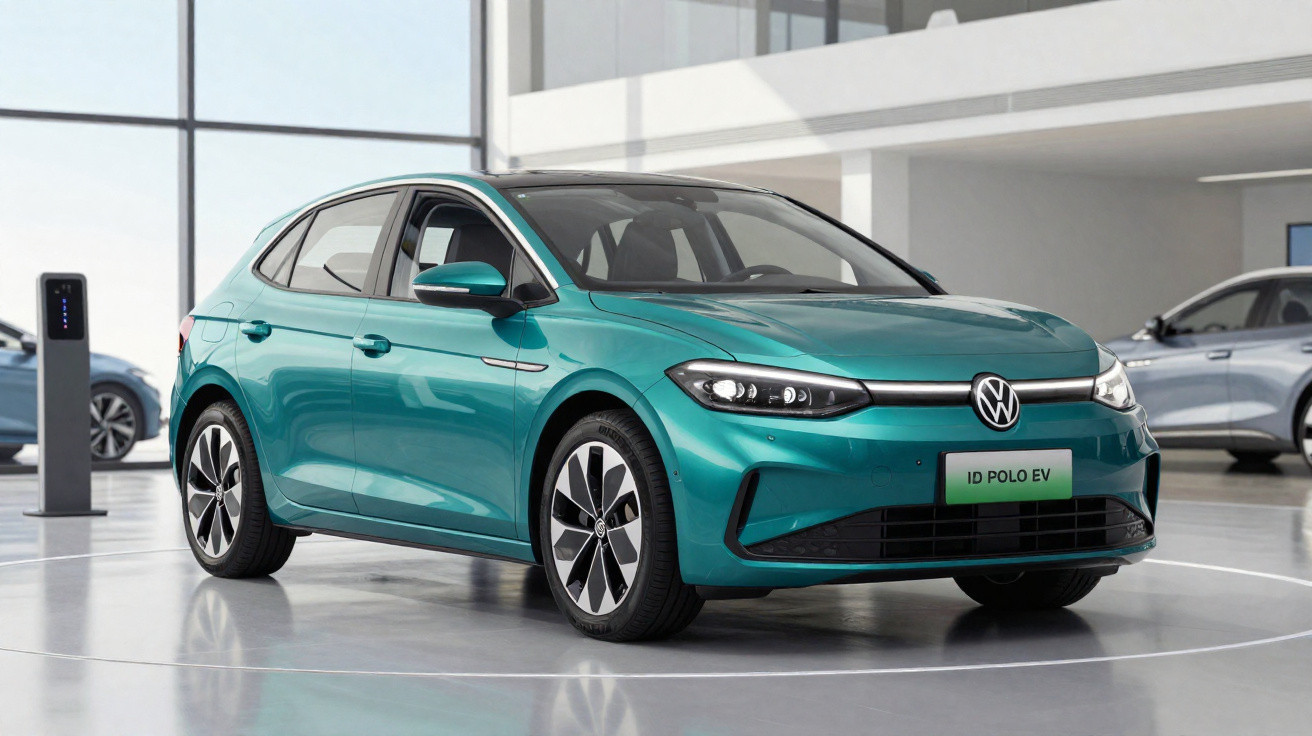
The new ID. Polo is among Volkswagen’s most significant launches of 2026, marking the start of a fresh electric-car push by the German group. This will bring smaller, more affordable models, with prices starting at €25,000. The name may be familiar, but aside from its ambition to become a benchmark in its class, it has little in common with the Polo we have known for decades.
A closer look is all it takes to see that the ID. Polo is aiming higher, whether in terms of cabin room, dynamic refinement or its positioning against direct rivals.
We travelled to Barcelona for a closer introduction to the ID. Polo and were already able to drive it, albeit in a camouflaged pre-production car. Volkswagen’s intentions for its new model could hardly have been clearer. Watch the video for our first impressions:
Back to its roots
The formula may look entirely fresh, but it is also a return to the brand’s roots. Even beneath its camouflage, the ID. Polo’s close relationship with the ID. 2All concept is clear, as is its departure from the rest of the ID. range.
Its styling is straighter, its bodywork more “square”, and its overall presence is closer to what we have traditionally associated with Volkswagen. This is a deliberate move away from the more organic appearance of the ID.3 and ID.4, representing an explicit return to the marque’s design DNA that will extend across the entire line-up.
In dimensional terms, the ID. Polo grows in the areas that matter most. Measuring just over four metres long and with a 2.6 m wheelbase, it provides noticeably more interior room than the combustion-engined Polo, itself one of the roomiest cars in the segment. The boot is among its strongest selling points: at around 435 litres, it even exceeds that of a Volkswagen Golf, which is unusual for this class.
We have already examined the interior in detail and, beyond the available space, its more balanced relationship between digital controls and physical switchgear also deserves praise. Yes, the buttons are back. You can watch, or revisit, our dedicated video for further details on the cabin, from its design and materials to its connectivity. It also includes an interview with Volkswagen’s head of design:
First driving impressions of the Volkswagen ID. Polo
From behind the wheel, the ID. Polo impresses less through immediate drama than through the way every element feels well judged. The car we drove had 211 hp (155 kW), placing it below the forthcoming GTI, yet it was already revealing enough to show the model’s character.
Power arrives progressively and is easy to meter out, avoiding the sharper response that many compact electric cars still deliver. Through corners, the front end is precise, the rear follows naturally, and the whole car inspires confidence.
The Volkswagen ID. Polo is convincing, even though it uses simpler solutions than one of its main rivals, the Renault 5. The French model has independent rear suspension, whereas the German car uses a torsion-beam axle, without compromising stability. Conversely, it features disc brakes on all four wheels, while larger members of the ID. family use rear drum brakes.
What we already know about the ID. Polo
The Volkswagen ID. Polo will launch in spring, and the brand has already released several key specifications. It will be available with two batteries: a 37 kWh (LFP) unit and a 52 kWh (NMC) unit, with a claimed range of up to 450 km on the combined WLTP cycle. The smaller battery will be offered in 85 kW (116 hp) and 99 kW (135 hp) versions, while the larger pack will be fitted to the 155 kW (211 hp) model I drove. It will also power the ID. Polo GTI, which will arrive later with 166 kW (226 hp).
As mentioned, Volkswagen is targeting an entry price of around €25,000. More powerful and better-equipped versions are expected to exceed €30,000, but they will remain in line with the pricing that the market is beginning to establish in this segment.
Those figures place it alongside the Renault 5 E-Tech Electric. The French car leans on nostalgic and emotional appeal, while the German alternative answers with more space, greater versatility and a more conventional approach - a difference in philosophy that could influence many buyers’ final choice.
Is it the best in its segment?
A final verdict will have to wait until the camouflage comes off and we can spend more time at the wheel, but the early signs are highly encouraging. The Volkswagen ID. Polo demonstrates maturity, a solid technical foundation, generous space and competitive positioning. It has everything needed to become one of the market’s most significant propositions in the years ahead.


Comments
No comments yet. Be the first to comment!
Leave a Comment