
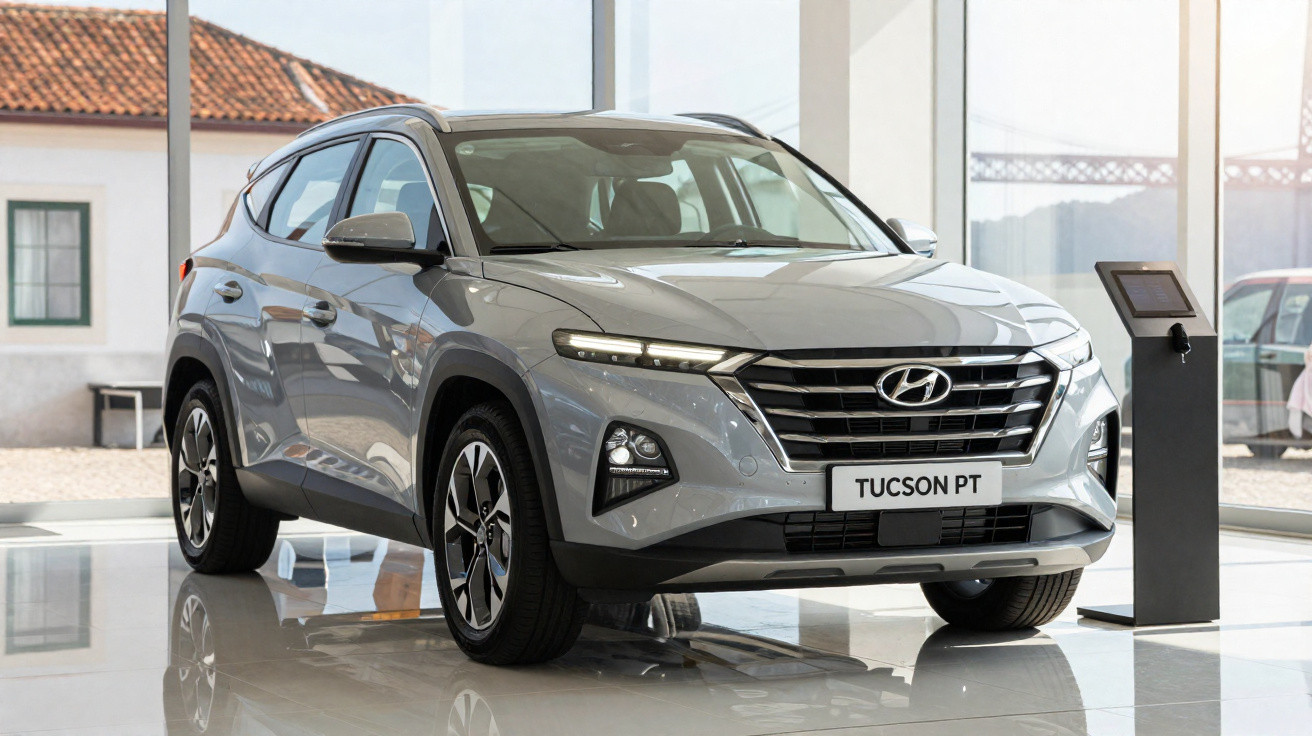
The Hyundai Tucson is one of the best SUVs in its segment. However, supply on the used market is limited.
The third-generation Hyundai Tucson (2015–2020) represented a pivotal period for the South Korean brand in Europe. It was one of the models that helped Hyundai finally move beyond its image as a merely “sensible” alternative and establish itself as a manufacturer capable of delivering technology, quality and desirability.
The South Korean manufacturer invested heavily in Europe, including development and design centres, staff and production facilities, and the Tucson clearly demonstrated just how important the European market was to Hyundai.
Today, the Tucson remains a highly credible option on the used-car market. We found more than 80 examples for sale on Piscapisca.pt, most of them approved used vehicles with a warranty.
It is worth considering for buyers seeking a straightforward SUV with space, comfort and predictable day-to-day ownership. Most versions are also generously equipped. One example we found for sale at under €21,000 even includes heated rear seats, a feature rarely seen in this segment.
The Hyundai Tucson keeps exterior design simple
The exterior styling of the 2015–2020 Hyundai Tucson is a good illustration of how to create a car that ages well without resorting to excess. Its proportions are well judged, while the bodywork looks sturdy without adopting the overly aggressive styling that quickly becomes dated.
However, the third-generation Hyundai Tucson looked its best following the 2018 facelift, which refined the overall package with a redesigned grille, slimmer headlights and a more contemporary appearance in keeping with the identity Hyundai was looking to establish at that time.
It is not an SUV that stands out from afar, but neither does it look old-fashioned. That is a clear advantage when buying used. Its body assembly is also solid, including the plastics, headlights and other components, helping it withstand the years with fewer concerns.
A Korean SUV that ages like a Japanese one
It is inside that the Tucson truly begins to justify its popularity. Space is one of its most widely recognised strengths: there is good shoulder room, sufficient rear-seat space for adults and a boot that copes well with family demands, whether for holidays, pushchairs or light business use.
Perceived quality is strong, and the precision of the assembly was enough to make many German-brand rivals raise an eyebrow, including premium marques. The standard Hyundai achieved with this Tucson feels like a blend of the best German and Japanese approaches.
In newer models, especially those built after 2018, the infotainment system was noticeably improved, offering quicker responses, larger screens and Apple CarPlay and Android Auto compatibility.
Even mid-range versions tend to come with a very comprehensive equipment list, so it is important to examine every advert carefully: some exceptionally well-equipped used Tucsons can be overlooked by buyers making a quick search - several examples can be found through this link.
Hyundai Tucson: very pleasant on the road
The Tucson’s driving experience remains true to its philosophy. It is not an SUV designed to thrill, but one intended to please in everyday use. Its suspension prioritises comfort and filters out poor road surfaces effectively, something particularly relevant on Portuguese roads. The steering is accurate and works well in town, while parking and manoeuvring, without compromising motorway stability.
When it comes to Diesel engines, it is worth being precise. Before the facelift, the main engine was the 1.7 CRDi (115 hp), a familiar, robust unit with restrained fuel consumption. From 2018 onwards, the 1.6 CRDi was also offered, with either 116 hp or 136 hp depending on the version and transmission.
Both perform competently on the road, with good ability at moderate speeds, enough torque for the vehicle’s weight and realistic fuel consumption for drivers covering high mileages. There are no unexpected positives or negatives, and once again that works in the Tucson’s favour as a used purchase.
Stable prices, but limited supply
The domestic market does not make things easy for anyone looking for a used Tucson. Availability is relatively limited, although prices have remained stable.
On PiscaPisca, older Diesel examples from 2015 and 2016, fitted with the 1.7 CRDi engine and average mileages, can be found priced between €16,000 and €18,000. Prices rise predictably as the model year and equipment level increase.
This table provided by MotorCV / Piscapisca.pt offers a clearer view of how the Hyundai Tucson performs on the used-car market:
Post-facelift models, now equipped with the 1.6 CRDi, are mostly priced between €20,000 and €30,000, depending on the year, mileage, manual or DCT dual-clutch gearbox, and equipment level.
Costs
Like Hyundai generally, the Tucson has a broadly positive reliability reputation, with the brand regularly appearing near the top of reliability rankings. The model is not associated with serious structural issues, which helps explain its strong acceptance on the used market.
There are nevertheless areas to check. Some more heavily used examples have reported premature wear of the clutch and flywheel, particularly where they have seen intensive urban use. Versions with the DCT automatic gearbox may be less smooth at low speed or during manoeuvres, so this should be assessed carefully before buying.
As with any modern Diesel, its usage history is crucial. Cars driven almost exclusively on short journeys require closer inspection, particularly of emissions-system components. Overall, maintenance costs are controlled and in line with the segment, without the financial burden associated with premium alternatives.
This is the Hyundai Tucson we would choose
In the Portuguese market, the most balanced choice is a post-facelift Hyundai Tucson, from 2018 onwards, with the 1.6 CRDi engine, ideally paired with a manual gearbox or a thoroughly tested DCT and a complete service history.
This is the version that best combines modernity, efficiency, comfort and residual value, without reaching the price extremes of the newest examples or accepting the compromises of older entry-level versions.
This report provided by MotorCV / Piscapisca.pt gives access to the most relevant information about this model on the Portuguese market:

Comments
No comments yet. Be the first to comment!
Leave a Comment