
First, the good news. Volkswagen is the brand selling the most electric cars in Europe - and, when the entire group is included (Audi, CUPRA, Škoda and the rest), its advantage at the top is even greater. On the final count, 2025 was the first year in which the German marque outsold Tesla.
Now for the bad news. It is not enough: it needs to sell even more. The German brand must rapidly reduce the average emissions across its range in order to meet European targets.
The pressure has become so intense that the EU postponed the final emissions calculation until January 2028, when it will assess the average emissions from the previous three years. The original timetable had set the deadline for January 2026.
In this “emissions championship”, Stellantis has some breathing space, as does Toyota, but Volkswagen does not. Should it fail to comply, the German group has estimated that it could face €1,500 million in fines.
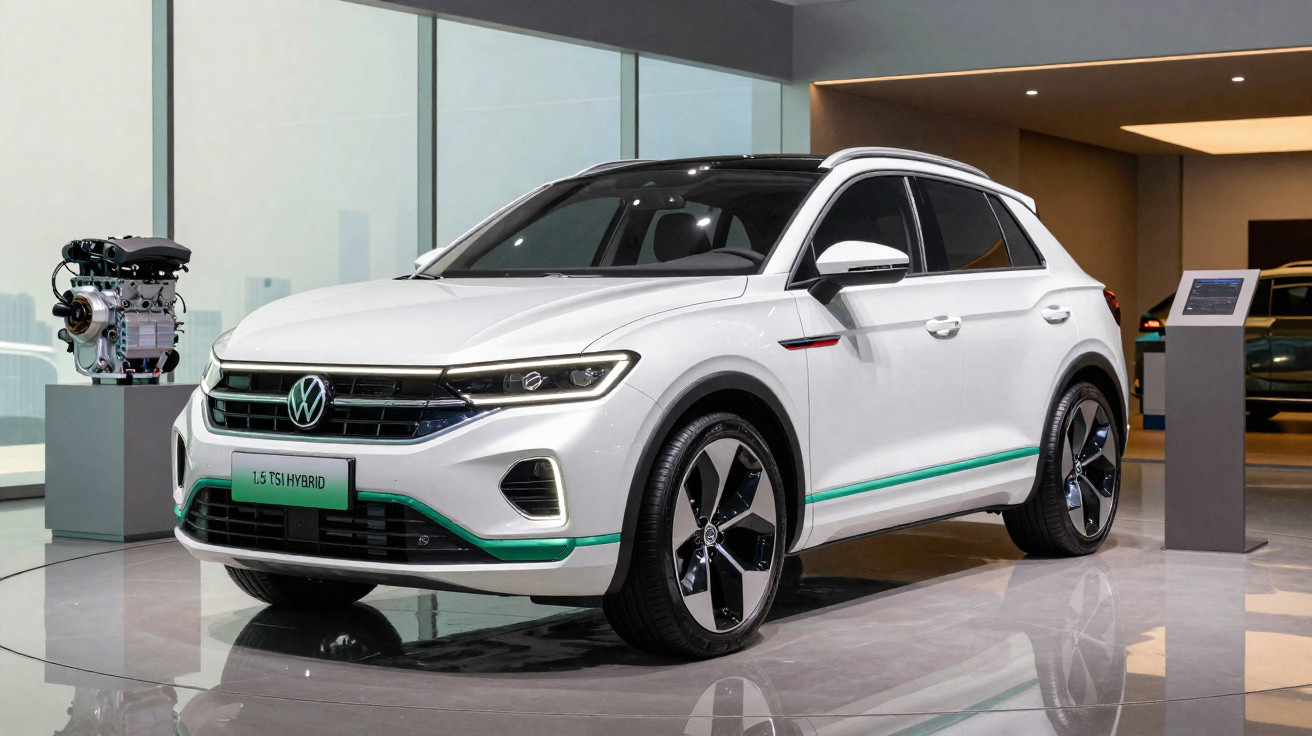
That is the backdrop for the uncapped hero of this German drama: Volkswagen’s new hybrid engine. Like any worthwhile soap-opera hero, it arrives at the last possible moment to save the day.
Volkswagen arrives late to the hybrid party
Although it is the world’s second-largest automotive group and Europe’s sales leader, the Volkswagen Group was the last major player to join the hybrid-engine party. Toyota, as we know, opened the dance floor in 1997 with the first-generation Toyota Prius.
Volkswagen picked a different partner: diesel. It all went very well until it went very badly - the Dieselgate scandal recently marked its 10th anniversary, though nobody blew out any candles. Perhaps they were worried about the smoke.
After all, electric cars alone will not be enough to reach emissions targets. Consumers still want cars with combustion engines. The answer must therefore involve cutting emissions from petrol-powered cars, and the most effective way to do that is through full hybrids, which do not need to be plugged in.
Better late than never for Volkswagen
For this late but essential move, Volkswagen has used the familiar 1.5 TSI petrol engine as its foundation, pairing it with an electric motor in two power outputs: 136 hp and 170 hp (both with 306 Nm of torque). It promises fully electric driving over short distances and fuel consumption 15% lower than that of 48 V mild hybrids.
The need to lower emissions is so pressing that every version of the familiar 1.5 TSI engine in the T-Roc line-up is now electrified. There will only be mild-hybrid and full-hybrid versions - we explained the difference between the two technologies in this video.
Autoeuropa welcomes the Volkswagen full-hybrid engine
It is in the T-Roc that Volkswagen’s full-hybrid engine will first find a home. The initial units of this engine will shortly arrive at the Palmela factory.
For decades, hybrid engines allowed Toyota to keep its average emissions so low that it could indulge in a few flights of fancy: building a sports car with BMW, launching a homologation special, or astonishing the world with a supercar.
Volkswagen is not after indulgences; it simply wants to avoid throwing €1,500 million out of the window. But there are consequences elsewhere.
Hello hybrid, goodbye small TSI
Larger engines are more efficient - managing heat inside the combustion chamber is less complex - and, today, every gram of CO₂ matters. That is why Volkswagen will gradually phase out the small and popular 1.0 TSI engine.
Compared with the efficiency gains, the difference in production costs between the 1.0 TSI and its 1.5 TSI sibling is marginal. The new T-Roc already no longer offers this engine, and the same is most likely to happen when the Golf is renewed. The same logic can be applied to the other Volkswagen Group brands.
A similar shift is under way among the remaining marques: smaller engines are being dropped in favour of larger, more efficient units. That is good news for the environment, but very bad news for the Portuguese.
Pay, pay, pay…
Unlike in other European countries, Portugal’s vehicle taxation remains focused chiefly on engine size. For ISV calculation purposes, engine capacity accounts for 60% of this tax.
The new Volkswagen T-Roc, for instance, received a price increase of more than €2,000 in the domestic market solely because of its engine capacity, despite being less polluting than the previous 1.0 TSI.
We can only hope that Volkswagen’s factory in Portugal and the growth in T-Roc engine production will finally help change vehicle taxation. We know that political power is receptive to industrial arguments - far less so to reasonableness.
That was how an exceptional toll-class regime was created - otherwise, the MPVs built in Palmela would all have been charged as Class 2 - and, more recently, a similar victory was achieved for the Mangualde factory. But thousands of jobs first had to be put at risk.
It is in these small details that Portugal’s full attachment to the European project becomes clear. Only when facing the abyss do we make any decision. Once again, better late than never…
Comments
No comments yet. Be the first to comment!
Leave a Comment