
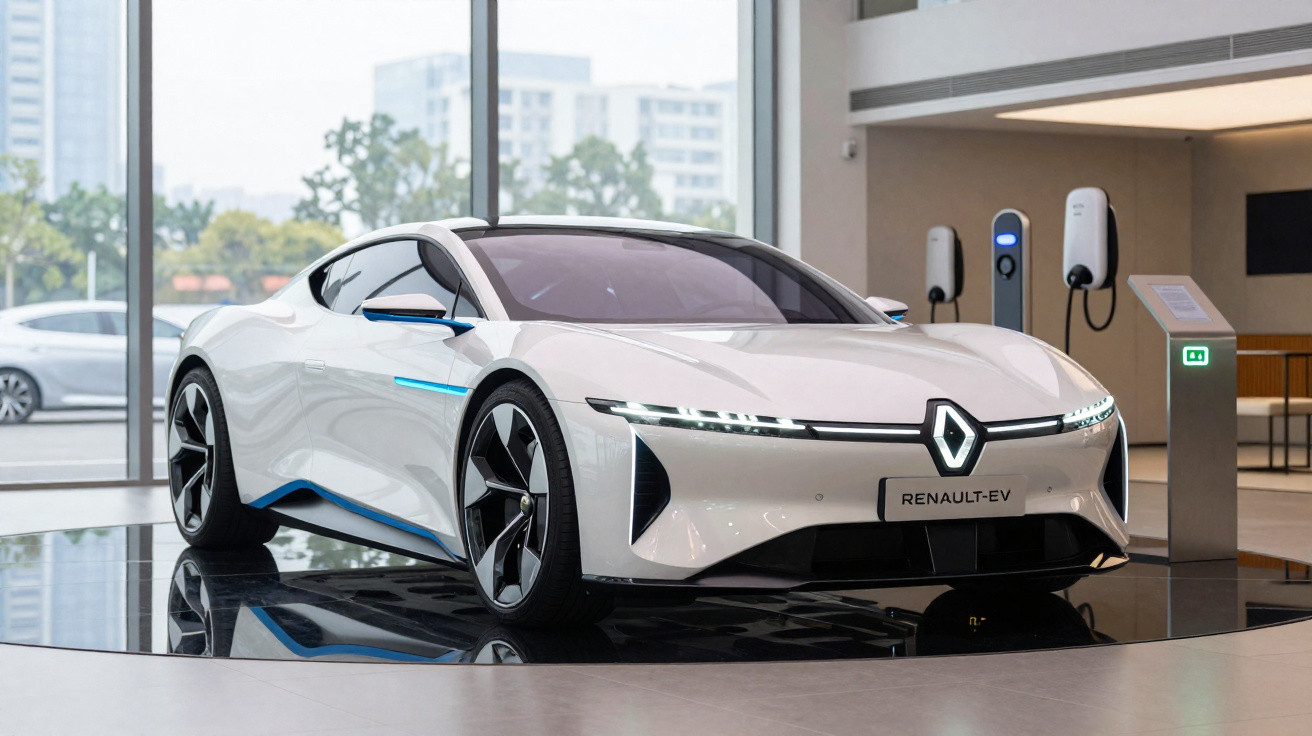
The Renault Group has put forward an alternative proposal to help bring down the price of electric cars in the European Union (EU). Rather than establishing a new dedicated category for small, affordable electric vehicles - as advocated by the European Commission (EC) - the French manufacturer proposes a more straightforward measure: freezing the current rules for the smallest models.
European electric ‘people’s car’ proposal
In September, the EC announced plans to introduce a new category for a European electric ‘people’s car’, drawing inspiration from Japanese kei cars.
These vehicles could dispense with some of today’s mandatory safety equipment and technology, making them simpler to build and less expensive to produce. The aim is clear: to make electric cars affordable for millions of Europeans without compromising sustainability. Further details are expected on 10 December, the date indicated by European Commissioner Stéphane Séjourné.
Renault Group proposes a regulatory freeze
The Renault Group, however, supports a different approach: temporarily halting the introduction of new regulations for city cars and superminis. This would allow manufacturers to refine their existing models, reduce production costs and, in turn, lower prices.
“I am not asking for regulations to be removed. I am only asking for a period of 10 or 15 years without new regulations,” said François Provost, the Group’s chief executive. “At present, Europe plans to introduce 107 new regulations for the sector by 2030,” he added.
According to the executive, the continual introduction of new standards forces manufacturers to repeatedly revisit vehicle development, increasing costs and delaying projects.
Provost believes a regulatory pause would enable manufacturers to improve existing models, cut production costs and ultimately reduce the price paid by customers. “We can spend time improving the cars currently on the market and reducing costs, (which means) a lower price for the customer,” he added.
In the executive’s view, the future European ‘people’s car’ should be less than 4.1 m long, have a carbon footprint of under 15 tonnes of CO₂ across its life cycle, and be built with a high level of local content.
Fabrice Cambolive, chief executive of the Renault brand, shares this position: “The important thing is to help us make the car more affordable. There are two ways of doing that: either create a new category, with fewer restrictions, fewer features, fewer ADAS and so on, or freeze regulation”.
A contracting market
Rising car prices in recent years, largely driven by the need to meet EU requirements, have held back demand. European sales remain around two million units below pre-pandemic levels, according to industry data. It is a situation that concerns both manufacturers and governments.

Comments
No comments yet. Be the first to comment!
Leave a Comment