
- ADD ZONA MILITAR TO
Why add us? Get the latest from Zona Militar in your Google feed.
JOIN THE WHATSAPP CHANNEL
Join our official WhatsApp channel and receive the news as it happens.
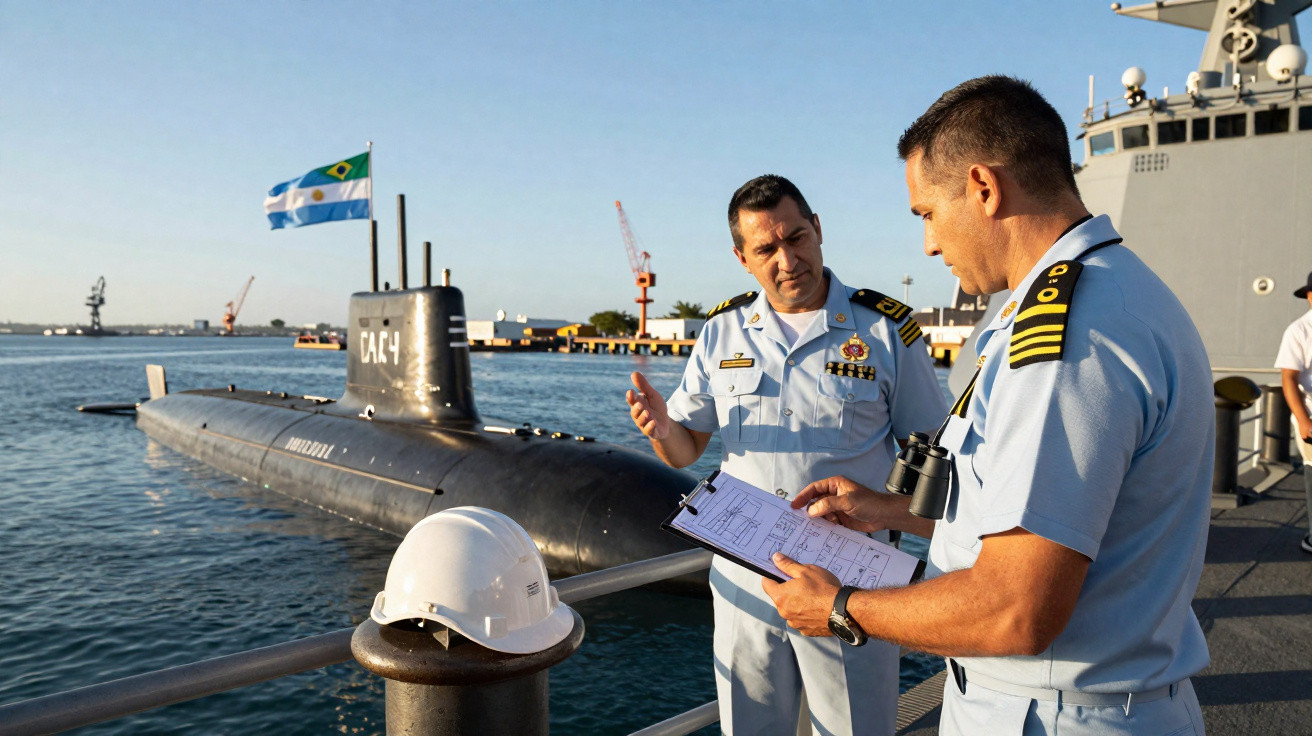
The conclusion of the XXXIX Fraterno Combined Exercise marked another milestone in the cooperation and mutual trust between Argentina and Brazil. It was distinguished by the participation of two of the Brazilian fleet’s most modern and sophisticated surface and submarine assets: the frigate Tamandaré (F200) and the submarine Humaitá (S-41), the second Riachuelo-class boat.
👉 Read also: Navantia UK lays the keel of the first new logistical vessels for the United Kingdom’s Royal Fleet Auxiliary
Both assets operated in the Argentine Sea alongside units from the Sea Fleet and Naval Aviation Command. Their deployment gave Argentine Navy personnel a valuable initial opportunity to become familiar with them, while also helping to promote in Argentina these two platforms produced under two of Brazil’s most ambitious Defence Industrial Base programmes.
Tamandaré frigates and Riachuelo submarines
The Tamandaré-class frigates and Riachuelo submarines currently represent the new generation intended to replace the Niterói class and the Tupi/Tikuna class respectively.
📌 You may be interested in
- The Brazilian Navy deploys South America’s largest warship for the first time in the Rio Grande elevation
- British aircraft carrier HMS Queen Elizabeth returns to service to lead a three-month deployment in Northern Europe
From an industrial standpoint, the capabilities developed by Brazil enable it to offer these designs to other regional and global navies seeking to renew their fleets.
This was demonstrated by the official visits held aboard both vessels at Mar del Plata Naval Base. Tamandaré and Humaitá arrived there after completing their involvement in the Fraterno exercise and before returning to Brazil.
Argentina examines Brazil’s naval programmes
The Argentine Navy reported that representatives of EMGEPRON (Naval Projects Management Company) gave Argentine naval commanders a presentation and briefing on “...the MEKO A-100 Class Programme, a strategic Brazilian Navy initiative aimed at acquiring technologically complex frigates through domestic construction in that country. The programme is being developed in collaboration with the Águas Azuis Special Purpose Company, made up of TKMS, Embraer and Atech, and is managed by EMGEPRON”.
It added: “During the presentation, technical and operational matters, management policy systems, construction, software and hardware, scope and limitations, strategic impact and costs were addressed. The Argentine authorities had the opportunity to put questions to those responsible for the projects, creating an exchange of knowledge and experience focused on jointly assessing these types of initiatives from a long-term perspective”.
This is significant, as the Argentine Navy will sooner or later need to address the replacement of its MEKO 360 destroyers. Only three vessels remain in service, while the fourth, ARA Heroína, was decommissioned last year after more than a decade without sailing. There has also been no progress in the modernisation programme the service is seeking to advance.
Argentine officials subsequently visited the submarine Humaitá as well, where “...they received a briefing on the comprehensive modernisation of Brazil’s Submarine Force through the Submarine Development Programme (PROSUB), a long-term strategic project that seeks not only to renew the existing fleet, but also to develop indigenous technological and industrial capabilities”.
Humaitá and Argentina’s submarine force recovery
As part of its current assessment of designs to restore its Submarine Force, Argentina has focused on the Scorpene submarines. Their design served as the basis for Brazil’s Riachuelo class, which emerged from the partnership with Naval Group.
Looking ahead, with construction of the four conventionally powered Riachuelo-class submarines complete, the Itaguaí Naval Complex has the installed capacity to begin producing new units for other navies. This is particularly relevant given the negotiations between Argentina and Naval Group, which include the signing of a Letter of Intent.
Nevertheless, several factors must be considered before the Tamandaré-class frigates and the Humaitá submarine can be regarded as options for renewing the Argentine Navy’s Sea Fleet. These include financing and the political will required to bring these programmes to fruition after years of assessments, visits and negotiations that have yet to reach a successful outcome.
About Tamandaré frigates and Scorpene submarines
Photographs used for illustrative purposes.





Comments
No comments yet. Be the first to comment!
Leave a Comment