
Buying a new car for under €20,000 has become increasingly difficult in Europe. Even Dacia, long regarded as the benchmark for low prices, now charges €19,900 in Portugal for the most affordable Duster.
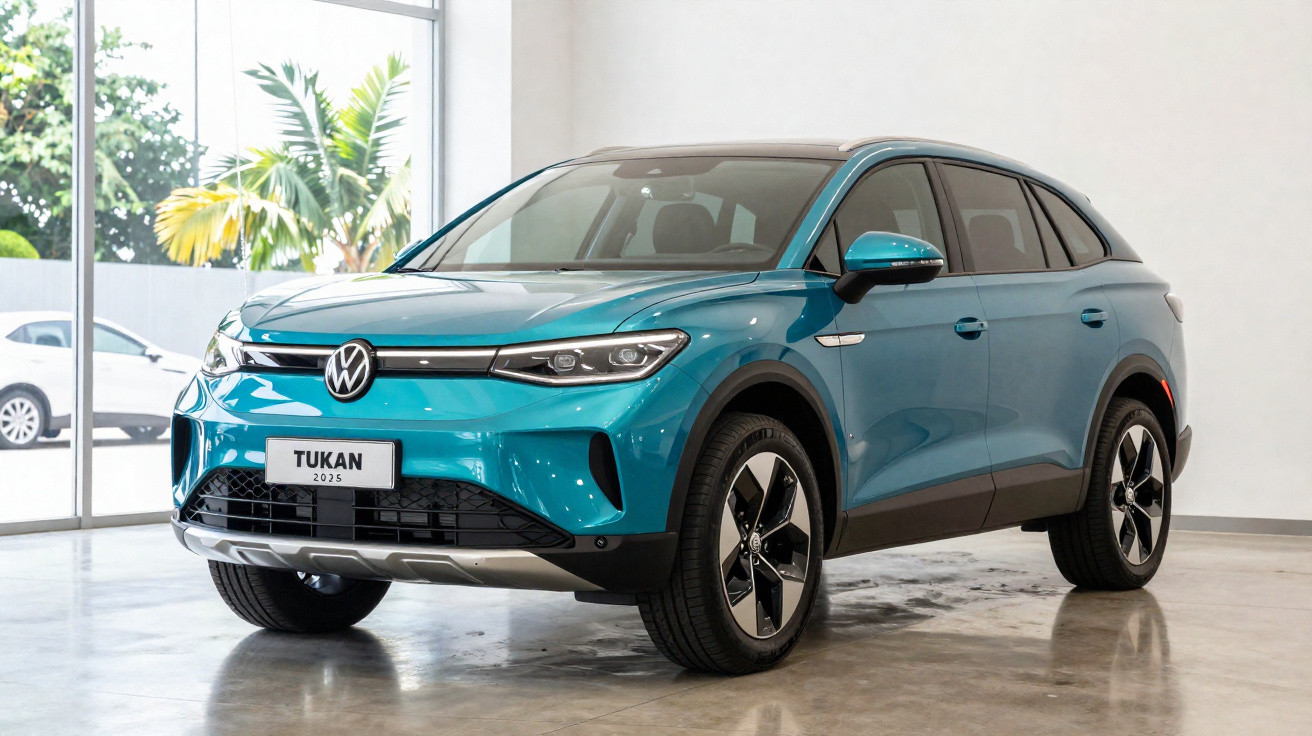
In Brazil, Volkswagen has unveiled a proposition that, to European buyers, seems to belong to a completely different world. Called the Tukan, it has a proper load bed and is expected to reach the Brazilian market from around 120,000 reais in entry-level form.
At a direct conversion, that equates to roughly €19,800. For comparison, this is less than the €19,900 requested for the entry-level Dacia Duster in Portugal.
In Brazil, less than €20,000 is enough to buy a brand-new Volkswagen pick-up. In Portugal, the same budget only provides access to the SUV range of one of Europe’s most affordable car makers.
The comparison highlights the vast gap between the two markets, as well as a Europe in which affordable options are becoming ever harder to find.
Two versions for different buyers
The Tukan has been unveiled in two configurations. The Robust version features a single cab, a longer load bed and a distinctly work-focused character. It is aimed at fleets and small producers, for whom carrying capacity takes priority.
At the top of the range will be the Extreme. This variant pairs a double cab and four doors with more equipment, a more refined finish and an intended role covering work, travel and leisure activities.
The new pick-up will progressively replace the Saveiro, which was launched in 1982 and remains on sale in Brazil. Larger and more modern than its predecessor, it will sit between conventional compact pick-ups and larger alternatives.
Polo platform with a rear end built for work
The Tukan will use an architecture derived from the MQB platform, found in models including the Volkswagen Polo, Nivus, Tera and T-Cross.
At the rear, however, Volkswagen engineers have fitted a rigid axle with leaf springs. This arrangement is common in commercial vehicles and is designed to handle heavier loads while offering greater resistance to intensive use and travel on poor road surfaces.
Volkswagen says it tested the pick-up directly with potential customers. Experience in particularly dusty conditions prompted the company to alter the intake system, while the air conditioning has been prepared to perform more effectively in high-temperature regions.
From straightforward engines to electrification
The brand has not yet released the full technical specification, although the range is expected to offer different engines depending on the version. The lower-priced configurations may use a naturally aspirated 1.6-litre engine with a manual gearbox.
Mid-range versions are expected to receive the 1.0 TSI engine with an automatic transmission. At the top of the line-up, a new 1.5 TSI Evo2 is anticipated, together with a 48 V mild-hybrid system.
Built in Brazil with costs kept under control
The new Tukan was designed and developed in Brazil. It will be manufactured at the São José dos Pinhais plant in Paraná, which currently produces the T-Cross.
According to Volkswagen, 76% of its components will be locally sourced. That high proportion will reduce reliance on imported parts and should help keep the price competitive.
The model forms part of Volkswagen’s investment of 20 billion reais (€3.3 billion) in South America, within a programme that includes 21 launches in the region by 2028.
Taking on Brazil’s best-selling car
The Tukan was developed to rival the FIAT Strada, Brazil’s best-selling car since 2021. It will also be expected to compete with the Chevrolet Montana, combining working versions with double-cab models intended for family use.
Volkswagen has not announced plans to sell the Tukan in Portugal or other European countries. The pick-up was created primarily for Brazil and other Latin American markets. European safety and emissions regulations, together with the tax burden imposed on cars, would make it virtually impossible to sell it in Europe at an acceptable price.


Comments
No comments yet. Be the first to comment!
Leave a Comment