
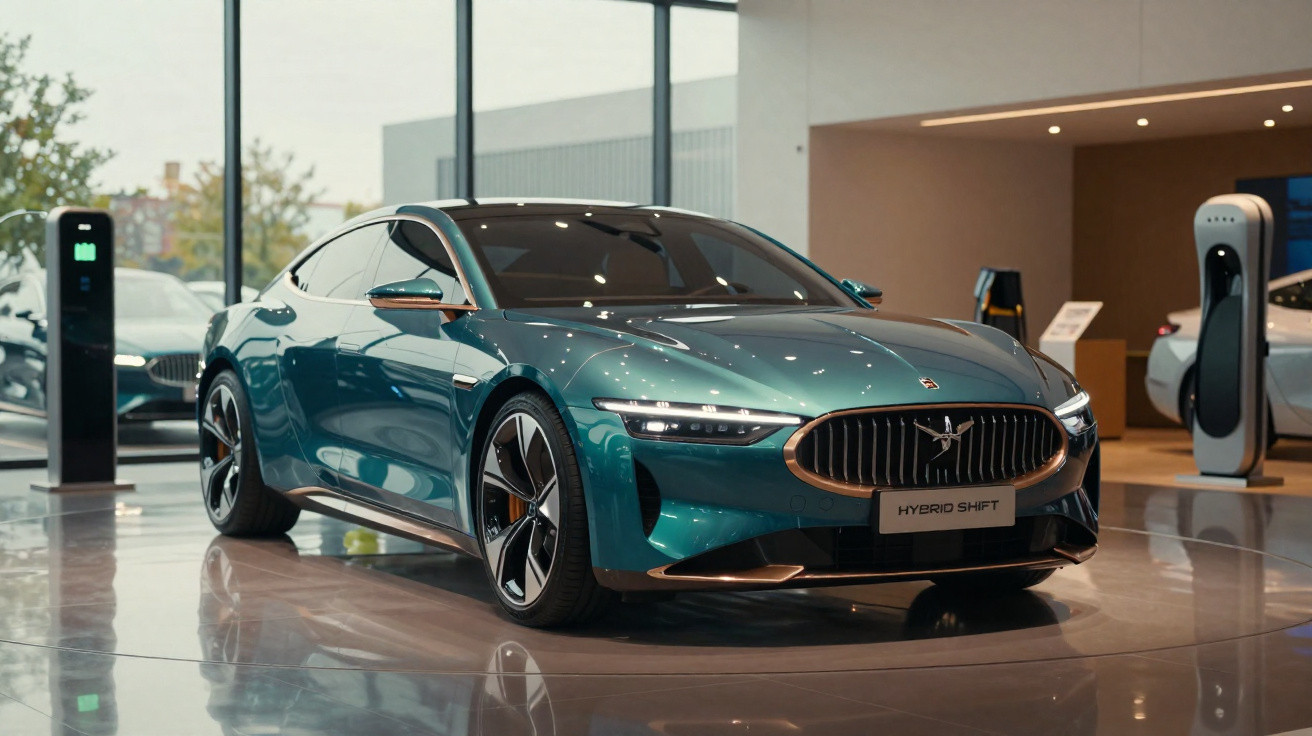
Just a few years ago, several car manufacturers were enthusiastically and optimistically announcing plans to become 100% electric by 2030, or close to that date. Today, however, the direction of travel appears to have changed.
The move to an entirely electric fleet is proving more difficult than many manufacturers had anticipated. Most importantly, demand for electric cars is not progressing at the expected rate, making the timing of a complete switch to this technology uncertain.
Over the past six months in Europe, the electric vehicle market grew by only 1.6% year-on-year, below the growth recorded by the overall market (+4.4%), according to ACEA figures.
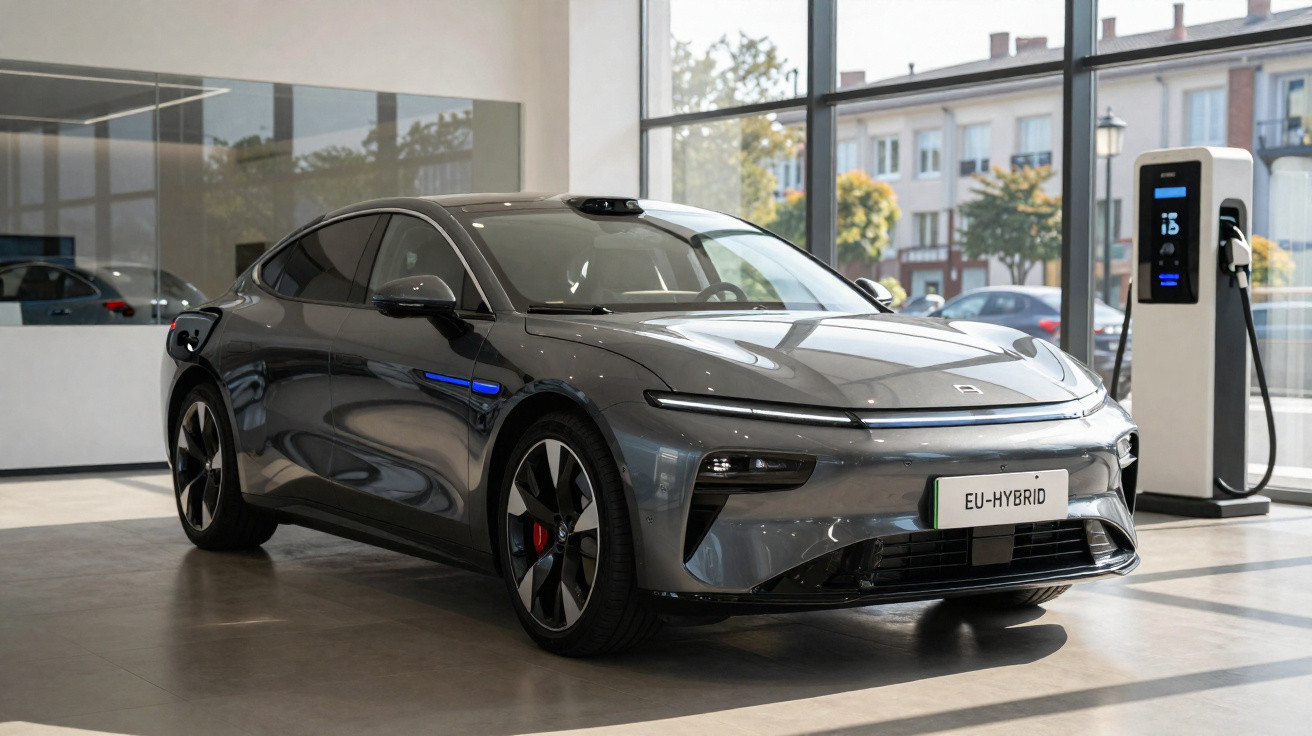
It is therefore unsurprising that many car brands and groups are beginning to turn towards other solutions, chiefly hybrid powertrains.
JLR
JLR, formerly Jaguar Land Rover, has significant electrification plans under way which are finally starting to take shape. Jaguar's ambition is even greater: the British marque has already announced that it will remove every combustion-engined model from its line-up.
As for JLR, while the group has not said that it intends to abandon its full electrification plans, it has announced changes to its strategy for the years ahead.
Prompted by cooling demand for electric cars, the Tata Motors-owned group said in February that it would cut the number of new electric models planned by 2026 from six to just four. Find out more:
Volvo
Volvo is not changing its strategy: the brand's future will be 100% electric. Last year, Volvo's chief commercial officer, Björn Annwall, said that “from 2030, there would not be a single model from the brand that was not electric”. In addition, the Swedish manufacturer aims to become carbon-neutral by 2040.
Volvo remains committed to its electrification strategy, having recently launched the EX30 and started production of the EX90. However, Jim Rowan, the Nordic brand's chief executive, said that the manufacturer could “rethink hybrids”, particularly because of inadequate charging networks in some markets, especially North America.
Speaking to Automotive News, Rowan said that this type of powertrain “can be a strong bridge for our customers who are not ready to move to full electrification”.
Mercedes-Benz
Mercedes-Benz, which had aimed to become a 100% electric brand by 2030, has also indicated that it is delaying that decision. It said it would “continue to have combustion engines for the next decade” and wanted to “offer the best technology to its customers”.
Following this, and according to comments made by Ola Källenius, chief executive of the Mercedes-Benz Group, to German publication Wirtschaftswoche, the German brand has increased its investment in combustion engines.
Nevertheless, despite this apparent shift in priorities, there is one target Källenius refuses to change: the brand's aim of achieving carbon neutrality by 2040.
Porsche
Mercedes-Benz is not the only German brand reassessing its plans. Other manufacturers, including Porsche, have also commented on the situation.
The Stuttgart marque had targeted more than 80% of its new cars being 100% electric by 2030, but has now said that this transition could “take longer than expected”, according to Automotive News Europe.
General Motors
General Motors (GM) had one of the most ambitious electrification plans in the entire automotive industry. Last year, Mary Barra, the American company's chief executive, announced a target of selling one million electric vehicles annually by 2025.
However, in January this year, Barra reiterated GM's commitment to bringing more hybrid models to market. Six months later, she announced that the company would reduce its electric vehicle sales forecast by half a million units.
It should be remembered that GM and Honda joined forces in 2022 to develop and build “affordable EVs”. Yet things did not go as expected, and the partnership was dissolved in October 2023.
“After one year of study, we decided that this (the partnership) would be difficult as a business,” said Toshihiro Mibe, chief executive of Honda Motor, as quoted by Automotive News.
Ford
In Ford's case, and according to comments made by Model E chief operating officer Marin Gjaja to Autocar, the Blue Oval is no longer planning to stop producing combustion engines in Europe within the next six years.
Instead, Gjaja acknowledged that the manufacturer's electrification plan had been “too ambitious”, adding that “we are committed to competing aggressively, regardless of the source of power. Customers want to have the freedom to choose the right powertrain,” he explained.
Aston Martin
Aston Martin was among the first brands to respond to signs of slowing electric vehicle sales. In March this year, the British manufacturer announced that it would postpone the launch of its first 100% electric models and increase its focus on plug-in hybrids.
Quoted by Autocar in February this year, Aston Martin executive chairman Lawrence Stroll said that “consumer demand is not what we thought it was two years ago”.
The head of the Gaydon-based British brand sees investment in plug-in hybrid technology not only as a transitional measure, but also as a long-term investment. He expects the technology to remain in production even after 2030.
Bentley
Bentley, in turn, also announced in March this year that it would delay the launch of its first 100% electric models until 2026-2027, while strengthening its focus on hybrids.
However, the reasons behind the historic British brand's decision differ slightly from the examples outlined above.
Adrian Hallmark, Bentley's former chief executive, who is heading to Aston Martin, attributed the delay to technical issues, particularly software problems related to the Volkswagen Group's PPE platform. These issues also delayed the arrival of the Porsche Macan and Audi Q6 e-tron.
Delaying its first 100% electric model forced Bentley to review its entire Beyond 100 plan, which had envisaged an all-electric range by 2030. The first electric model was due to arrive in 2025, followed by four further new electric models at a rate of one per year.
Other markets
European markets are not the only places where brands are adjusting their strategies. In North America, several manufacturers are already postponing the launch of fully electric offerings, with Volkswagen among them.
The German brand has delayed the launch of the ID.7 in the US and Canada because of “changes in market dynamics”.
China does not appear to be an easy market either, with some brands looking to move towards Europe.
Source: Autocar, Automotive News Europe
Comments
No comments yet. Be the first to comment!
Leave a Comment