
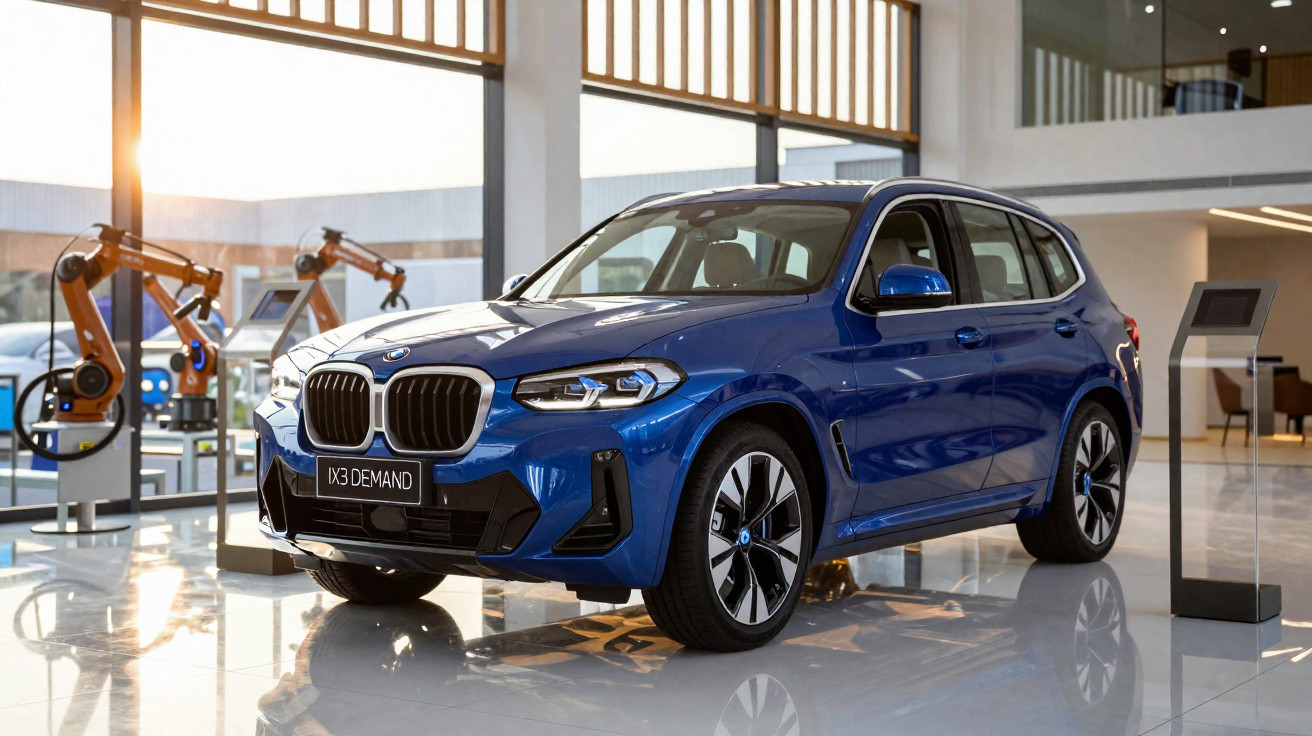
The shift towards electric mobility is still producing mixed signals across the motor industry. While some manufacturers have slowed investment or revised their production plans, others are dealing with stronger-than-anticipated demand.
BMW is among the latter, with its new iX3 joining the list of manufacturers required to increase output. The strong performance of the Volvo EX60, a direct rival to the iX3, has already led the Swedish marque to take action at the factory where it is built.
BMW iX3 demand exceeds expectations
The initial level of interest in the new BMW iX3 has surpassed forecasts, prompting the company to raise the factory's production capacity even before full-scale series production begins.
Factory to add an extra shift
To meet the robust demand for the new iX3, BMW has chosen to introduce an additional shift at its Debrecen plant in Hungary. The Hungarian site is a key part of BMW's electrification strategy and will build several models from the brand's next-generation electric range, referred to internally as the Neue Klasse.
The iX3 will be one of the first vehicles in this new family. Based on an entirely new BMW platform developed exclusively for electric vehicles, it marks a significant change in the company's approach to electric mobility.
Debrecen and the Neue Klasse
Built from the ground up to support BMW's next phase of electrification, the Debrecen facility underlines the attention the company is giving to the launch of iX3 production.
A strategic model for BMW
The new iX3 is more than simply another electric SUV in BMW's line-up. It is one of the models introducing the brand's new technological generation, featuring more efficient batteries, an 800 V electrical architecture, and substantial advances in range and charging.
At a time when demand for electric vehicles differs considerably between markets and segments, the iX3's early commercial performance is an encouraging sign for BMW's strategy.
As with other European manufacturers, the German brand is continuing to balance production between electric models and combustion-engine versions. However, cases such as this demonstrate that demand for electric vehicles is still rising in certain segments.


Comments
No comments yet. Be the first to comment!
Leave a Comment