
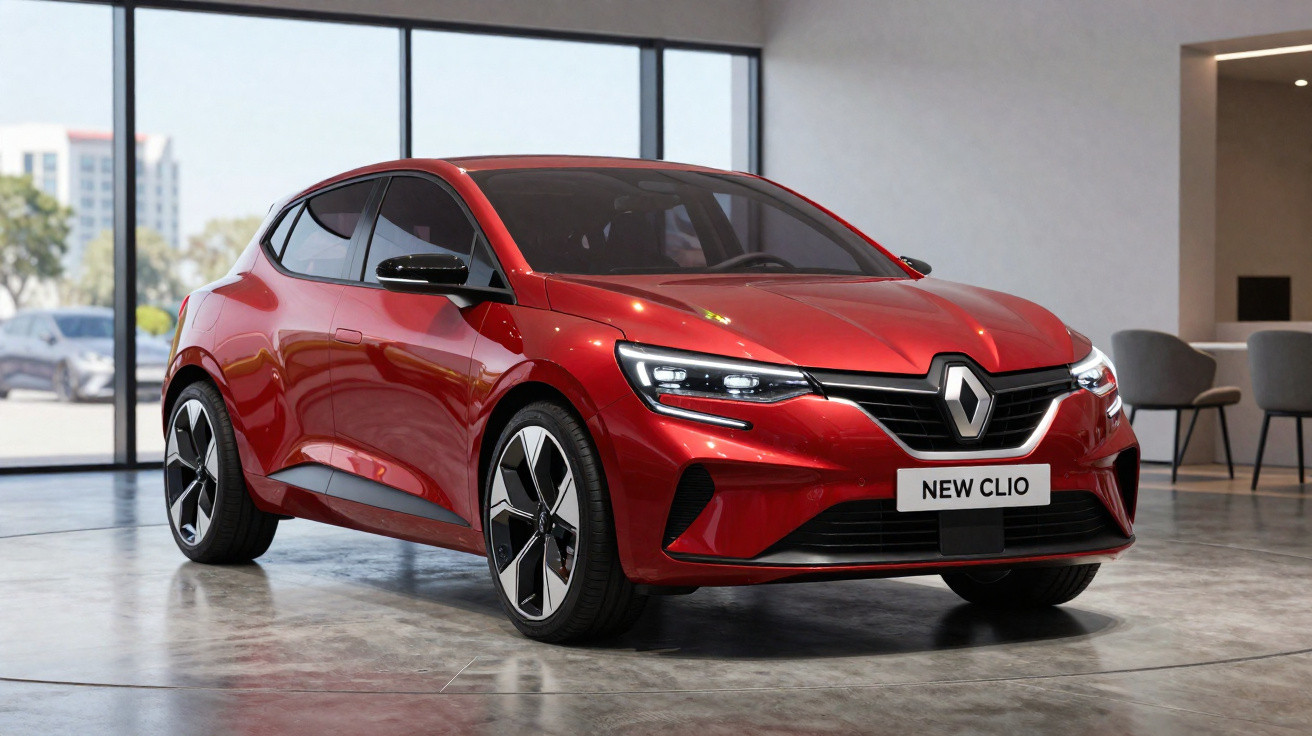
Renault is giving its bestselling supermini a substantial overhaul. The new Clio is intended to be more than a facelift, gaining a clearly recognisable identity of its own. With this move, the manufacturer is responding to a market in which superminis must compete ever harder for attention amid the electric-car boom, the SUV trend and tighter CO₂ requirements.
Why Renault is reinvigorating the Clio now
For years, the Clio has ranked among Europe’s best-selling superminis. Renault could, in theory, afford to take it easy. Instead, the company is introducing a major update that goes well beyond fresh headlamps and revised infotainment.
Renault is pursuing two objectives. The Clio should align more closely with the brand’s latest design language while also delivering greater emotional appeal. In the supermini class, buyers often make decisions instinctively: what is their first impression when they see the car on a dealer forecourt? Does it feel sufficiently premium? Does it look contemporary, or more like a budget-conscious choice?
The new Clio presents itself far more confidently, with a sharpened silhouette, more strongly sculpted surfaces and a sporty rear end.
This gives it greater separation from the group’s more affordable entry-level models and brings its appearance closer to that of larger model lines. The message is clear: small no longer has to mean plain.
Sharper styling: changes to the bodywork
The key development is immediately apparent: the body lines look more muscular and three-dimensional. Renault has chosen forms that appear more deliberately sculpted from the metal. Surfaces are intentionally recessed or curved outward to create stronger contrasts of light and shadow.
A sleeker presence instead of an understated everyday look
From the side, the car now has more clearly defined shoulders and a more dynamic window line. This makes its previously rather restrained character more engaging. Creases along the doors and wings are designed to make the car appear wider on the road.
- More sculpting along the sides: Recessed sections and pronounced curves.
- More distinctive wheel arches: They look considerably more substantial with larger wheels.
- More finely executed details: Trim pieces and light-catching edges appear more upmarket.
This should help the Clio stand out more in urban traffic, where vehicles are often parked closely together. Buyers who deliberately do not want an SUV are therefore offered a conventional compact model with a distinct personality.
A falling roofline for a sportier character
The more pronounced downward sweep of the roof towards the rear is particularly noticeable. This “coupé-like” curve is now found in many segments and has become more evident in the supermini class as well:
- The profile appears lower and more elongated.
- The transition into the tailgate is smoother.
- The impression of a sporting compact car is strengthened.
Renault is walking a fine line here: a more dynamic design must not compromise rear headroom. How much everyday practicality is actually affected will depend on the final interior layout. What is already clear is that the car gains considerable visual momentum.
Rear end with motorsport references
The newly designed rear is especially striking. The Clio receives four small rear-light elements intended to evoke racing cars. This arrangement makes the car look more modern and technically sophisticated, even though it is “only” a different interpretation of the lighting signature.
Four compact rear lights reference motorsport styling and give the Clio a recognisable feature in dense traffic.
At night or in twilight, this creates a distinctive light signature that can be recognised from a distance. Such a feature is almost standard in the premium sector, but remains relatively unusual in the supermini class and therefore has greater visual impact.
Combined with a redrawn bumper, diffuser-like elements and potentially darker trim, the result is a rear end that looks far less conservative than before. This approach fits the broader trend of making superminis visually closer to sporting compact cars.
New brand identity: what is behind the transformation
The visual redesign is not an end in itself. Renault is currently repositioning the brand. Electric powertrains, hybrids, stricter fleet targets and changing customer expectations demand clear answers. The Clio has a key role to play in this process.
| Aspect | Change for the Clio |
|---|---|
| Design language | More sculpting, more dynamism, a more distinctive brand face |
| Brand image | More premium, more emotional, with influences from sporting models |
| Target group | Urban commuters, young families and design-conscious drivers rather than a sole focus on price |
| Technology | Hybrids and efficient combustion engines are the focus, with preparation for stricter standards |
Renault wants to demonstrate that the traditional supermini remains a serious offering even below the dedicated electric model ranges. Those not ready to drive fully electric immediately should still have access to a modern, attractively designed model.
Where the new Clio sits in the market
With the revised Clio, Renault is chiefly targeting buyers who may currently be drawn to cars such as the VW Polo, Opel Corsa, Peugeot 208 or Hyundai i20. Many of these rivals have progressed significantly in recent years, both in styling and in driver-assistance systems and connectivity.
The Clio aims to establish itself through a more distinctive appearance and the image of a “small but grown-up” car. It is particularly relevant for:
- City residents seeking a compact, manoeuvrable car with a credible visual presence,
- Drivers who do not want an SUV but still value road presence,
- Commuters wanting an economical car without giving up a modern appearance.
There is also an efficiency advantage. Despite the SUV boom, superminis are often the most realistic response to rising energy costs and constrained city centres. Acceptance increases considerably when their styling does not look like a compromise.
What the design boost means for drivers in practice
A car with a sportier look has greater emotional appeal for many buyers. In daily use, however, the tangible effects are what ultimately matter. The new shape may, for example, alter aerodynamics and noise levels. A more aerodynamically efficient roof and a cleanly designed rear section can reduce wind noise and fuel consumption, especially at motorway speeds.
More heavily sculpted panels can also add rigidity to the bodywork, potentially improving both structural stiffness and perceived quality. Doors may close with a more solid sound, while the vehicle feels sturdier overall. Details like these subtly shape impressions of quality.
Greater design dynamism does not simply mean a different look – it often reflects detailed work on aerodynamics, acoustic comfort and body rigidity.
Why superminis continue to have a future
While many manufacturers are dropping superminis or offering them only in heavily limited form, Renault is deliberately going on the offensive with the Clio. Tighter regulations make affordable cars more difficult to price competitively, yet demand remains steady, particularly in Europe.
People living in cities often do not need more car than a Clio provides. Its luggage capacity is sufficient for the weekly shop, its interior matches that of older compact cars, and running costs remain manageable. At the same time, modern superminis no longer feel like budget models at the bottom of the range.
The visual upgrade also serves to elevate the segment itself: choosing a supermini should feel like a deliberate decision, rather than something dictated purely by cost.
What prospective buyers should consider
Potential buyers should examine several points closely once the new Clio reaches dealers:
- Rear-seat seating position: Does the falling roofline still leave enough headroom for taller passengers?
- All-round visibility: Does the more dynamic styling affect rearward visibility?
- Technology packages: Which driver-assistance systems are fitted as standard, and which require an extra charge?
- Powertrains: How do hybrid versions perform in urban traffic and during commuting?
A realistic everyday test drive is particularly worthwhile in the supermini segment: how does the car feel in traffic queues, over cobbles and when parking in tight spaces? The new sporty design only truly makes sense if comfort and practicality keep pace.
The Clio’s new identity illustrates the direction in which the supermini segment is moving: less sacrifice, more character. Rather than presenting an anonymous metal box, Renault offers a striking, intentionally styled city car that has no intention of hiding behind larger model ranges.
Comments
No comments yet. Be the first to comment!
Leave a Comment