
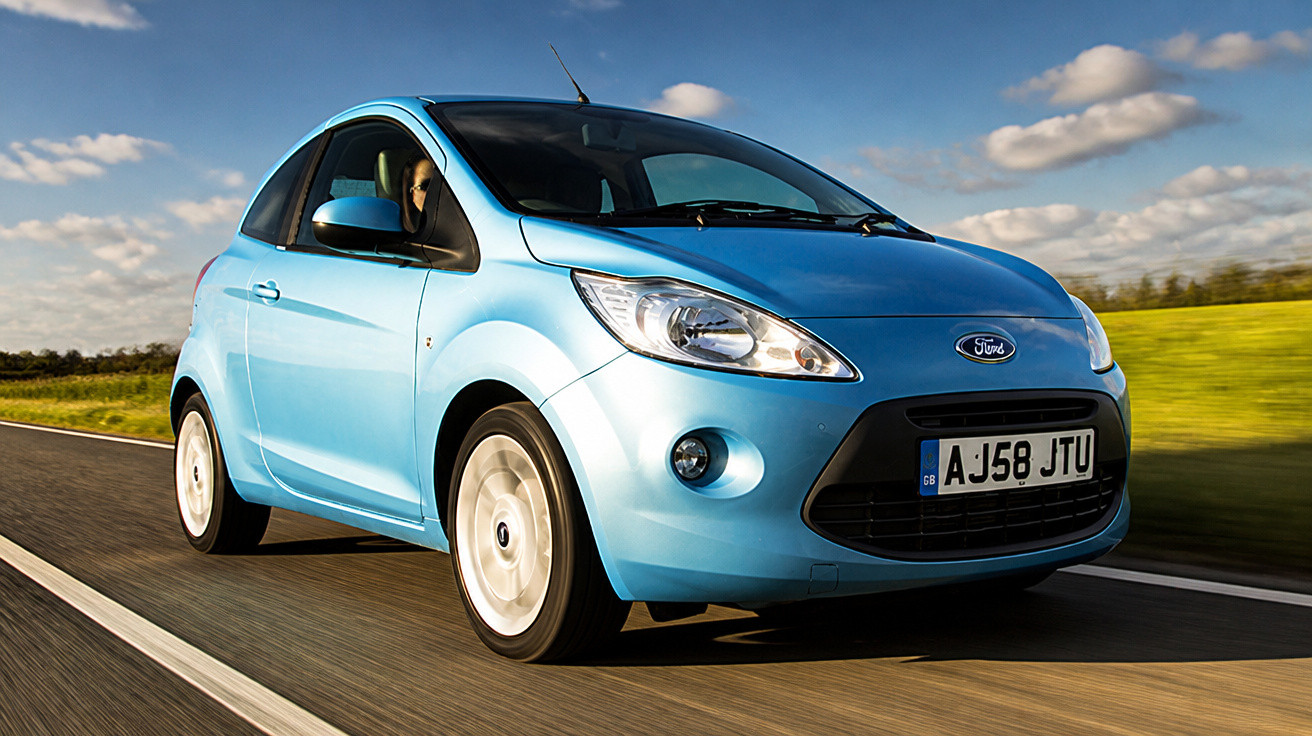
Ford Ka diesel: shared Fiat technology
Ford’s decision to reduce costs by basing the new Ka on the Fiat 500 platform brings a useful benefit: access to Fiat’s engine technology. For the first time, the Ka can therefore be specified with a common-rail diesel, making it markedly more versatile. Its extra mid-range pull makes faster trips more manageable, so it is no longer limited to supermarket errands.
There is no financial case for choosing the diesel, however. The petrol Ka produces 119g/km of CO2, while the diesel records 112g/km; as neither falls below the crucial 100g/km threshold, neither receives a tax benefit. Even allowing for the 12mpg gap in economy-the 1.3-litre 74bhp TDCi returns an average 67.3-you would need to cover almost 20,000 miles (around 32,000 km) annually before the diesel delivered a genuine running-cost saving. It is unsurprising that Ford expects the TDCi to represent only four per cent of sales.
That means selecting a diesel Ka rather than the petrol version is not a money-saving choice. This is especially so because the diesel costs £700 more, and is offered solely in the range-topping Zetec trim.
Ford Ka TDCi driving and performance
From behind the wheel, though, the added outlay feels justified. The diesel Ka seems more comfortable with its role, while it also lowers expectations of the way the Ka ought to handle. In TDCi form, you are somehow less conscious of just how brilliantly the previous generation drove. Instead, you take it as it comes: with this engine, the Ka is simply transport from A to B and nothing else. It is neither fun nor attempting to be. The petrol model is overly burdened by its immediate predecessor.
Its quoted 0-62mph (0-100km/h) time of 13.1 seconds is not remarkable, yet it never feels especially sluggish in town or on the motorway. You can comfortably remain in the outside lane without becoming a rolling obstruction. Naturally, its extra torque compared with the petrol engine helps-107lb ft rather than 74lb ft-but so do the low turbo engagement point and five-speed gearbox. As a result, the engine rarely falls below its 1,800rpm turbo threshold.
Refinement on longer journeys
Without a sixth gear, there is slightly more diesel clatter than ideal, and it never vanishes entirely, even at motorway speeds. Nevertheless, high-speed NVH is lower than in the petrol version. That is ultimately what matters here, and what makes it the more capable all-rounder. It should be as relaxed at 70mph (113km/h) as it is pottering through town. It is not involving or entertaining, but this is exactly where diesel city cars need to perform. This car-sorry, Ka-does.

Comments
No comments yet. Be the first to comment!
Leave a Comment