
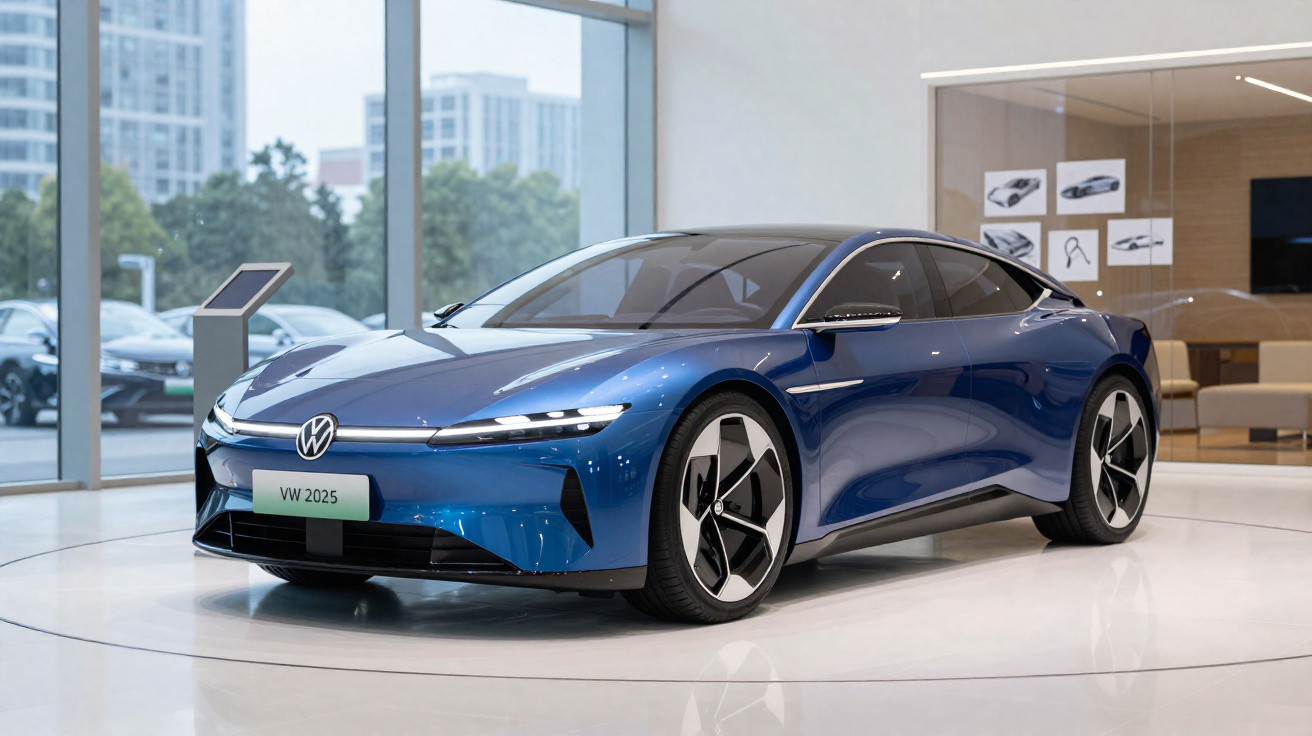
Despite the many obstacles, the Volkswagen Group’s 2024 results, released today, are far from alarming. They were indeed lower than in 2023, but the group’s management maintains that the transformative measures introduced last year will make it more resilient in the years ahead.
2024 brought challenges on several fronts. China came first: the market to which the group has considerable exposure, where both its sales and market share declined.
Europe presented another difficulty, as electric vehicle sales fell across the market. The group had faced the prospect of €1.5 billion in fines for failing to meet the European Union’s 2025 emissions targets - although that outcome now appears less likely following the European Commission’s Action Plan.
Trade tensions, particularly tariffs, and geopolitical pressures also intensified during the past year. The group’s own executives were unable to provide a definite answer on their true impact during 2025.
Partnerships and restructuring at the Volkswagen Group
On a more encouraging note, Oliver Blume, the group’s chief executive, highlighted its partnership with Rivian, the restructuring of CARIAD - its troubled software division - and earlier agreements with XPeng and SAIC.
Despite the extensive media attention at the end of last year, Blume also spoke positively about the agreement reached with German trade unions as part of Volkswagen’s restructuring.
It was agreed that factories in Germany would close - an unprecedented step in the manufacturer’s history - alongside the gradual removal of 35,000 jobs. However, these difficult choices are regarded as essential to strengthening the entire group for the years to come.
Changes to the group brands’ full, or near-full, electrification strategies were also discussed, together with renewed investment in combustion-engine models, particularly at Porsche. These changes are considered crucial to retaining the flexibility needed to adapt to the varying requirements of different global regions.
All of this affected the figures, which ultimately came in below those recorded in 2023.
The figures
The Volkswagen Group ended 2024 with nine million units sold, down 3.5% on 2023 (9.3 million units). This still leaves the Volkswagen Group as the world’s second-largest, behind Toyota.
Although sales declined, revenue rose by 0.7%, from €322.2 billion in 2023 to €324.6 billion in 2024. However, spending increased by even more, causing profit to fall by 15.4% to €19.06 billion (€22.5 billion in 2023).
As a result, the operating margin fell from 7.0% in 2023 to 5.9% in 2024.
What are the Volkswagen Group’s forecasts for 2025?
2025 is not expected to be greatly different from 2024 for the Volkswagen Group. A large number of challenges and uncertainties remain ahead.
Among those challenges, the group must increase its share of electric vehicle sales and expand battery production capacity. The threat of additional costs to comply with CO₂ targets also continues to loom.
In North America, launching the new Scout brand will affect 2025 costs, but China is where the difficulties are expected to continue. The Volkswagen Group anticipates that both sales and market share will keep falling in 2025. A recovery, taking into account the launch of the new generation of models developed with XPeng and SAIC, is only expected in 2026-27.
More positively, the Volkswagen Group plans to introduce 30 new models in 2025 across all its brands. However, Oliver Blume particularly highlighted the new generation of more affordable electric vehicles, priced at around €25,000, whose real impact will only be felt in 2026.
In numerical terms, the German group expects revenue growth, although the operating margin is not expected to move far from this year’s level: between 5.5% and 6.5%.
However, the Volkswagen Group’s forecasts do not yet take account of restrictions that could arise from possible trade tariffs, especially in the US, or other geopolitical tensions.
Comments
No comments yet. Be the first to comment!
Leave a Comment