
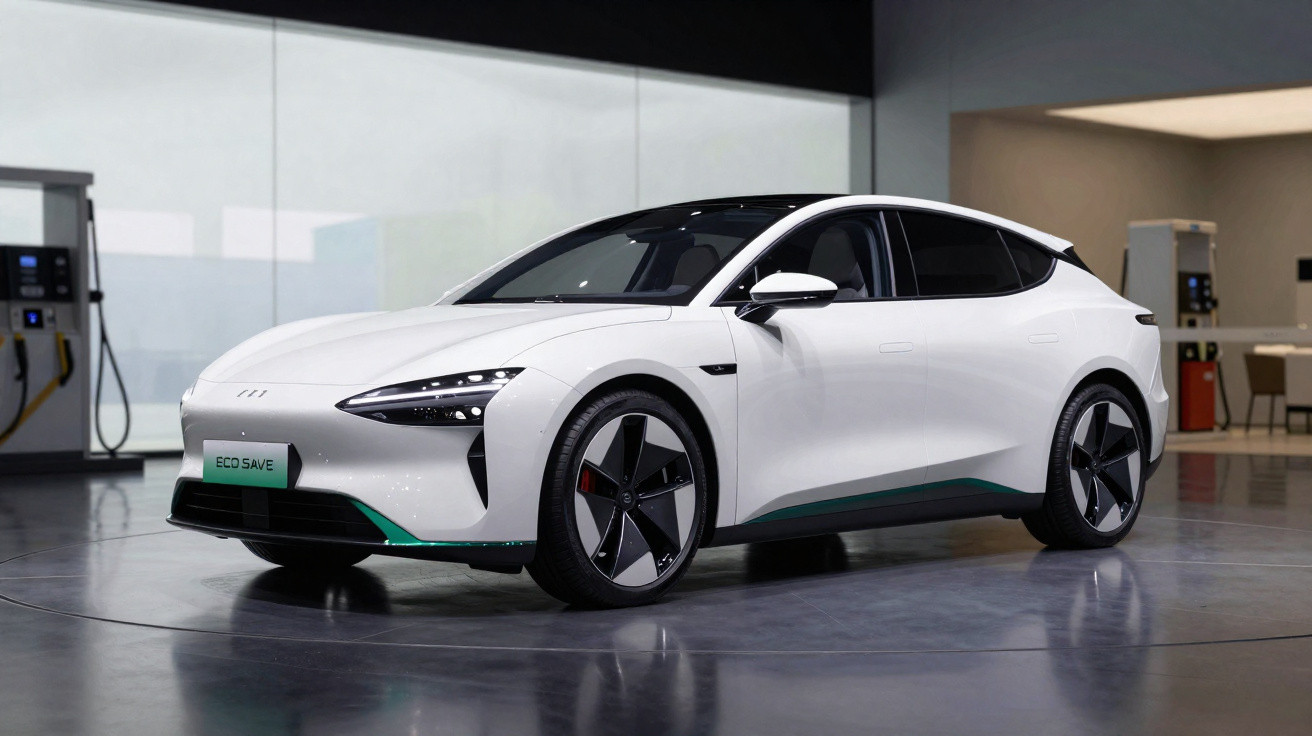
Saving fuel is high on the agenda. Fuel prices have never been as high as they are today, and the upward price trend looks set to continue, making it increasingly expensive to fill the tank.
While there is nothing we can do about fuel prices themselves, we can make the most efficient use possible of the fuel already in our cars.
With that in mind, we have compiled a series of tips that we hope will help you cut both consumption and your fuel bill.
Saving fuel before you even set off
You can begin saving fuel before the car has even left the driveway.
Start by checking the tyre pressures. Whenever you drive with tyres inflated below the pressure specified by the manufacturer, there is greater friction between the tyre surface and the road.
As a result, more energy is needed to cover the same distance, which inevitably increases fuel consumption.
Another recommendation is to reduce the vehicle's running weight. Clearly, we are not suggesting that you remove the rear seats simply because you rarely use them.
However, it is quite common to carry unnecessary “ballast” in the car: open the boot and take a look at what is inside. Could some of those items be left at home or in the garage?
With fewer kilograms on board, the engine has to work less hard to overcome the vehicle's inertia, helping to lower fuel use.
Vehicle maintenance is equally essential. Although the cost of a service might seem like “money for fuel”, remember that a car in excellent mechanical condition will also be more economical.
Have the wheel alignment checked, clean the air filter, inspect the spark plugs in petrol engines and the glow plugs in diesel engines, and change the engine oil in line with the manufacturer's specified intervals and requirements. All of these measures will help you save fuel.
Finally, use the Start/Stop system and put aside the often unfounded concerns that it could harm the car. Fitted to most modern vehicles, this system can genuinely reduce urban fuel consumption by switching off the engine when you stop at traffic lights or in a queue of traffic.
Acceleration and saving fuel
Naturally, cars do not consume the most fuel while stationary. The key to saving lies in efficient driving, making the best possible use of every drop of fuel. There are several ways to achieve this.
First, accelerate gently. Whether pulling away or already on the move, there is no need to “floor” the accelerator to reach a given speed. Smoother, more progressive acceleration benefits both fuel consumption and your wallet.
Lowering your speed also has a direct effect on consumption, as you would expect. That does not mean driving at a “snail's pace”, however, as this can even prove counterproductive.
Yet, if you reduce your usual speed from 90 km/h to 80 km/h on an open-road journey, or stay slightly below the legal limit rather than slightly above it on the motorway, the lower aerodynamic drag delivers immediate benefits.
If your vehicle has it, cruise control can also be a valuable tool when saving fuel, as it maintains a steadier travelling speed.
It is also vital to anticipate the traffic. After all, repeated acceleration and braking are among the main causes of higher fuel consumption.
By reading the road and traffic conditions properly - for example, when approaching traffic lights - and keeping your speed as consistent as possible, you will use the accelerator and brakes less often, which helps reduce consumption.
Lastly, it is important to keep the engine in its ideal rev range and select the correct gear, in cars with manual gearboxes, of course. In the battle against fuel consumption, the gearbox and rev counter are our greatest allies.
For petrol cars, the ideal operating range is between 2500 rpm and 3000 rpm - slightly lower for turbocharged petrol engines - while for diesel engines it is between 2000 rpm and 2500 rpm.
This is the rev range in which the balance between mechanical efficiency and fuel consumption is most favourable for saving.
Planning helps you save fuel
Planning journeys in advance is another way to save fuel. It allows you to avoid routes that may be more congested, have more traffic lights or include more gradients, all of which are roads where consumption suffers most.
Very short journeys should also be avoided, since the engine and catalytic converter will not have time to reach their ideal operating temperature, causing fuel consumption to rise sharply.
They are also not particularly healthy for the mechanical components or the catalytic converter. If the engine does not warm up properly, its lubrication will be insufficient - as the oil also needs time to warm up - leading to greater wear and potentially requiring premature replacement of the catalytic converter.
Take care with climate control
Although air conditioning makes journeys far more comfortable, it does affect fuel consumption. Its effect is much smaller today than it was in older cars, but it is still present, as the trip computer in some models can confirm.
Even so, at higher speeds it remains a better option than driving with the windows open. At faster speeds, the extra aerodynamic drag created by open windows has a direct and negative impact on consumption.
Choose where you refuel carefully
Even if significantly improving your driving helps you save a great deal of fuel, you will still need to stop and refuel. But you may be able to make savings at that point too.
Choosing standard fuel rather than premium additive fuel will reduce your fuel bill. You can also use low-cost filling stations, or take advantage of the various cards and apps available that offer discounts when you refuel.



Comments
No comments yet. Be the first to comment!
Leave a Comment