
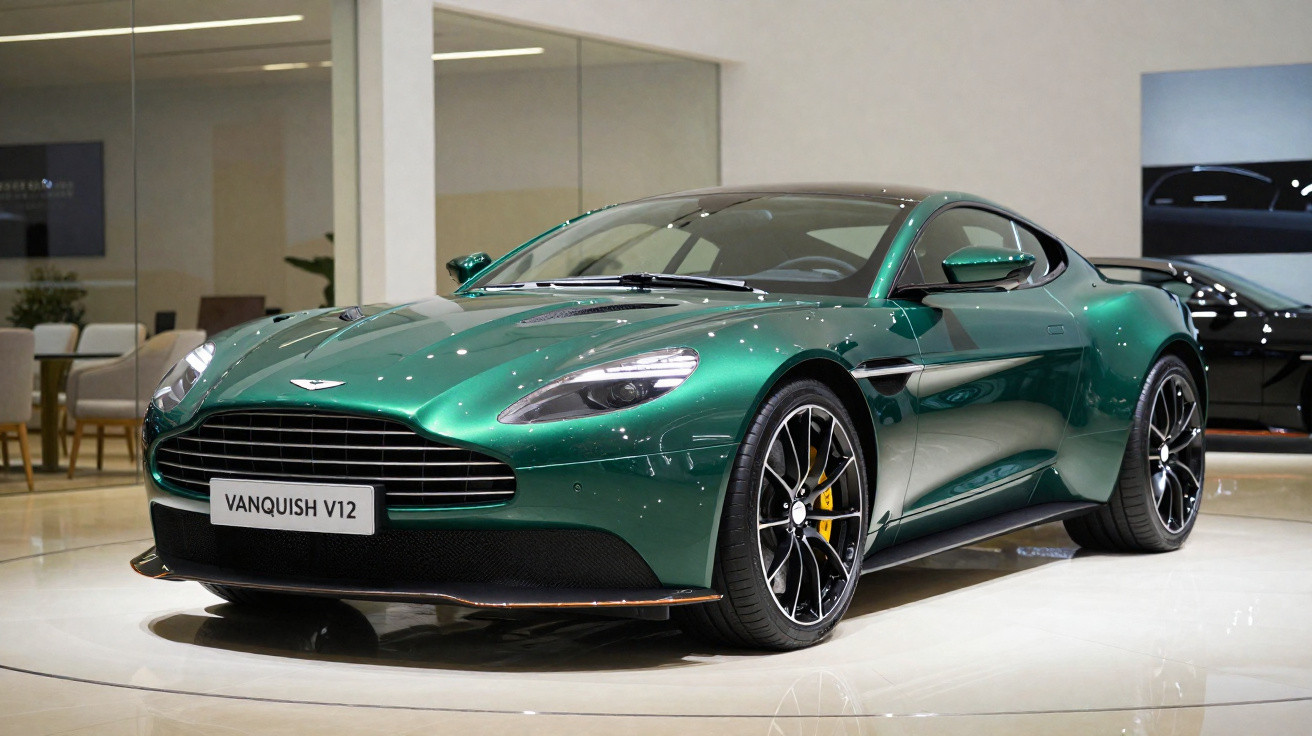
The Aston Martin Vanquish has returned, looking every bit the car to accompany James Bond on a mission, now wearing more sophisticated and thoroughly modern attire. It is no less formidable, however, as it retains the full splendour of a V12 engine.
For the new Vanquish, the Gaydon marque has introduced several distinctive styling details, particularly at the rear. The large black carbon-fibre panel is the standout feature, accompanied by newly designed, exclusive LED light clusters.
The design team has also gone a little further in a literal sense, extending the wheelbase by 80 mm in the area between the A-pillar and front axle. The intention is to give the Vanquish the classic long bonnet, flowing into bodywork where elegance remains a central priority.
Even so, there is no shortage of more technical features, many inspired by technology developed for the Formula 1 team. The bonnet vents are an excellent illustration.
At the front, the car is dominated by its vast grille, which has 13% more surface area than the one fitted to the DBS 770 Ultimate. Here too, the purpose is to improve engine cooling.
Along the flanks, as well as the familiar flush-fitting door handles, there is a new sculpted feature inspired by a bow and arrow, bearing the V12 designation.
The distinction of an “analogue” V12
At a time when electrification has reached even the most exclusive supercar segment, this Aston Martin receives an all-new 5.2-litre twin-turbo V12 producing a maximum 835 PS. Its 1,000 Nm of torque is sent solely to the rear wheels through an eight-speed ZF automatic gearbox.
The rear axle also gains an electronically controlled limited-slip differential - the first time this has been paired with a front-engined Aston Martin V12 - with the task of delivering the best possible traction performance.
As for outright performance, the marque has not announced a 0–100 km/h acceleration figure. It has, however, confirmed a 345 km/h top speed, the highest ever claimed for a production Aston Martin. And it is all accompanied by an enthralling soundtrack delivered through four enormous exhaust outlets.
Although the Aston Martin Vanquish is not intended to set the fastest lap times on a circuit - the brand has other models for that purpose - extensive work has gone into ensuring maximum driving enjoyment. With weight a constant priority, both the bodywork and numerous other components are made from carbon fibre.
The standard braking system features carbon-ceramic discs measuring 410 mm at the front and 360 mm at the rear. The 21-inch wheels were likewise designed with weight reduction in mind and are fitted with a set of Pirelli tyres developed specifically for the Vanquish.
Larger anti-roll bars and Bilstein DTX adaptive dampers complete the package. Every element is intended to provide the finest possible driving experience.
The Aston Martin Vanquish is strictly a two-seater
Like every previous Aston Martin Vanquish, the cabin has just two seats, underlining its supercar “personality”. They feature elegantly trimmed leather upholstery and more pronounced side bolsters. Optional carbon-fibre seats with an even sportier character are also available.
Inside, the new infotainment system incorporates a 10.25-inch touchscreen that appears to float above the rest of the centre console. It provides access to numerous settings and familiar functions, including smartphone connectivity through Apple CarPlay and Android Auto.
The Aston Martin Vanquish nevertheless retains a wide range of physical controls for numerous functions and systems. Visually, the interior also features extensive carbon fibre and more “technical” details, such as screws and metallic components, reinforcing the Vanquish’s sportier nature.
Production and price
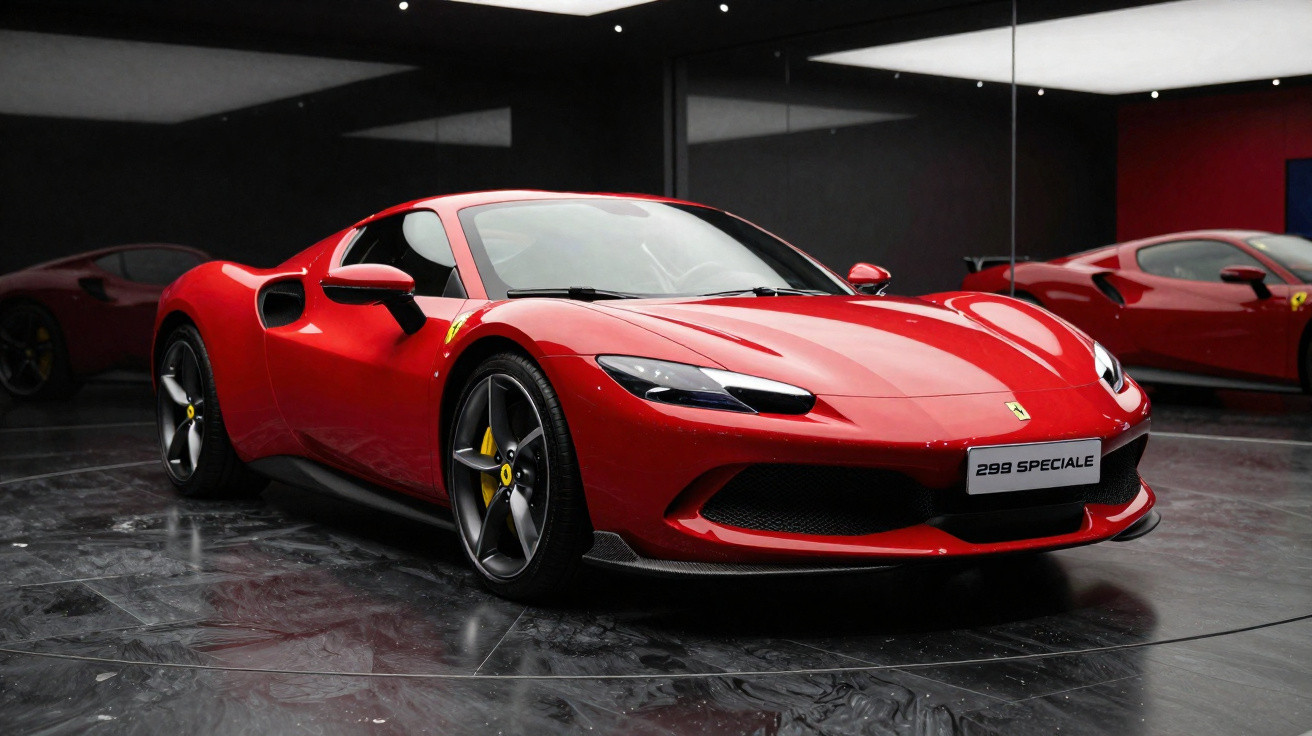
One of the potential key rivals to the new Ferrari 12Cilindri, which we have already had the opportunity to see, is now available to order. The first customer deliveries are expected before the end of this year.
A total of 1,000 examples of this model will be built each year, with every one priced at more than £300,000. That equates to over €350,000 before any of the available options are even considered.
Comments
No comments yet. Be the first to comment!
Leave a Comment