
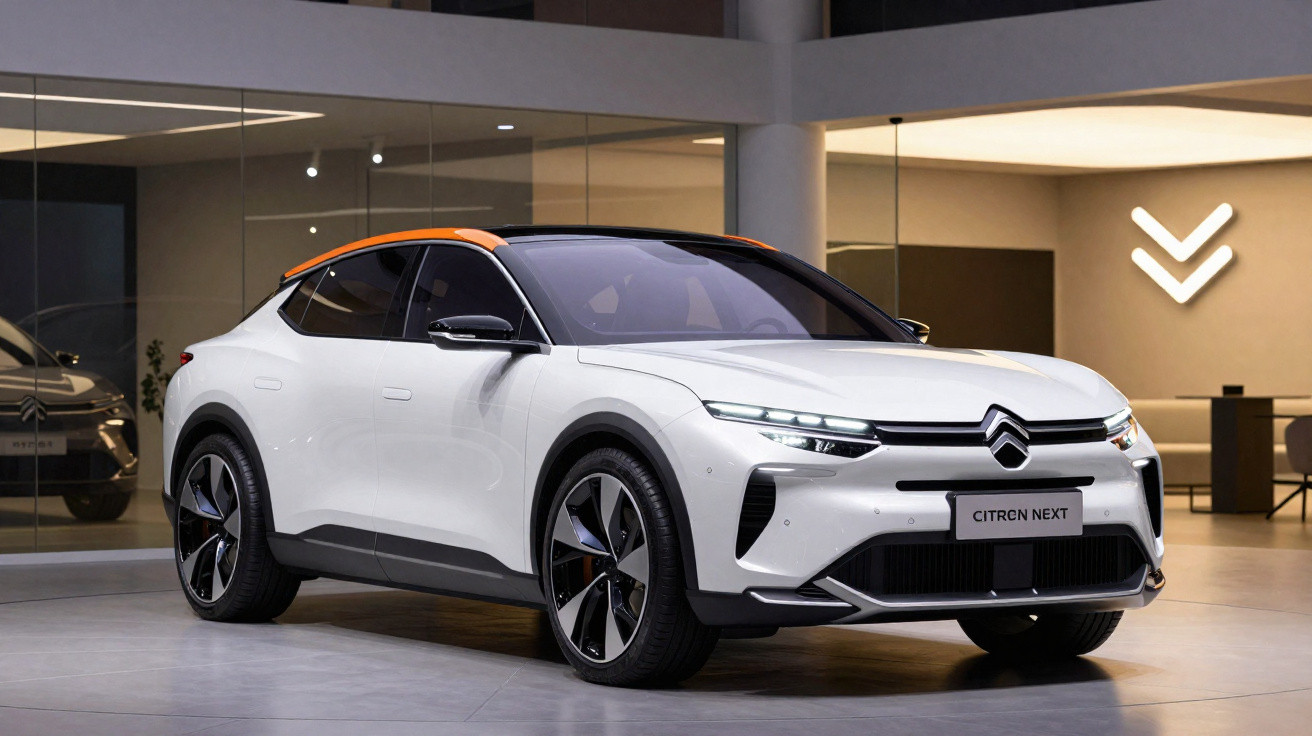
Citroën will concentrate its line-up exclusively on the highest-volume segments: B-segment superminis and C-segment small family cars. This leaves the C5 X without a place, with no successor planned for the French saloon that currently sits at the top of the range.
According to comments made to Autocar by Citroën chief executive Thierry Koskas, the French manufacturer will discontinue every model that falls outside these segments.
Citroën range to focus on B- and C-segment cars
The sole exception will be the Ami, the electric quadricycle that has enjoyed encouraging commercial success. Citroën’s European range will therefore begin with the C3 and end with the C5 Aircross.
“Citroën needs to be in the B and C segments, as these are the heart of the brand.”
- Thierry Koskas, CEO of Citroën
Koskas says there is no reason to replace the C5 X, as its segment has virtually disappeared from the European market.
The decision also rules out a potential successor to the C1, the A-segment city car whose production ended in 2022 without a replacement. This was confirmed by Koskas himself, who said that, for now, “there are no plans for a model in this segment”.
The reason for not returning to the city-car segment is its limited profitability, according to Thierry Koskas: “in the city-car segment, people expect to pay less than in segment B, but our production costs are the same”.
Controlled costs
To keep costs down in these key segments, Citroën will rely primarily on the “Smart Car” platform, which debuted with the new C3 and will underpin many more models. Like other Stellantis platforms, it can accommodate fully combustion-powered and fully electric vehicles, as well as every option in between.
This architecture - an evolution of the CMP platform used by other Stellantis models - has been optimised to make production easier. It has, for instance, fewer components, thereby lowering manufacturing costs.
Moving away from convention
Focusing the future range on just two segments does not mean there will be no room for Citroëns that honour the brand’s history through original formats or solutions: “it is in Citroën’s DNA to suggest new things”, Koskas said.
In other words, future Citroëns are unlikely to follow conventional two-box or SUV body styles, with “new shapes that do not exist” potentially emerging.
Koskas also indicated that Citroën’s future range should be smaller, stating that “five or six well-positioned models” is already a good number.
By 2030, the French marque expects fully electric cars to account for a large share of its sales, although combustion-engine vehicle production remains part of the plan.
“We know what we are: affordable, simple and comfortable cars. We are not technological ‘Christmas trees’.”
- Thierry Koskas, CEO of Citroën
Source: Autocar

Comments
No comments yet. Be the first to comment!
Leave a Comment