
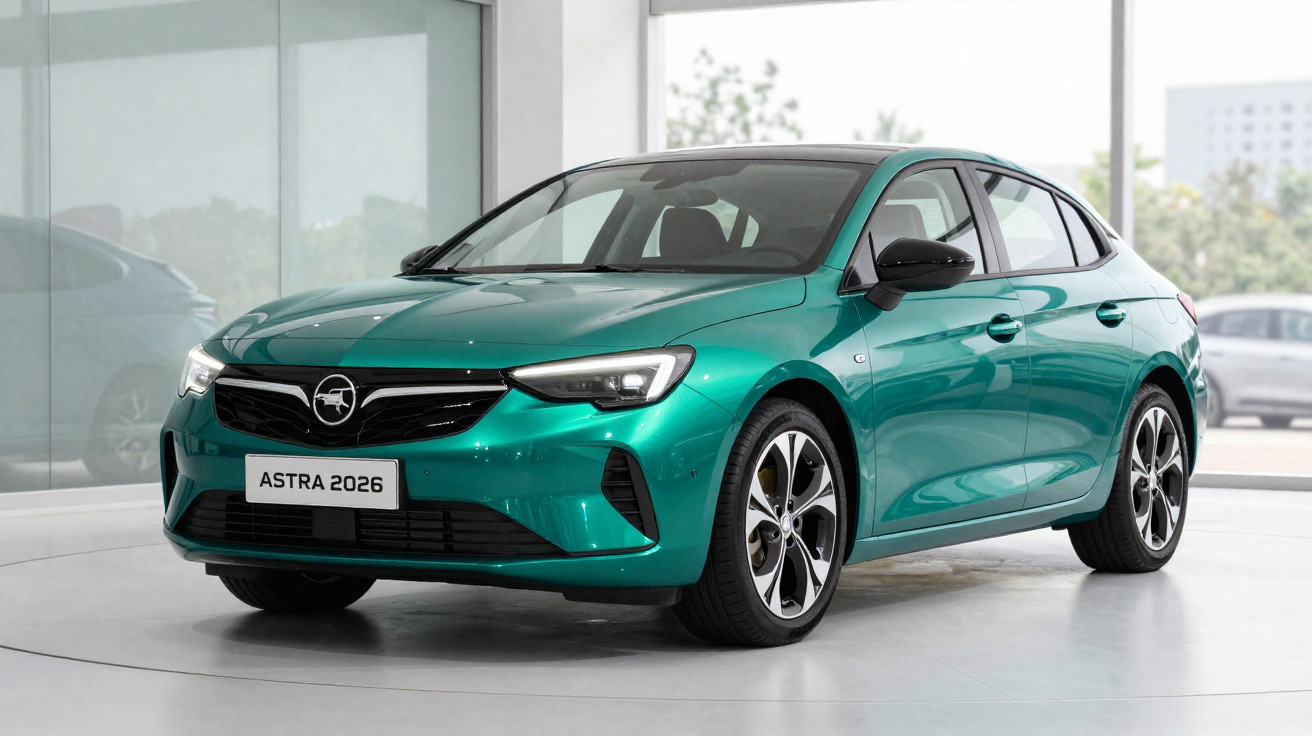
The 2026 Opel Astra has not undergone any substantial changes, but the updates it has received are all for the better.
‘If it isn’t broken, don’t fix it’ appears to have been Opel’s guiding principle for this Astra update. Very little has changed, and the revisions can be counted on one hand.
There have been a few exterior tweaks, while the cabin has received several improvements, as has the engine range, which still provides choices for every preference and budget. Rather than being a drawback, these limited changes mean that, in my view, the model remains instantly recognisable as an Astra.
“Light is the new chrome”
“Light is the new chrome.” Those were the words of Philip Röckl, product director for the new Opel Astra, during its international presentation in Croatia, which we attended.
And it could not be more accurate. Lighting is, after all, the area in which the 2026 Opel Astra has changed most. While the familiar profile and rear end remain unchanged, the front is where the key revisions are concentrated.
The Opel Vizor - the black panel linking the headlamps - now incorporates a new light signature, centred on the ‘Blitz’, which is backlit on every version. It is one of the latest trends in the motor industry, already adopted by models such as the Volkswagen Golf and its Peugeot 308 cousin. The Astra stands apart, however, because its badge remains illuminated both during the day and at night.
The lighting units themselves have also been revised. As standard, the German model replaces its previous LED reflectors with projectors, while the optional Intelli-Lux LED Matrix headlights now contain more than 50,000 elements - compared with ‘just’ 168 previously - substantially improving visibility when driving at night. They turn night into day.
Interior changes are subtle
The updates inside the cabin are more restrained, even though improvements have also been made here. The main one concerns the centre console, which has swapped its gloss-black finish for matt grey. It may sound insignificant, but it should conceal signs of wear, including fingerprints and scratches, far more effectively.
On the safety front, and in line with increasingly demanding European regulations, the A-pillar now incorporates a driver-recognition system designed to ensure the driver keeps their attention on the road.
The biggest changes are beneath the surface
It was on the road that I spent the most time with the 2026 Opel Astra. And it is in the powertrain line-up that the most significant changes can be found.
The German model continues to stand out by offering something for everyone: petrol, diesel, plug-in hybrid and fully electric versions. In the Astra Electric, battery capacity rises from 54 kWh to 58 kWh, increasing maximum WLTP range to 454 km, an additional 35 km over the previous figure.
For this first drive, however, I spent more time in the entry-level Hybrid 145 powertrain, introduced last year. It pairs the 1.2 Turbo petrol engine with a small electric motor (21 kW or 29 hp) and a six-speed automatic gearbox. Despite its name, it is a 48 V mild hybrid, and it differs from the former non-electrified 1.2 Turbo units (110 hp and 130 hp) by using a timing chain rather than an oil-bathed belt.
This is a newer, more sophisticated system, delivering a greater effect on fuel savings than other mild-hybrid systems and narrowing the gap to genuine full hybrids in terms of fuel economy.
Opel says the greatest savings will be felt in urban driving, where the electric motor assists when pulling away and accelerating. At low speeds, the brand states that it is possible to cover up to 1 km in electric mode, or up to 50% of the total distance in town, using every deceleration and braking phase to recharge the small 48 V battery, which has a capacity of only 0.84 kWh.
During this first drive, on a mixed route of just over 100 km on Croatian roads, I even recorded an average below the official figure: 4.8 l/100 km, which is 0.1 l/100 km less than claimed. That is very good for a petrol engine. A longer test in Portugal will be needed for a definitive verdict, but I have little doubt that real-world consumption should not differ greatly from the official figures.
French platform, German genes
Although the Opel Astra shares its technical platform with its French Peugeot 308 cousin, it is clear from behind the wheel that this model has attended German school. In other words, the suspension is never uncomfortable, but its slightly firmer set-up gives it better control over body movements.
When driven more enthusiastically, this makes the 2026 Astra feel more planted on the tarmac and more stable. The 18-inch wheels and lower-profile tyres help deliver that additional precision, while also contributing to more communicative steering.
Of course, the Opel Astra is not a sports car, which is why it finds its sweet spot at more restrained speeds.
Available to order
The 2026 Opel Astra arrives in Portugal with prices starting at €30,990, while the Sports Tourer estate version is available from €32,090. See the prices for the full range:
Comments
No comments yet. Be the first to comment!
Leave a Comment