
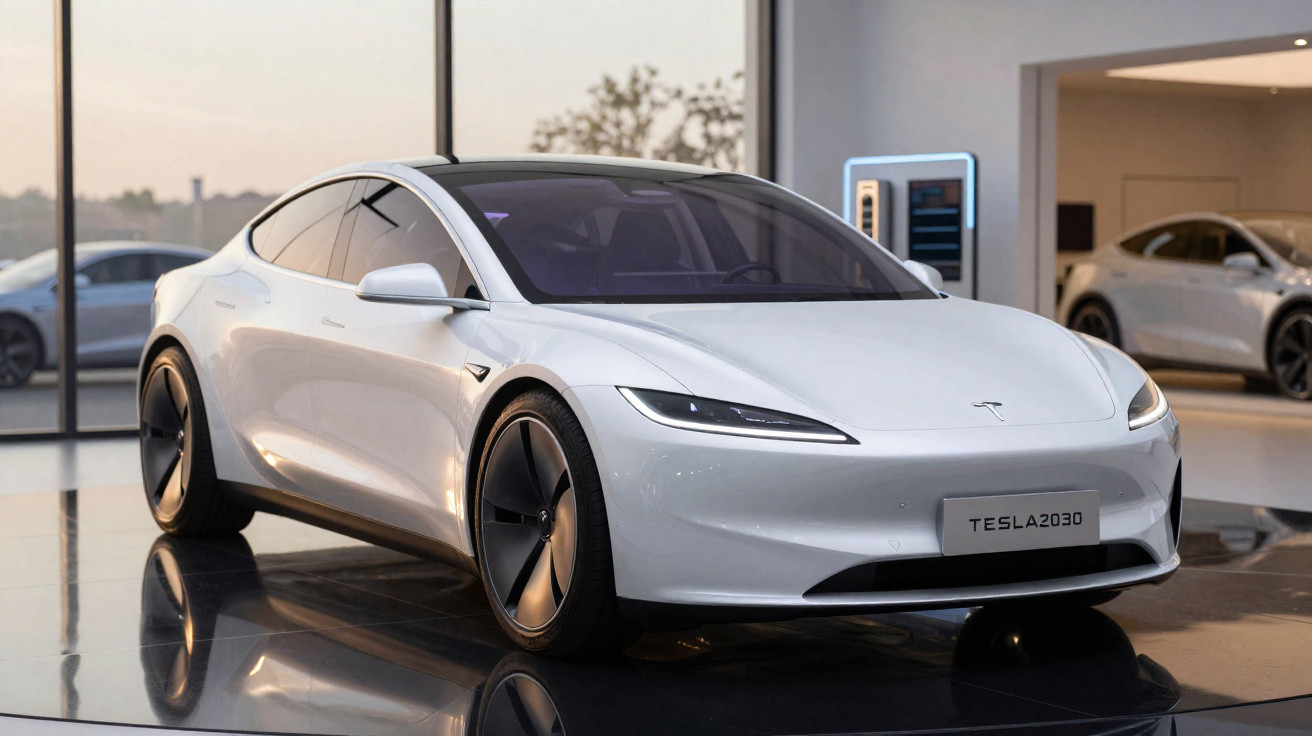
In 2020, at Battery Day, Elon Musk first spoke of Tesla’s ambition to sell 20 million vehicles a year by 2030. It was a brief, hurried remark that almost went unnoticed and sounded more like a gaffe.
After all, 20 million units a year is twice as many as Toyota, the world’s largest automotive group, sells. How could Tesla, which was then preparing to reach 500,000 annual units, make such an enormous leap within a decade?
Tesla’s 20 million vehicles-a-year ambition
Yet it was not a mistake. Musk repeated and reinforced the message on several occasions, including as recently as last year. As excessive as the ambition seemed, it was not entirely without a basis.
Tesla’s growth in recent years, particularly from 2020 to 2023, had been spectacular: rising from almost half a million vehicles to 1.8 million in four years is an impressive achievement in itself. It was all the more notable because it happened during a pandemic and the logistics crisis that followed.
Musk’s own forecast that Tesla could grow by 50% every year until it reached 20 million vehicles annually appeared to be within reach. The plan relied on introducing a more affordable model - nicknamed the Model 2 - which, together with a second vehicle based on the same platform, would raise Tesla sales by five million units a year. That figure alone is extraordinarily high, if not almost impossible: the Model Y was the world’s best-selling car in 2023 and “only” reached 1.23 million units.
Even allowing for these new, more affordable models, alongside sales of the current range and the Cybertruck, even the most optimistic projections cannot reach… 10 million units. Achieving 20 million units would require far more models and entry into additional high-volume markets, such as India.
Reality
Reality, however, has now dealt a decisive blow to Tesla’s ambition of selling 20 million vehicles a year. The first quarter of 2024 was far from positive for the American manufacturer, which recorded its first sales decline in many years (-8.5% compared with the first quarter of 2023).
There is little to suggest that this situation will change in the near term. Tesla now faces considerably more competition than before, particularly in China, while demand for electric cars is slowing in several key regions.
Tesla’s more ambiguous objective
Perhaps in response to this rapidly shifting environment, the $25,000 electric car, the so-called “Model 2”, appears to have been abandoned. Elon Musk chose instead to focus Tesla’s efforts on developing a robotaxi, due to be unveiled in August. However, it will not have anything close to the same volume expectations as the “Model 2”, although it is expected to inherit some of its technical features.
Perhaps for all these reasons, and possibly others, Tesla’s 2023 Impact Report dropped the target of 20 million cars a year, unlike the 2021 and 2022 reports. The goal is now less specific, as the report states:
“To fulfil our mission, we must make products that are much better than fossil fuel alternatives in every way, source and manufacture them as sustainably as possible and sell as many as we can.”
- Tesla, 2023 Impact Report

Comments
No comments yet. Be the first to comment!
Leave a Comment