
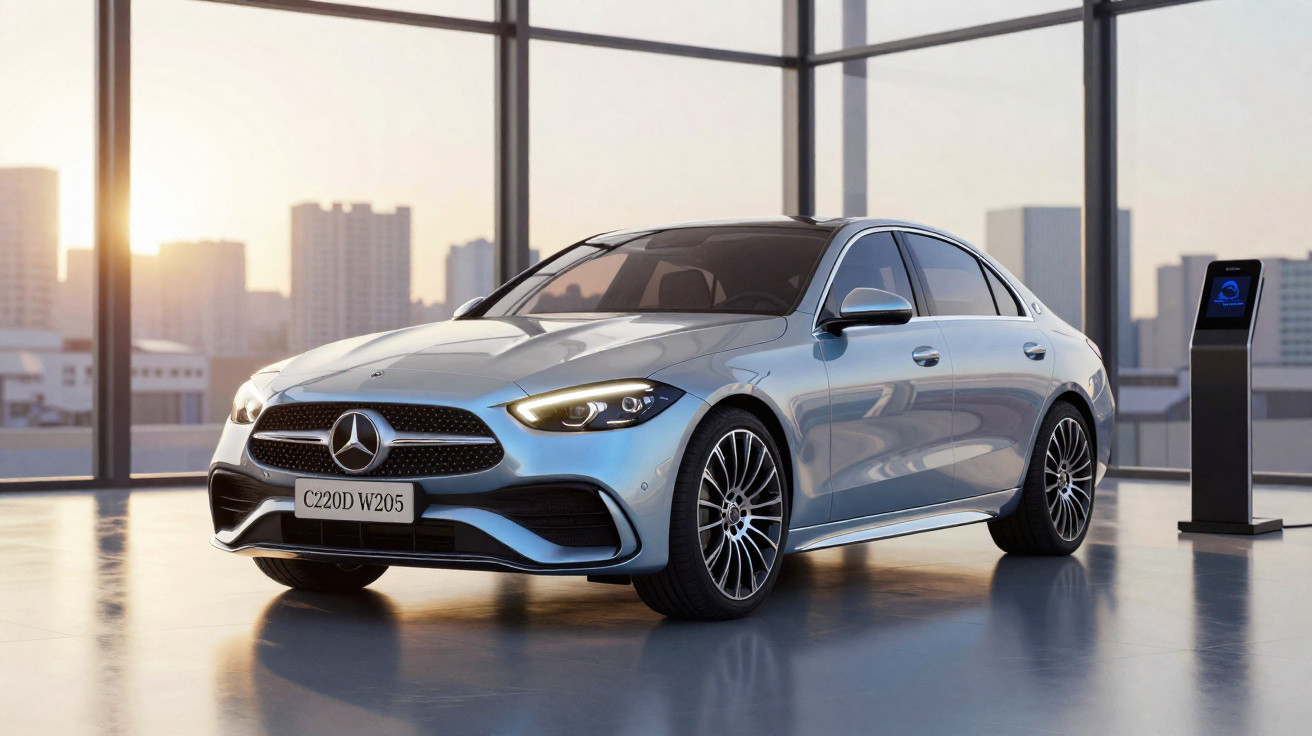
Comfortable, safe and prestigious. The Mercedes-Benz C-Class 220 d (W 205) remains highly sought after.
When the Mercedes-Benz C-Class (W 205) arrived in 2014, it looked more like a scaled-down S-Class than ever before, particularly in terms of styling. This was intentional: Mercedes wanted to link the image of its flagship to one of its best-selling models.
The changes went beyond appearance. This generation introduced a new rear-wheel-drive technical platform made from aluminium and steel, designed to underpin larger models, and its benefits were evident on the road. In one of the market's most competitive segments, the C-Class became more stable, more comfortable and more like a “big car”.
Within the W 205 range, the C 220 d Estate established itself as one of the most popular versions: balanced, efficient and free from unnecessary excess. It was an obvious choice in Portugal for many years, and the same qualities continue to make it appealing on the used market today.
On Piscapisca.pt, there are more than 400 examples advertised, with prices ranging from €17,000 to €37,000 depending on year, engine and equipment. In this buying guide, we cover everything you need to know before purchasing a used Mercedes-Benz C-Class 220 d.
Welcome to another Used Car of the Week from Razão Automóvel, supported by Piscapisca.pt.
A smaller Mercedes-Benz S-Class on the outside
As mentioned, the W 205 C-Class design followed a clear objective. Its grille, light signature, proportions and even the way it sits on the road were intended to bring it closer to the S-Class.
It is larger than its predecessor in every dimension. This is especially apparent in side view, where the car looks more planted and mature.
On the used market, AMG Line versions are the most desirable because of their sportier looks, although this does not bring only advantages. Larger wheels and firmer suspension do not necessarily make the car better suited to daily use.
Mid-range versions still deliver a sense of prestige without compromising comfort, two characteristics that are highly valued in this segment.
A major step forward in interior design
At launch, the W 205 C-Class interior put considerable pressure on its long-standing BMW 3 Series, Audi A4 and Volvo V60 rivals. This was less about cabin space or perceived quality, and more about its presentation and chosen design.
Material quality is consistently good, including away from the most visible areas, and Mercedes made a clear effort to make the car feel more expensive than it actually was. The metallic air vents, controls, buttons and LED lighting layout all contribute to an environment that continues to age better than many direct competitors.
Pre-facelift versions have a notably dated infotainment system. Screen resolution, together with the lack of Apple CarPlay and Android Auto, reveals the W 205's age compared with current Mercedes models. However, aftermarket solutions are now available to update the system.
In terms of cabin wear, cars with nappa leather can be expected to show signs of use from 200,000 kilometres onwards, particularly on the driver's seat. The rest of the interior stands up well over time, apart from piano-black centre consoles.
According to data from MotorCV, a consultancy and Piscapisca.pt partner, the W 205 was subject to several manufacturer recall campaigns, some relating to interior quality.
The German brand's quality standards are extremely high, so it has always chosen to call cars back to dealers whenever there was any doubt. In some cases, this was for issues reported in only a few dozen examples among the many thousands produced.
MotorCV's full report for the Portuguese market is available via the link below:
Rear-seat space is not among the segment's best, especially for taller adults, but it is adequate. The boot, at around 480 litres, performs its role without significant limitations.
The driving position is comfortable, the seats are well designed and the ergonomics are generally well resolved. There are also a great many used examples available with different configurations.
Mercedes-Benz C-Class 220 d: comfort takes priority on the road
The Mercedes-Benz C 220 d was not developed to be the most engaging car in its segment, but in this W 205 generation it came very close to the benchmark, the BMW 320d. When priorities had to be set, Mercedes engineers favoured comfort, stability and ease of use.
Pre-facelift models use the familiar OM 651 engine, a 2.1-litre four-cylinder diesel producing 170 hp. From 2018 onwards, models received the more modern 2.0-litre OM 654 with 194 hp. Both provide abundant torque, more than adequate performance and power delivery well suited to the car's character.
Fuel consumption is genuinely very low. It is one of the most efficient and capable engines of its generation. Mercedes-Benz engineers also carried out extensive work to suppress diesel noise, which only becomes more noticeable when the engine is cold.
The C-Class is in its element on the motorway. It is quiet, stable and comfortable, particularly in automatic versions. If possible, choose an automatic gearbox and you will not regret it.
Prices reflect strong demand
In Portugal, the C-Class 220 d remains in high demand on the used market, and this is reflected in asking prices. The oldest 2014 and 2015 cars start at around €17,000 to €18,000, usually with high mileages and simpler equipment levels.
The most appealing examples, with a full history, automatic gearbox and a good equipment level, are priced between €20,000 and €25,000. Post-facelift versions, with the OM 654 engine and lower mileage, can easily exceed €30,000. It is not cheap, but neither is it a car that depreciates quickly.
This graph supplied by MotorCV, using data for the Portuguese market, shows the price development of this model at the time this article was written:
Low consumption and predictable servicing
Real-world fuel economy is one of the C 220 d's strongest points. In mixed driving, averages between 4.5 l/100 km and 5.5 l/100 km are entirely achievable, with motorway and long-distance journeys standing out in particular.
Servicing follows the pattern expected of a modern premium model: it is not inexpensive, but it is predictable. On the Piscapisca.pt platform, certified versions stand out, providing an additional measure of confidence when buying used.
It is essential to check the service history, particularly on cars with an automatic gearbox, and to confirm that every technical campaign has been completed. Road tax and insurance costs remain within the expected range for a diesel in this segment.
Our choice
The most sensible choice is a car built from 2018 onwards, with the OM 654 engine, automatic gearbox and a balanced equipment level. These are more efficient, more refined and more up to date technologically.
For buyers looking to maximise value, a well-maintained 2016 or 2017 C 220 d with a full history remains an excellent option, provided its price reflects its age and mileage.
Now that you know everything you need about this model, all that remains is to find the best deal:
Comments
No comments yet. Be the first to comment!
Leave a Comment