
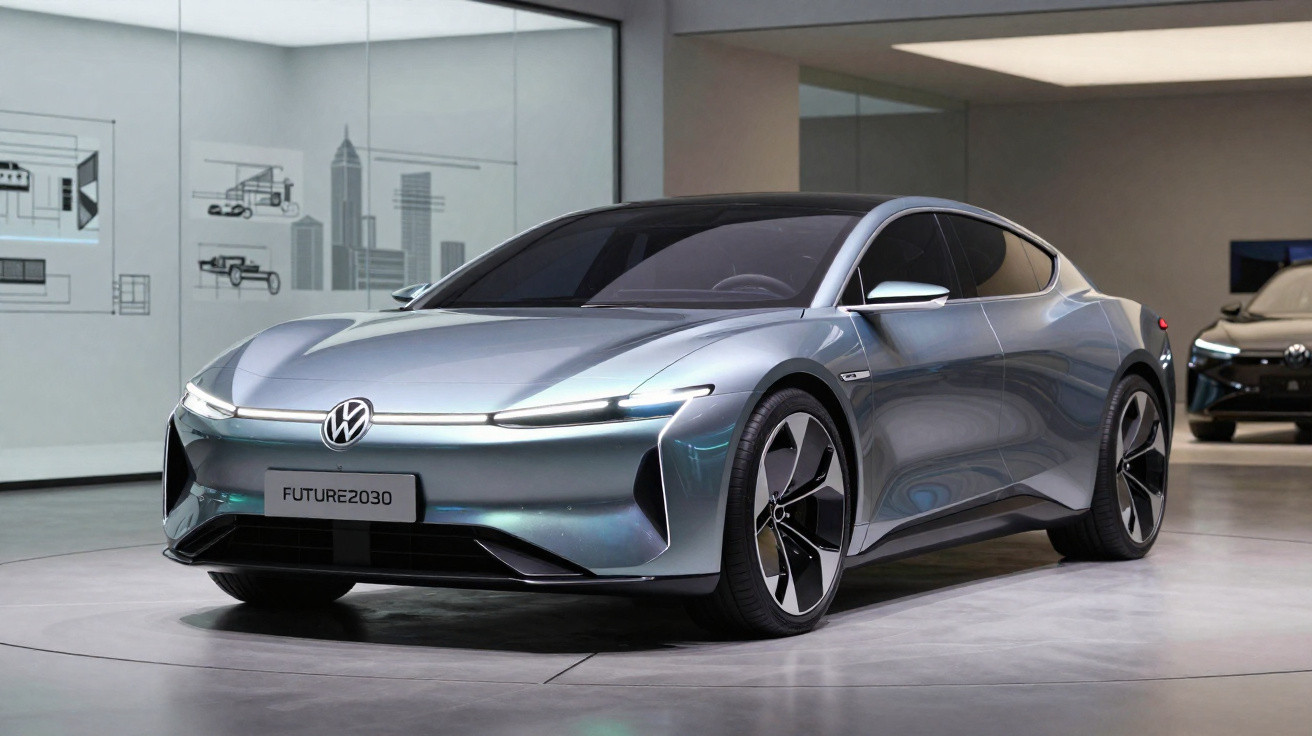
The Volkswagen Group supervisory board has unanimously approved the Future Plan 2030, which the company describes as the most far-reaching transformation programme in its history. The plan means fewer models, fewer variants, lower production capacity and a smaller workforce.
It brings several months of internal debate to a close and sets out 12 initiatives designed to cut costs, simplify the Group’s structure and improve profitability. Although some of the measures emerged in recent weeks, they now have the required approval to proceed.
Among them is a further reduction of around 50,000 jobs worldwide, including management roles. This figure is in addition to roughly 50,000 positions already covered by existing reduction programmes, taking the potential total to close to 100,000.
Up to half of Volkswagen Group models to be phased out
One of the most significant changes will be felt directly by customers. By 2035, the Volkswagen Group aims to cut its model range by up to 50% and reduce the complexity of its offering by approximately 75%.
In practical terms, this will mean not only fewer models, but also fewer versions and equipment options. The intention is to raise production volumes for each model, make better use of economies of scale and focus investment on the products regarded as the most important and profitable.
The Volkswagen Group also intends to standardise platforms, electronic architectures, driver-assistance systems and software, removing parallel structures wherever possible.
Its financial target is an operating margin of 9% by 2030, alongside annual sales of nine million vehicles. The Future Plan 2030 also includes €135 billion for investment and research and development between 2027 and 2031.
Four factories remain at risk
The Volkswagen Group acknowledges that its current annual production capacity exceeds demand by more than 500,000 units. It intends to present a new concept for its European manufacturing structure by June 2027.
Within that concept, the future of the Emden, Zwickau, Hanover and Neckarsulm plants remains unresolved. The Group accepts that it cannot guarantee competitively viable future production allocations for these sites between 2031 and 2034, and is also considering alternative uses.
The plan additionally calls for simpler management structures and fewer layers of hierarchy, together with a cross-functional efficiency programme covering development, procurement, manufacturing, quality, sales and administration.
In North America, the strategy will involve a greater focus on the most profitable segments. In China, the Volkswagen Group will adjust to the market’s new growth expectations and strengthen exports to other countries.
Its business portfolio and shareholdings will also be reviewed. The aim is to reduce them by around one-third, through the sale or restructuring of activities not considered strategic to the automotive business.
Months of deadlock
Approval of the Future Plan 2030 was far from assured. Worker representatives hold half the seats on the supervisory board and had opposed earlier versions of the plan.
The state of Lower Saxony, which owns 11.8% of Volkswagen AG’s share capital and holds 20% of voting rights, had also challenged some of the proposed measures. In July, an earlier proposal was rejected by the supervisory board.
Daniela Cavallo, chair of the Volkswagen Group General Works Council and Works Council, accepted that the Future Plan is needed to steer the company through the next decade, while stressing that the transformation cannot be achieved solely at the expense of employees.
Future Plan 2030 implementation begins immediately
Following approval by the supervisory board, the Future Plan 2030 now moves into a new implementation phase. Measures that are already under way will continue, while preparations for the remaining initiatives will begin at once.
Where agreements with employee representatives are required, the relevant brands and subsidiaries will have to open negotiations. The supervisory board will continue to monitor delivery of the programme.
Comments
No comments yet. Be the first to comment!
Leave a Comment