
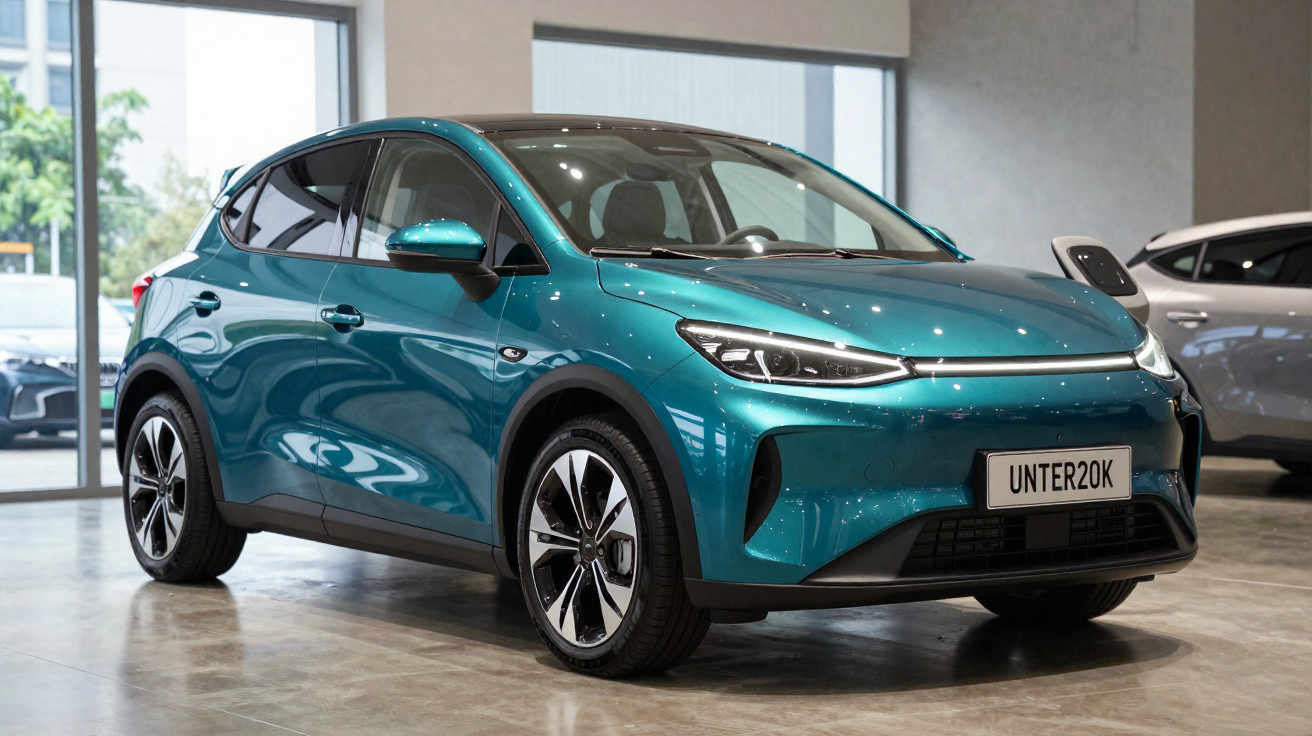
We can all agree on one thing: €20,000 no longer buys what it did a few years ago. There is good news, though: the number of options below this threshold has grown again this year, and by no small margin.
There are compact city cars, superminis capable of serving as a family’s only vehicle, fully electric models, LPG-powered cars and even an SUV - and it is not hard to guess which one.
We focused primarily on new cars costing less than €20,000, although some promotional offers can bring prices down considerably. Before looking at the highlights, we have gathered every model in a table, arranged from the least expensive to the most expensive.
If we looked solely at list prices, excluding promotions and special conditions, the Dacia Sandero would top this list. FIAT’s current offers, however, change the picture. With that clarification made, here is the complete list.
As we are not keen on asterisks, here is an explanation of the first one straight away. This is a promotional price that depends on finance, a part exchange or other requirements. Prices and promotions change regularly, so they should always be checked on the manufacturer’s website or with a dealer.
The second asterisk relates to the Renault Twingo E-Tech. It is advertised from €19,490, but the current RRP stated by the manufacturer, including administration and delivery costs, is €20,680.64. We have included it because its advertised range-entry price remains below €20,000.
A third asterisk could also be added. Every price shown is for the entry-level version, which is rarely the one buyers choose. Moving up one trim level usually adds little to the monthly payment when finance is taken out, while significantly increasing the available equipment.
With that in mind, if price is the deciding factor, it is worth checking manufacturers’ websites for the strongest offer. If it is not, and because there is no single answer for everyone, we have set out a range of scenarios. Used cars should also be considered.
The used and nearly-new market is also well worth exploring. This is where the overwhelming majority of private buyers find their next car:
Best value: Dacia Sandero
From €14,950
If we had to recommend a car on price alone, the Sandero would be our starting point. Fortunately, competitive pricing is far from its only strength.
It is a proper B-segment car, with five genuinely usable seats, enough room for a small family and a TCe 100 engine that provides more than enough power to avoid restricting its use to town driving. It also costs almost €5,000 less than this article’s upper limit.
It is also offered with a bi-fuel petrol and LPG powertrain. In other words, it can be fuelled with LPG, which costs around 50% less than petrol. Your wallet will appreciate it.
Alternatives: the Citroën C3 provides greater comfort and a more crossover-like appearance; the Hyundai i20 is more refined and comes with a seven-year warranty, although its sub-€20,000 price currently depends on a promotion; the Opel Corsa also stands out on price, particularly with an offer in place; and the SEAT Ibiza is among the most well-rounded choices for anyone seeking a supermini that can do everything.
Best city car: FIAT Pandina
RRP of €19,593; currently from €12,900 on promotion
The Pandina still does what the Panda has always done so well: it is compact on the outside yet remarkably practical within. Measuring just 3.69 metres long, it has five seats, good visibility and a very straightforward layout. It is precisely the sort of car that suits anyone whose days involve narrow streets, tight parking spaces and short journeys.
It is economical, too. The current generation is available only with a mild-hybrid powertrain. It is neither the most refined car on this list nor the one we would choose for frequent motorway journeys. As a city car, though, it remains excellent. Ask an Italian: it continues to lead sales in its home country, where it is regarded as an institution on wheels.
Alternatives: the Kia Picanto is more modern and refined; the Dacia Spring is even better suited to urban driving and, as an electric car, offers very low running costs for those able to charge at home.
Saving with style: FIAT Grande Panda
Currently from €14,900 on promotion
This is the more emotional choice, but it does not demand a premium for it. The Grande Panda is probably one of the most appealing cars at its price point. It nods to the original Panda without resorting to an overly obvious retro treatment and, at four metres long, remains compact enough for town use.
Yet it is not merely a stylish city car. It is substantially larger and more versatile than the Pandina, and is available with petrol, mild-hybrid or electric power. The current promotion brings the petrol version down to €14,900 and the hybrid to €16,900; the electric model is already above €20,000.
It could easily serve as the only car for a small family. The “evergreen” FIAT 500 may be even more appealing, but it is also more limited, especially for family use.
Alternatives: every car listed in the table, from the Peugeot 208 to the Hyundai i20, with the SEAT Ibiza also included.
Best electric car: Citroën ë-C3
€19,990 RRP; currently from €17,990
This is where the extent of the market’s change is most apparent. The urban-range ë-C3 has 113 hp, a 30 kWh LFP battery and a claimed 212 km WLTP range. That is not a great deal of range, but this is a genuine five-seat B-segment car: comfortable and capable of working as an ordinary everyday vehicle.
That is why it would be our first choice among electric cars below €20,000 for anyone seeking a single-car solution.
Alternatives: the Leapmotor T03 costs €18,500 and delivers 265 km on the WLTP cycle, so it offers more range per euro, although it is smaller; the Dacia Spring costs less and is ideal as a second car, but has less space; the Renault Twingo E-Tech is probably the most interesting option for predominantly urban use, and it is also almost impossible not to like its design.
Best for a family: Dacia Jogger
From €18,508
Some choices in this guide are difficult. This is not one of them. The Jogger still offers an amount of space that is hard to find for less than €20,000. The five-seat Essential Eco-G 120 starts at €18,508 and runs on petrol and LPG. The best bit? That is the price, full stop. No promotional asterisks.
It is not especially luxurious or sophisticated. But where there are children, pushchairs, bicycles, luggage and everything else that normally comes with family life, it is probably the most sensible purchase on this list.
Alternatives: the Dacia Logan, from €17,150, provides plenty of space for even less money, although its saloon body style is less appealing to many buyers. The Citroën C3 Aircross is more modern, more comfortable and SUV-shaped, and currently falls below €20,000 thanks to a Citroën Store promotion.
Best SUV: Dacia Duster
From €19,900
Even right at the budget limit, the Duster remains a difficult proposition to match. It is a sales success because it covers the essentials in terms of equipment, space, versatility and performance. Material quality is hardly an issue: the plastics are hard, admittedly, but the assembly quality leaves little to criticise.
For €19,900, the Essential Eco-G 120 is available. It is the simplest version in the range, yet it still provides the space, ground clearance and versatility that have made the Duster one of Dacia’s biggest successes. Would this be the version we would recommend? Probably not. The Expression costs €1,500 more and adds equipment that can easily justify the difference.
Alternative: the Citroën C3 Aircross is more focused on comfort, town driving and family use. It can also currently be bought for less than €20,000, although only through a promotional price.
Do not overlook any option
This may be the most important recommendation in this guide. If you have €20,000 to spend, there is little point restricting your search to cars with a list price starting below that amount. Instead, it is worth checking Razão Automóvel and the price currently shown on the manufacturer’s website when the time comes to buy.
To be clear, this list is not intended to choose a car for you - the answer depends on how each person will use it. We simply wanted to show what can still be bought for €20,000 and provide a starting point for the search. That is what we have done every day for almost 15 years.

Comments
No comments yet. Be the first to comment!
Leave a Comment