
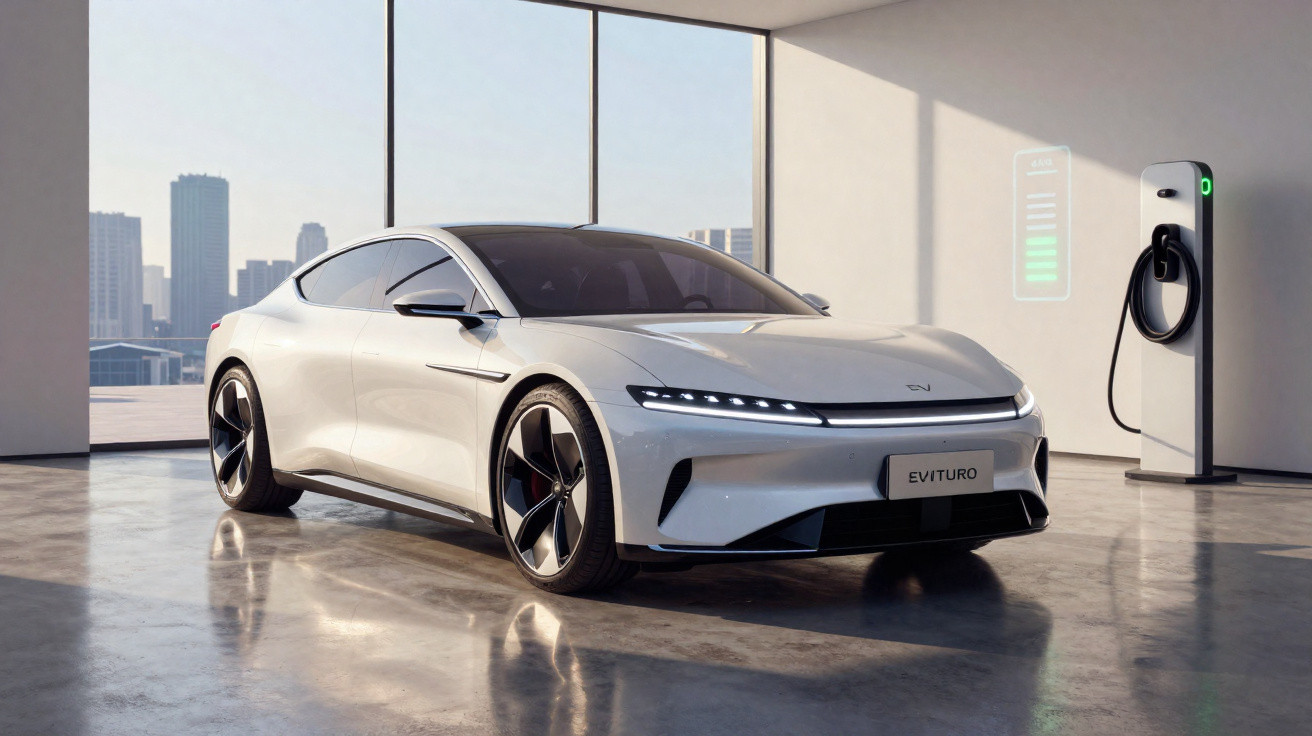
Brake lights lit up, horns began sounding and, amid the late-afternoon rush, a gleaming new electric car came silently to a halt. There was no smoke or mechanical spectacle. Just… nothing. Inside, the driver watched the battery symbol on the dashboard disappear, as though the car were quietly signing out.
He reached for his phone, equally embarrassed and alarmed. That morning, the app had said the car had “a few miles” remaining. The salesman had sold him freedom, savings and the future. Now he was trapped between a bus and a delivery van, painfully aware of every impatient stare through his rear window.
The breakdown service picked up promptly. Initially, however, it would not tow the car.
When the future stalls in the fast lane
The driver, Mark, had seemingly done everything properly. He had a new EV, a home charger, an easy commute and the quiet satisfaction of reaching tomorrow before everyone else. Yet only three weeks after buying it, his car died in traffic in a city that proudly calls itself “smart”.
Traffic flowed around him like water around a stone. Passing drivers craned to see what had gone wrong. No bonnet was raised and no steam escaped; an expensive car simply sat there, resembling a stubborn smartphone stuck at 2%. In the middle of the day, the silent failure looked almost ridiculous.
The tow-truck dispatcher was not laughing. Through a crackling phone line, they explained that their vehicles were “not authorised” to tow electric cars with a flat battery. Mark assumed it was a joke. It was not.
Accounts like Mark’s are increasingly appearing everywhere. Social media is filled with awkward posts about EVs that miscalculated a winter motorway journey, rental cars that lost charge one junction before a service station, and apps that confidently predicted range which never materialised. A Norwegian study found that drivers commonly overestimate real-world range by 20 to 30% in cold weather.
Before buying an EV, people often mocked range anxiety. Then comes the first near miss on a dark, rainy night, and it no longer seems funny. That narrow blue line on the dashboard stops looking like a clever technology feature and starts resembling a lifeline slowly being rubbed away.
For Mark, the humiliation was worse than the disruption. The recovery operator told him that its standard vehicles were neither trained nor insured to handle an EV that had run out of charge on a live road. They cited battery safety, high-voltage systems and “operational risk”. Those words felt remote and bureaucratic while his hazard lights flashed like a sign of confession.
The reality is more complex than one poor decision made from a call-centre script. Many roadside-assistance providers developed their procedures for an age of petrol vapour and overheated radiators, and EVs still do not sit comfortably within those processes. A flat electric car is not equivalent to a failed alternator or blown gasket. It is a 400-volt computer on wheels, with a battery heavy enough to damage a tow bed if it is handled incorrectly.
Some recovery vehicles cannot safely lift particular EV models from one end without risking harm to the battery pack. Others require dedicated wheel dollies to prevent a locked motor from being dragged. Beneath the corporate terminology lies a straightforward reality: the services designed to recover motorists are still catching up with the vehicles now on the roads.
How not to end up begging a tow truck in the rain
Mark’s ordeal ended after a stressful 40 minutes. He contacted his dealer, the dealer called the recovery service, and it suddenly “found” an EV-trained truck. The space between a car’s promise and the reality of being rescued is where drivers can take practical steps to protect themselves.
The first step is unglamorous, which is precisely why it is often ignored: examine your breakdown policy as closely as a restaurant bill that seems slightly too expensive. Search for wording such as “EV-specific support”, “flat-battery callouts” and “onward mobility”, and establish whether the provider offers mobile charging or towing only. A single line in the small print may determine whether help arrives quickly or you are told to “wait while we escalate”.
With the car itself, think in terms of a safety margin rather than a precise figure. If the display shows 60 miles of range, regard it as 40 unless circumstances are ideal. Low temperatures, high speeds, heavy loads and headwinds all quietly consume those digital assurances. Spending an extra 10 minutes topping up at a charger can remove considerable stress later, even when you feel impatient and “sure it will be fine”.
There is also a more personal mental adjustment to make. Many of us spent years driving until the fuel warning light flashed furiously, then “pushing it” for another 20 kilometres, feeling both proud and reckless. EVs penalise that behaviour. They are more transparent but less forgiving. When the warning appears, you are already negotiating with physics rather than relying on a kindly fuel-tank designer.
Experienced EV drivers also share understated tactics in late-night forums and group chats. If charge falls below 15% and the next charger is not nearby, select “eco” or low-power mode. Temporarily switch off energy-hungry features, including heated seats, strong climate control and the loud playlist. Follow a lorry at a safe distance to reduce drag, slow down slightly, and monitor the projected range as it steadies.
Planning tools are useful, provided reality is allowed a say. Configure navigation to show chargers en route rather than only at your destination. Think of third-party apps and built-in maps as opinionated friends, not infallible authorities. When the next two chargers show “busy” or “limited service”, do not gamble if you can stop earlier, have a coffee and let the car take on electrons.
This does not require permanent anxiety. It means adapting to the rhythm of an EV rather than acting as if it operates exactly like the petrol cars you grew up with.
The emotional impact is where many people find it difficult, yet seldom discuss it openly. Breaking down with no battery charge can feel foolish, as though you “should have known better”. Online, it becomes a meme. In reality, it may be frightening, especially at night or when children are in the back.
One driver stranded outside Birmingham told me, looking exhausted but smiling,
“I felt like an idiot, but also like the system had lied to me. The app, the salesman, the adverts… none of them mentioned sitting for an hour on a hard shoulder arguing with a call centre about whether my car was ‘safe’ to tow.”
Underneath that anger is a simple hope: that the bright future will arrive with clearer guidance, rather than glossy promises alone.
Here are several practical checks that can make matters easier when things go wrong:
- Confirm that your insurance or breakdown policy explicitly covers EV assistance and mobile charging.
- Save the direct numbers for both the manufacturer’s assistance line and your breakdown provider.
- Keep a modest waiting kit in the boot: water, a warm layer, a power bank and a basic reflective vest.
- Find out how to activate your car’s “tow” or “transport” mode before it is ever needed.
- Ask your dealer who it actually contacts when an EV fails during a test drive.
What this one stranded car says about the road ahead
Mark eventually arrived home that evening. The EV-trained truck turned up with a driver who seemed genuinely interested, even proud, to be doing this “new tech job”. The vehicle was loaded carefully and without fuss. The dealer later performed diagnostics and attributed the incident to a software fault that had incorrectly reported the remaining range. A minor patch, a subdued apology, and the system was working again.
But the sensation of being powerless amid live traffic did not disappear after the update. It became the test Mark now applies to every future technology: what happens when it fails in an ordinary, mildly inconvenient situation? Who answers the phone? Who is first to say “we can’t help you”?
That is the element worth passing on. EVs are no longer a science-fiction concept; they are used for school runs, late-night airport collections and wet Wednesdays. More silent cars will stop on more congested roads, not because their drivers are foolish but because the supporting systems are not yet perfectly aligned. Stress, frustration and viral posts emerge in the gap between marketing and untidy everyday reality.
The positive side is that gaps create opportunities for solutions. Some recovery firms now carry portable battery packs, providing stranded EVs with enough charge to reach the next charger. Others train drivers for individual models, issue clear towing guidance and revise their policies to eliminate the first uncomfortable “we’re not authorised” response. Drivers share advice about what works. The ecosystem is changing, albeit slowly and unevenly.
Personally, moving from petrol to electric involves expectations more than cables and kilowatts. It changes how we view distance, risk and contingency plans. We are learning where the polished narrative gives way under the pressure of real life: crying toddlers, long working days or evenings when you simply forgot to plug in. On a tired Tuesday, the future can feel like just one more thing to manage.
Mark still likes his car, incidentally. He now charges it more frequently, reads the small print and jokes about “never trusting 10% again”. His worst EV day has become the story he shares with friends considering the switch. It is not intended to frighten them away, but to offer what brochures rarely provide: a slightly chaotic, entirely human account of what happens when the battery reaches zero and, briefly, everyone seems to step back.
| Key point | Detail | Why it matters to the reader |
|---|---|---|
| Check assistance cover | Read the EV clauses in your breakdown policy carefully | Avoid the initial refusal to tow experienced by Mark |
| Manage your battery buffer | Treat the displayed reserve as an estimate, not a promise | Greatly reduce the risk of running out of charge on the road |
| Prepare a “plan B” | Keep useful numbers, a waiting kit and knowledge of tow mode | Turn a potential ordeal into a manageable inconvenience |
FAQ:
- Can a breakdown service refuse to tow an electric car? Yes, some providers still do so when they lack EV training, insurance cover or appropriate equipment. That is why checking EV-specific clauses before signing a contract matters more than the glossy brochure.
- Is it dangerous to tow an electric vehicle that’s out of charge? It can be if it is done incorrectly. Many EVs must be moved on a flatbed or with their wheels lifted, to prevent damage to the motor or battery. The correct tow mode and equipment make the process safe.
- What should I do if my EV runs out of battery in traffic? Switch on the hazard lights, move to a safe place if the car can still roll, then contact the manufacturer’s assistance service and your breakdown provider. Remain somewhere secure, rather than standing between moving traffic and the car, and wait for professional assistance.
- Do mobile charging trucks really exist? Yes, in certain regions. They offer a small top-up, often 5–15 miles of range, which is enough to reach the nearest public charger. Availability varies considerably by country and provider.
- How low can I safely let my EV battery go? Most manufacturers advise keeping normal use between roughly 20% and 80% for convenience and long-term battery health. You can go lower in an emergency, but depending on the final few percent every day is an invitation to stress. Let’s be honest: nobody really does that every day without giving themselves at least a small scare.


Comments
No comments yet. Be the first to comment!
Leave a Comment