
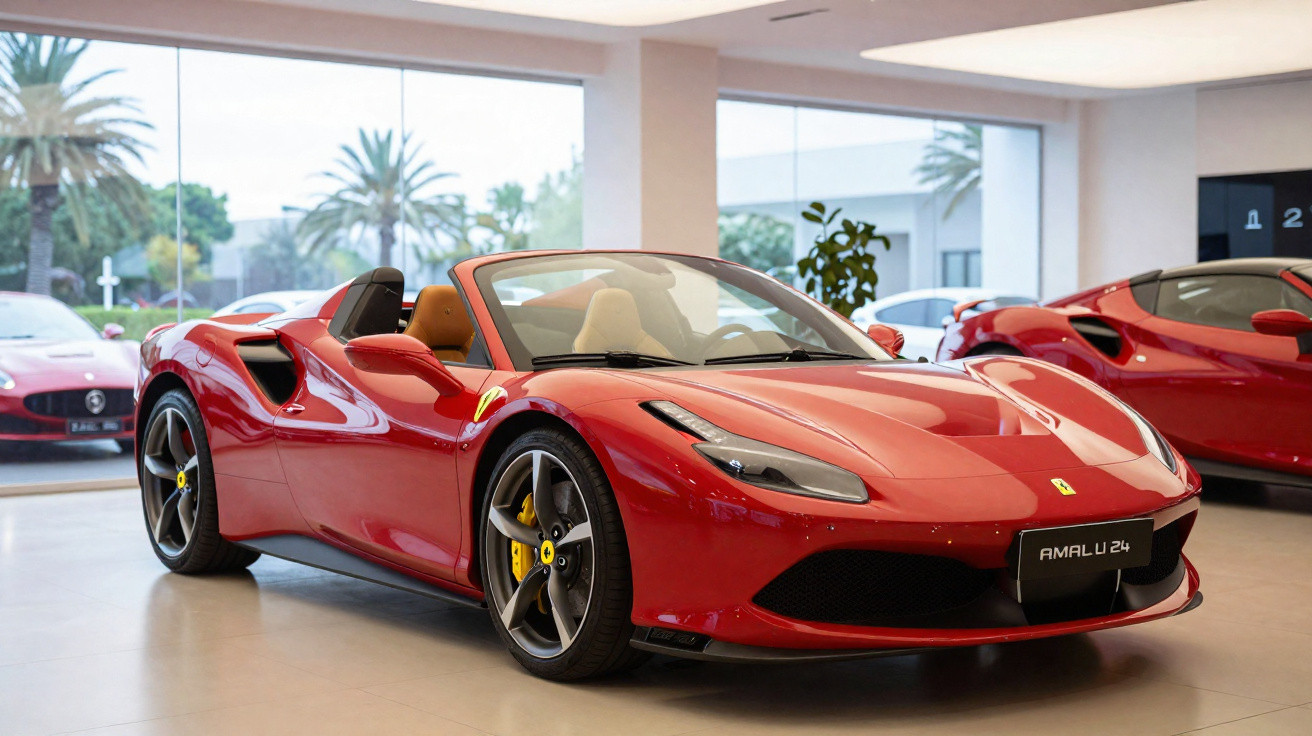
Launched in the middle of last year, the Ferrari Amalfi entered the Italian marque’s exclusive world to continue the role previously held by the Roma.
Although it wears a new name, it is based on the same foundations: the platform, chassis, engine and most of the technical solutions are carried over. Following the coupé, Ferrari has now unveiled the Ferrari Amalfi Spider, its “open-top” counterpart.
Ferrari Amalfi Spider aerodynamics and roof
Ferrari aimed to ensure that, with its roof raised, the Spider’s profile and aerodynamic properties remain as close as possible to those of the coupé.
Its automatically adjustable rear wing is a notable feature, altering its position according to road speed. Ferrari says it can produce up to an additional 110 kg of downforce at 250 km/h, while also cutting aerodynamic drag by 4%.
To provide occupants with the greatest possible comfort, the Amalfi Spider has an electrically operated wind deflector behind the rear seats, which can be used while the car is moving.
Ferrari Amalfi Spider interior
The cabin is unchanged from the coupé. Physical buttons have returned-a decision the marque is extending across its range-alongside three displays: a 15.6″ instrument screen, a 10.25″ infotainment display and an 8.8″ screen for the passenger.
Extra weight does not compromise performance
Beneath the bonnet, the Italian convertible uses the same front-mid-mounted 3.9-litre twin-turbo V8, producing 640 cv and 760 Nm of torque, paired with an eight-speed dual-clutch automatic gearbox.
Despite gaining 86 kg, taking its dry weight to 1556 kg, due to the roof and its operating mechanism, the new Ferrari Amalfi Spider matches the coupé’s figures: 3.3 seconds to reach 100 km/h and nine seconds to reach 200 km/h.
When will it arrive?
The new Ferrari Amalfi Spider is already available to order, with the first deliveries expected over the coming months. Prices have not yet been announced, although they are expected to exceed those of the coupé.
For reference, the Amalfi coupé costs 240 thousand euros in Italy, rising to 270 thousand euros or more because of Portuguese taxation. This does not include personalisation costs, which can readily add many tens of thousands of euros to the final price.
Comments
No comments yet. Be the first to comment!
Leave a Comment