
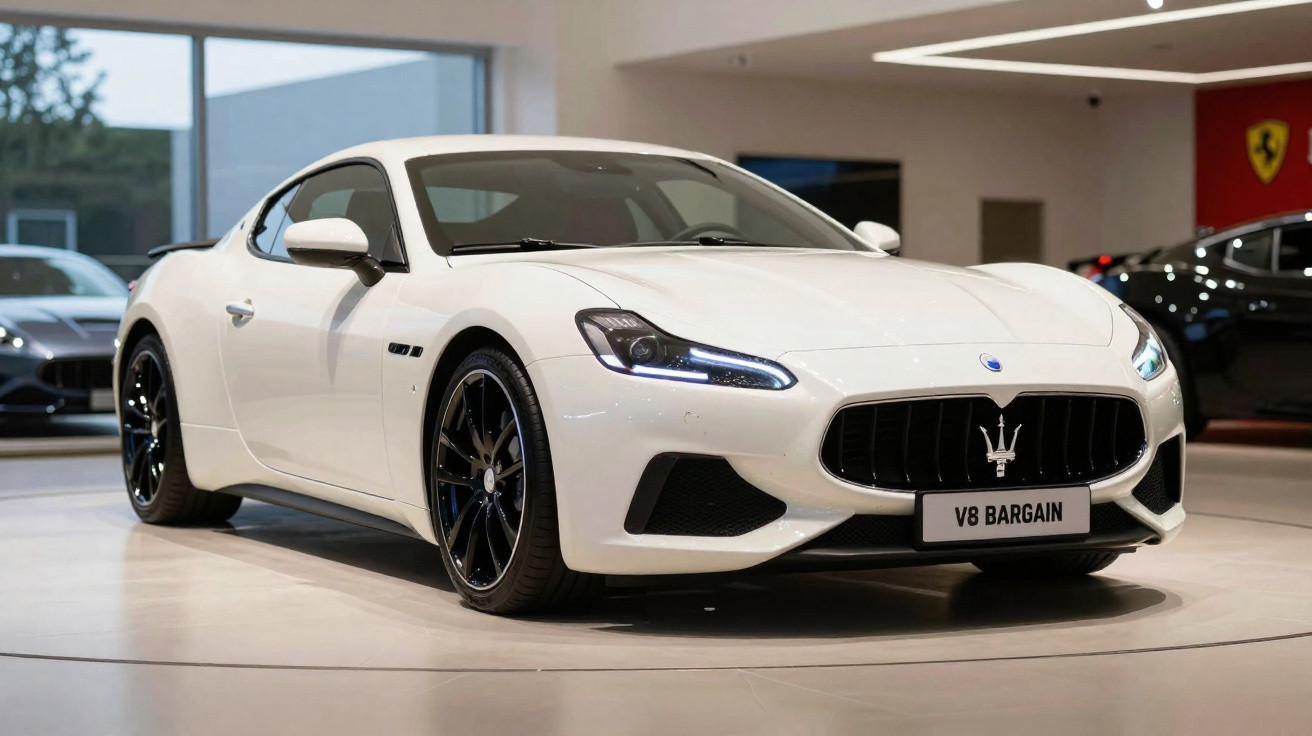
An Italian dream coupé that once carried a firmly six-figure price tag has suddenly appeared in a bracket normally occupied by family-friendly SUVs. Specifically, this is a Maserati GranTurismo with a naturally aspirated V8, currently advertised for just under €25,000 – roughly the same money as a well-equipped Dacia Duster from a showroom.
From six-figure dream car to an ‘everyman Maserati’
When the Maserati GranTurismo arrived in 2007, it was primarily aimed at the very wealthy. Depending on specification, its new price was well above €100,000. The used-car market now paints a very different picture.
The example in the advert was built in 2009 and is listed at €24,990. That puts it at approximately the price of a new, decently specified Dacia Duster from a dealer. For a car in this class, the figure seems almost unreal – particularly given what the GranTurismo represented at the time: a refined luxury coupé, Pininfarina styling and Ferrari engineering beneath the bonnet.
“A car that once belonged in the dream-car league has dropped into the price range of ordinary family SUVs – that is what makes this case so compelling.”
Pininfarina elegance: timeless rather than dated
The GranTurismo has lost remarkably little of its visual appeal. Its shape was created by the historic Pininfarina design house, which has also penned numerous Ferraris. With its long bonnet, short overhangs and wide rear end, it still looks like a classic grand tourer built to cover long distances quickly and stylishly.
This design is precisely what has allowed the Maserati to age so gracefully. While some cars from the 2000s now look decidedly old-fashioned, the GranTurismo remains modern enough to avoid the appearance of an old man’s coupé. The car being offered also has a striking colour combination: dark red paintwork, with an interior finished in a blend of beige and matching dark red. It is bolder than the usual black or grey examples, yet suits the luxurious character surprisingly well.
Original condition, not a modified project
One detail will catch the attention of enthusiasts: according to the description, the car is completely original. That is far from guaranteed with this model range. Many owners fit loud, non-approved exhaust systems or give their cars questionable tuning additions.
An unmodified example not only makes an MOT inspection easier, but should also help to keep its resale value more stable if the next owner eventually decides to sell the GranTurismo.
Maranello heart: the 4.2-litre Ferrari V8
Things become genuinely interesting beneath the bonnet. It houses a naturally aspirated 4.2-litre V8 developed in collaboration with Ferrari. The specification sheet lists 405 PS and 460 Newton metres of torque. There is no twin-turbo shortcut and no downsizing here, just a traditional high-revving engine with a soundtrack capable of producing goosebumps.
Later versions came with a 4.7-litre engine and slightly more power, but the 4.2-litre is also regarded as characterful and, at the same time, surprisingly durable. Many examples cover six-figure mileages without trouble – 100,000 or even 200,000 kilometres are not unusual, provided servicing and oil changes have been taken seriously.
“Anyone buying this car is paying for more than a badge – they are getting a genuine Ferrari-related V8 of a kind that will scarcely exist in this form much longer.”
Automatic gearbox rather than a temperamental transmission
Initially, Maserati fitted a sequential gearbox that does not enjoy the best reputation. It could be jerky particularly in urban traffic, and isolated cases of expensive failures occurred.
From 2009, Maserati switched to a conventional six-speed ZF automatic transmission. It is considered substantially more reliable and better suited to the GranTurismo’s character. This later gearbox is fitted to the advertised car – a clear advantage for anyone who does not want their V8 ownership experience to begin with a costly transmission failure.
The catch: import, MOT and running costs
Why is this car so inexpensive? Part of the answer lies in its history. The Maserati was first registered in Dubai before later being imported to Germany. According to the dealer, the import process has been completed and taxes paid, but the car has neither a German MOT nor registration.
That does not necessarily have to be as dramatic as it sounds, though it does mean additional work. The buyer must arrange the technical inspection and register the car themselves. The dealer argues that this is exactly why the price sits €5,000 to €7,000 below the usual German market level. At least four new tyres are included, and delivery is also available.
- Price: €24,990
- Year: 2009
- Mileage: 99,000 kilometres
- Engine: naturally aspirated 4.2-litre V8, 405 PS
- Gearbox: six-speed ZF automatic
- Status: imported vehicle, no MOT, no German registration
- Extras: four new tyres, delivery available
Do not underestimate maintenance costs
Anyone already imagining swapping a Dacia key for a Maserati key should assess one point with complete realism: running costs. A used price comparable with an SUV does not turn an Italian luxury sports coupé into a cheap car to own.
Insurance, 20-inch tyres, brakes, routine servicing and the engine in particular can generate substantial bills if anything goes wrong. A major service at a marque specialist can quickly run to a four-figure sum. Even smaller items, such as parking sensors, xenon headlamps or suspension components, cost far more than their equivalents on typical everyday cars.
Who this affordable Maserati GranTurismo really suits
From a purely financial standpoint, this type of car makes sense for very few people. Anyone simply seeking a dependable everyday vehicle would be better served by a new compact SUV. The GranTurismo belongs in an entirely different category: it is aimed at enthusiasts who place emotion above reason.
This offer is particularly appealing to three groups:
- Marque fans who have wanted a Maserati for years but were previously priced out by its new cost.
- Collectors on a limited budget who value unmodified, original-condition cars and may hope for appreciation.
- DIY owners or technically minded buyers who can undertake smaller jobs themselves and reduce costs as a result.
Those living in an area with unrestricted motorways gain an additional benefit: a GranTurismo feels considerably more at home cruising at 180 km/h than a compact SUV. The V8 turns over calmly, the suspension remains composed, and the cabin is filled more by a muted rumble than an excitable howl.
What prospective buyers should inspect before buying
Before signing a purchase agreement, a thorough inspection is worthwhile. Standard checks include corrosion, accident damage and a complete service history. With an imported vehicle, there is also the question of whether its equipment is suitable for the European market, including the lighting system and emissions standard.
An independent inspection, or at least an assessment by a Maserati or Ferrari specialist mechanic, makes sense. They will know the typical weak points, including suspension components, electronics and the cooling system. A brief cold-start sound check can reveal a great deal about the engine: an uneven idle, timing-chain rattle or excessive smoke are warning signs.
Another frequently overlooked consideration is the garage. A coupé like this is best kept dry and protected, ideally with a battery conditioner. Owners who use the car only occasionally can significantly extend the life of many components this way.
Why deals like this are likely to become rarer
The combination of a large-capacity naturally aspirated V8, classic grand-tourer bodywork and comparatively low prices belongs to the current transitional era. The car industry is turning towards electrification and downsizing, while tighter emissions standards make large-capacity combustion engines increasingly difficult.
This creates two effects. On the one hand, prices for older combustion-engine cars fall because many buyers would rather invest directly in modern technology. On the other, enthusiasts are increasingly recognising that engines like these are disappearing. Over the long term, that could result in a degree of value stability – provided the car remains well maintained and reasonably original.
Anyone buying a former luxury coupé with a Ferrari V8 today for the price of a new Dacia is therefore making a clear bet: on emotion, on their own taste in cars and, to some extent, on the future of classic sports cars.
Comments
No comments yet. Be the first to comment!
Leave a Comment