
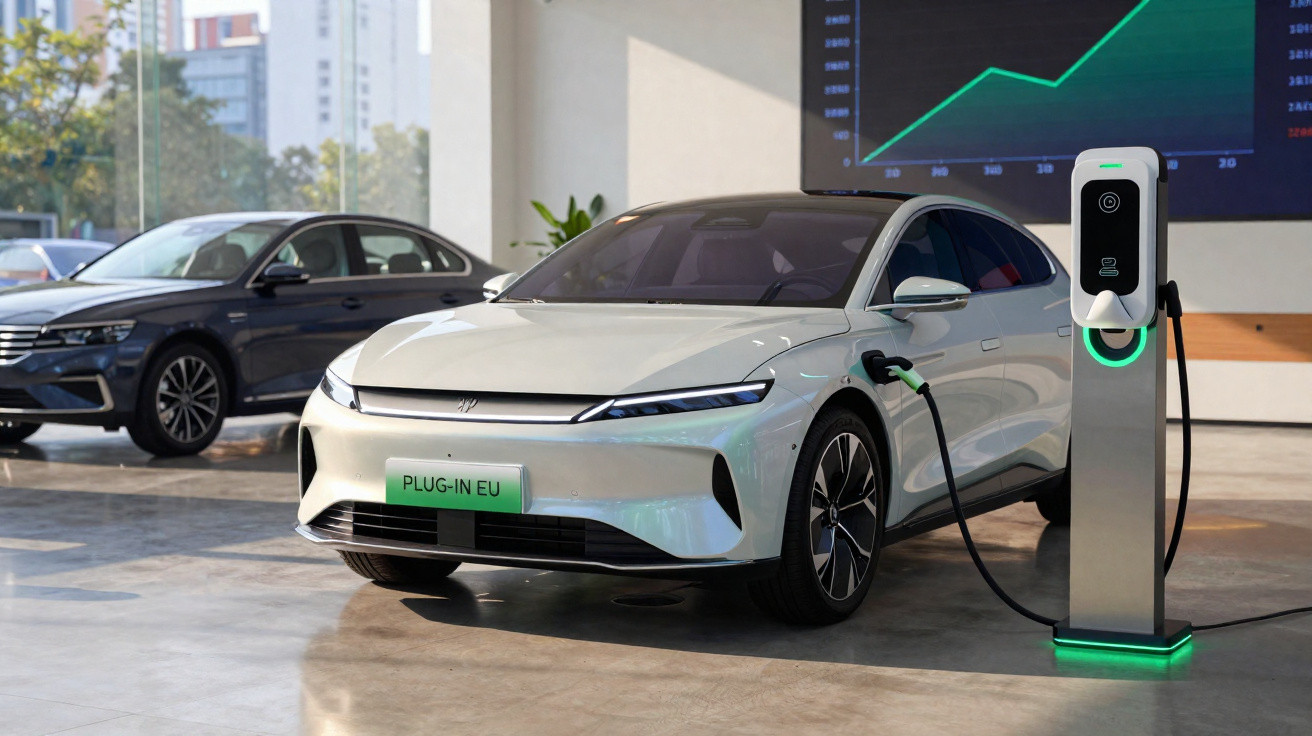
Plug-in hybrids’ growing success is no longer new. A number of manufacturers have invested in this technology to cut their emissions, and demand has risen markedly this year.
While they still trail electric cars and conventional hybrids - which do not need to be plugged in - plug-in hybrids have recorded considerably stronger growth in 2025.
European market trends for plug-in hybrids
By October, more than one million units had already been registered, representing a 32.9% increase on the same period last year. By comparison, electric cars reached 2 022 173 units (+26.2%), while conventional hybrids accounted for 3 828 278 units (+14.2%) (source: ACEA).
Conversely, combustion-only powertrains continue to lose ground, particularly Diesel. From January to October, 2 964 732 petrol cars were registered (-18.9%), alongside 878 782 Diesel models (-24.1%). Diesel’s situation is especially notable given that, throughout much of the previous decade, this type of powertrain represented half of the European market for many years.
Plug-in hybrids outsell Diesel
Plug-in hybrids have been outselling Diesel cars in Europe since March. That month saw sales of 119 388 plug-in hybrids (+19.5% year on year) and 105 699 Diesel cars (-24.2%), equating to market shares of 8.4% and 7.4%, respectively.
On a year-to-date basis, May was the first month in which plug-in hybrids overtook Diesel’s European market share: 8.5% versus 8.3%. Although the initial gap was narrow, it has widened month after month.
By October, the plug-in hybrid share had continued to climb to 9.4%, while Diesel’s share had edged down to 8%. It is now among Europe’s least-sold powertrain types, ahead only of the category ACEA groups as “other”, which includes hydrogen, LPG and so on.
Conventional hybrids (including mild hybrids) remain the most popular choice, with a 34.7% share, followed by petrol engines at 26.9% and electric cars at 18.7%.
Reasons behind the decline
Several factors account for the fall in Diesel-engine sales, which began after the emissions scandal known as Dieselgate 10 years ago.
The vilification of Diesel following the scandal contributed to its first substantial market-share losses. The push towards electrification - from hybrids to electric cars - was also driven by stricter European Union emissions targets and supported by incentives and tax benefits, accelerating the decline further.
Diesel options continue to shrink
Finally, the range of available models is now far smaller than it was in the past. Many manufacturers have simply removed Diesel powertrains from their line-ups, either because the cost of complying with emissions regulations has continued to rise or because electrified alternatives have become increasingly accepted as replacements.
There are no longer any Diesel city cars and, when the current Renault Clio generation comes to an end, Diesel engines will also disappear from the supermini segment. Many models in higher segments have likewise dropped Diesel engines, replacing them with hybrid and plug-in hybrid systems.
With this in mind, Diesel’s decline in the passenger-car market is expected to continue over the coming years, making it an increasingly marginal powertrain.

Comments
No comments yet. Be the first to comment!
Leave a Comment