
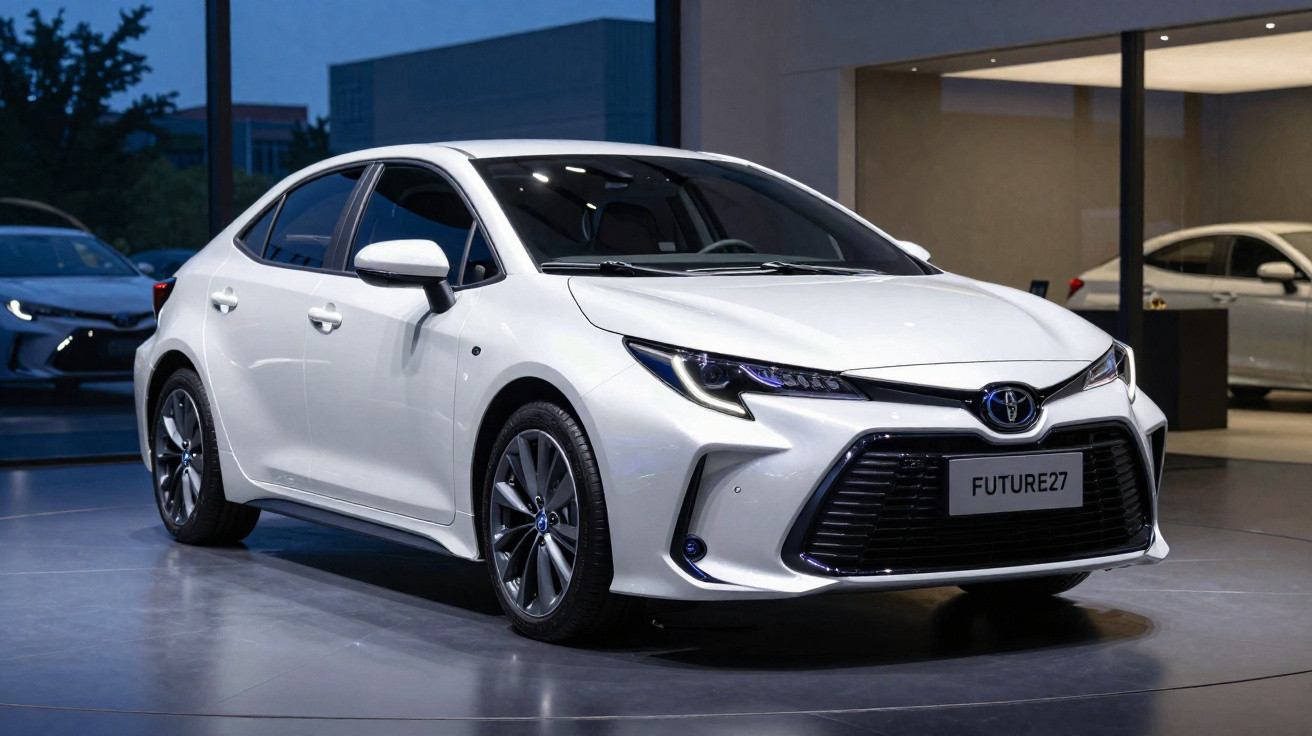
Toyota recently announced that it is developing a new generation of combustion engines, which it says could “change the game”. The words come from Hiroki Nakajima, chief technology officer of Toyota Motor Corporation.
The forthcoming engines are intended to be more efficient than the manufacturer’s current combustion units without sacrificing power. They will also be 10% to 20% smaller, potentially allowing lower bonnet lines and creating fresh aerodynamic and design opportunities.
Toyota’s new generation of combustion engines takes to the track
Although they are still several years away from reaching production - with an arrival expected in 2027 - Toyota’s new generation of combustion engines is already in motion. A Toyota Times video filmed at Fuji Speedway in Japan offers an early listen:
The clip reveals very little, including almost nothing of the test car housing the engine, which appears to be a Lexus IS. However, the new unit’s somewhat guttural note can already be heard. It remains unclear whether it is the 1.5-litre or 2.0-litre engine, the only two variants Toyota has announced so far.
What do we know so far?
Beyond their capacities - 1.5 litres and 2.0 litres - we know the engines will use an inline four-cylinder layout. There will be naturally aspirated 1.5-litre versions, alongside turbocharged 1.5-litre and 2.0-litre units. Perhaps their most unusual feature is a piston stroke that is considerably shorter than is typical.
Longer strokes are known to favour engine torque, or pulling force, yet Toyota has chosen the opposite route. Even so, the engines are not expected to be “anaemic”, as they are being designed from the ground up to form part of a hybrid system. In practice, the electric motor will compensate for any shortfall in that area.
Toyota is also promising greater thermal efficiency. In other words, more of the energy produced by combustion will be used to move the vehicle, with less lost as heat.
At present, the naturally aspirated 2.0-litre engine used in Toyota hybrids claims 40% thermal efficiency, a benchmark figure for a petrol engine.
For now, the car maker has not disclosed figures for the new engines or explained how it will raise efficiency. However, exceeding 40% would bring them close to diesel territory.
Lessons from hydrogen combustion development
What is known is that the new solutions draw on lessons learned while developing hydrogen combustion engines, particularly in fuel injection and thermal management.
Toyota has been especially active in hydrogen combustion. Starting with the three-cylinder engine from the GR Yaris, it installed the unit in a competition Corolla and has been testing it in endurance events.
That does not mean these new combustion engines will run on hydrogen - they will continue to use conventional petrol, that much is certain. It does, however, show that Toyota foresees a future in which hydrogen, synthetic petrol and biofuels are all used. These new engines will be more than ready for that possibility.

Comments
No comments yet. Be the first to comment!
Leave a Comment