
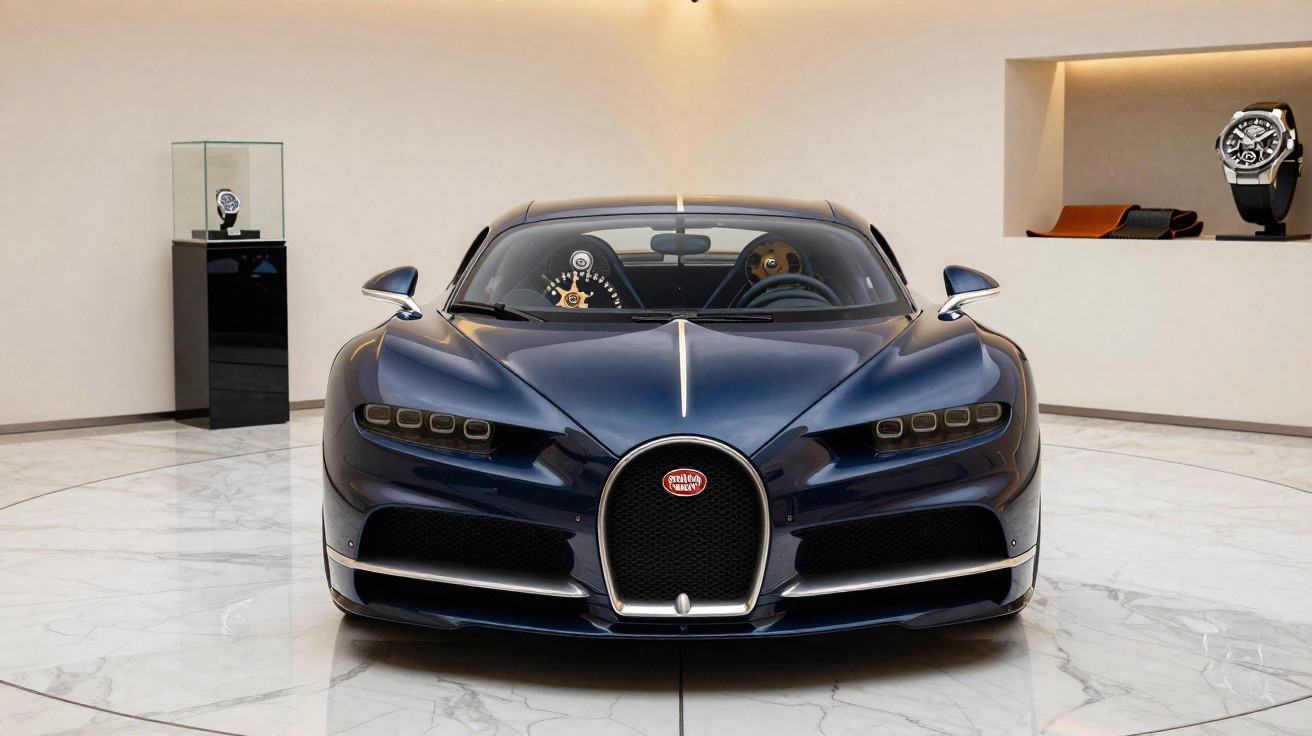
While many hypercars rely on vast displays and digital interfaces, Bugatti has chosen a mechanical, analogue approach for its instruments. The Tourbillon demonstrates that decision.
Bugatti Tourbillon: a fully analogue cockpit
Rather than a conventional digital instrument panel, the Bugatti Tourbillon features a fully analogue cockpit. Created with Swiss firm Concepto, a specialist in intricate watch movements, its instruments echo those of purely mechanical timepieces.
The assembly comprises more than 650 individual components, all put together by hand using haute horlogerie techniques. These methods have been adapted to withstand the vibrations, acceleration and temperature fluctuations imposed by a car. Every gear and detail has been designed specifically for this application, producing a distinctive meeting of automotive engineering and watchmaking craftsmanship.
The watchmaking inspiration behind the name
This solution made such an impression that it ultimately gave the French hypercar its name: “tourbillon” describes a watchmaking mechanism invented in 1801 to counteract accuracy deviations caused by gravity.
Bugatti brings that concept to the instrument panel, delivering a timeless visual and tactile experience which, unlike a display, will not look outdated further down the line.
Customers can personalise the visible details with traditional watchmaking finishes - guilloché, Clous de Paris and Tapisserie - as well as luxurious materials including aventurine, rubies and sapphire crystal.






Comments
No comments yet. Be the first to comment!
Leave a Comment