
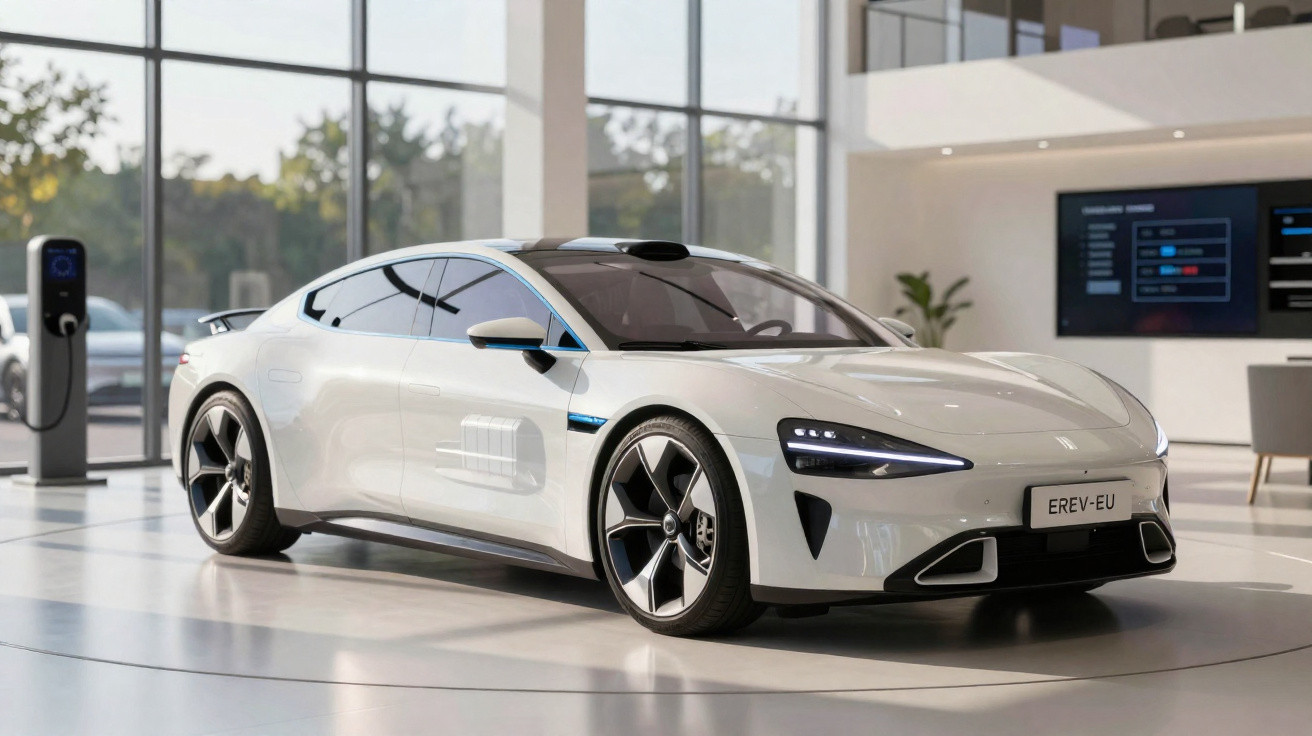
In European dealerships, a new type of vehicle has appeared over recent months: electric cars with a range extender, often marketed as EREVs. They are intended to combine the benefits of electric motoring and combustion-engine vehicles. In Brussels paperwork, however, many of these models are simply classified as plug-in hybrids – with tangible implications for taxation, incentives and access to clean-air zones.
What is behind the new “range-extended electric” vehicles
The basic proposition initially sounds compelling: the car runs mainly on electric power in day-to-day use. Once the battery is depleted, a small combustion engine starts up, not to drive the wheels but to generate electricity. The familiar fear of running out of range is therefore meant to disappear without abandoning electric mobility altogether.
Chinese brands in particular, including Leapmotor, are bringing these concepts into the European market. While many European manufacturers are streamlining their dedicated electric platforms and cutting costs, the newcomers are actively promoting practical ranges and low consumption figures.
In technical terms, the distinction from conventional plug-in hybrids lies in the drivetrain concept:
- PHEV (plug-in hybrid): The electric motor and combustion engine can generally both drive the wheels directly.
- EREV: In theory, the combustion engine serves only as an electricity generator, while propulsion is provided primarily by the electric motor.
They also use larger batteries. While many plug-in hybrids offer only 10 to 25 kWh of capacity and around 40 to 60 kilometres of electric range, range-extender vehicles often provide 20 to 40 kWh and usable everyday distances of 80 to 100 kilometres, sometimes more.
“In everyday use, EREV models often feel like fully fledged electric cars – but the EU still regards them as hybrids.”
Why Europe classifies EREVs as hybrids
Sales literature may describe them as “almost like an electric car”. EU regulations, by contrast, use a more unwieldy code: “OVC-HEV”, meaning an externally chargeable hybrid electric vehicle. Range-extended vehicles are placed in this category alongside conventional plug-in hybrids.
Brussels currently does not provide a separate legal classification for range extenders. Marketing terminology is not what matters; the deciding factors are technical criteria such as:
- the presence of a combustion engine
- the ability to charge externally using a cable
- emissions values in the test cycle
Whether the combustion engine merely charges the battery or occasionally drives the wheels directly is of secondary importance in many approval rules. As a result, the EU tends to treat these vehicles like plug-in hybrids for incentives, fleet targets and, in some cases, clean-air-zone badges.
EREV therefore remains primarily a marketing label. There is currently no clearly defined EU-level legal segment for an “electric car with a range extender”. This is precisely where the conflict between advertising claims and regulation arises.
What EREV classification means for tax, incentives and clean-air zones
This classification is far more than a formality. Anyone buying a car they consider “almost fully electric” could face an unwelcome surprise when it comes to taxes, grants and access rights.
Typical consequences in EU countries, based on current practice, include:
- Grants and electric-vehicle bonuses: Many countries restrict electric-car grants to fully electric drivetrains or vehicles meeting very strict CO₂ thresholds. EREV models officially classed as OVC-HEVs often fail to qualify or receive only reduced support.
- Access to clean-air zones: In low-emission zones or zero-emission areas, the official vehicle category is what counts. A vehicle classified as a hybrid may face restrictions, even if its driver uses electric power almost exclusively in daily life.
- Tax classification: Company-car tax and vehicle taxes are based on declared CO₂ figures and vehicle class. Here too, fully electric cars receive substantially greater benefits than plug-in hybrids in many countries.
For buyers, this means that relying on the brochure while ignoring the EU type-approval certificate may lead them to expect privileges the vehicle does not officially receive.
“When in doubt, it is not what the salesperson promises that counts, but what the registration documents state under ‘type of propulsion’ and emissions class.”
How EREVs differ from conventional plug-in hybrids in everyday use
Away from the regulations, range extenders do offer real advantages. Drivers who cover short urban journeys each day and can charge at home or at work will often use the combustion engine only on long trips or when they forget to charge. The driving experience then resembles that of a fully electric car, including quiet acceleration and regenerative braking.
Typical situations in which the concept appears useful include:
- commuters travelling up to 70–80 kilometres to work each day
- city residents with charging available in a garage or carport
- families with only one car that nevertheless occasionally plan holiday journeys of several hundred kilometres
Unlike many plug-in hybrids with small batteries, this can genuinely allow most everyday driving to be completed electrically. Those who charge consistently cover a large share of their mileage without emissions and keep the combustion engine’s fuel use low.
The drawback emerges when long journeys are required without charging opportunities: the combustion engine may then run for hours as a generator. Depending on the setup and driving profile, actual CO₂ emissions can be closer to those of an efficient petrol car than to a “nearly emissions-free” vehicle – even where the official test figure looks very low on paper.
Marketing claims and the regulatory grey area
Manufacturers like to use phrases such as “an electric car with a safety net” or “electric driving without range anxiety”. Technically, this is not incorrect: these vehicles can indeed travel many kilometres solely on electricity and do not rely on dense rapid-charging networks.
From a regulatory perspective, however, this creates a grey area. Their showroom presentation often conveys an image closer to that of a fully electric car, while official classification places the model nearer to conventional hybrids. Manufacturers fill this gap with appealing abbreviations and their own labels.
This creates several risks for consumers:
- incorrect expectations about grant levels and tax relief
- uncertainty over whether the vehicle will retain access to all clean-air zones in the long term
- an unclear picture of its real CO₂ balance when used for long-distance travel
This can become costly, particularly for fleet operators and company-car drivers. They often plan around particular emissions and cost values that apply only to vehicles officially classified as fully electric.
What prospective EREV buyers should check
Anyone considering an EREV should not rely solely on marketing copy, but should specifically ask for technical data and the official type approval. Several points can help put the vehicle in context:
- Official propulsion type: If the documents state hybrid, plug-in hybrid or similar, hybrid rules generally apply, regardless of battery size.
- Electric WLTP range: Figures well above 80 kilometres indicate a practical electric share for everyday use, but do not guarantee equal eligibility for incentives with fully electric cars.
- Availability of charging points: Anyone unable to charge at home or at work largely eliminates the consumption advantage.
- Local authority rules: In cities with strict access restrictions, it is worth checking local requirements to see whether plug-in hybrids may be restricted in future.
An open discussion with the dealer can prevent misunderstandings. Direct questions about incentive eligibility, company-car taxation and clean-air-zone badges will usually quickly reveal how authorities classify the vehicle.
Why calls for a separate EREV category are likely to grow
As EREV concepts become more widespread, calls for clearer rules are likely to become louder. Manufacturers see range extenders as an attractive option for customers who are not yet ready to commit to a fully electric car. Policymakers, meanwhile, face the risk that vehicles officially labelled “electrified” may use considerably more fossil fuel in real-world driving than intended.
One possible outcome would be greater differentiation within the hybrid category, perhaps through minimum electric-range requirements or monitoring of users’ charging behaviour. Some countries are already discussing models under which only vehicles with a demonstrably high electric share retain access to certain privileges.
For consumers, the situation therefore remains somewhat unclear. Anyone buying a supposedly future-proof vehicle today must allow for rules changing during their ownership period. EREV owners in particular could then be required to demonstrate more closely how often they actually charge and drive electrically if they are to retain tax advantages.
What all this means for the transition to cleaner transport
Range extenders demonstrate how much the market is shifting between conventional combustion vehicles and fully electric cars. They can serve as a transitional technology, familiarising people with charging and increasing the electric proportion of traffic on the road. At the same time, a patchwork of rules is a risk if every subcategory seeks its own exemptions.
Anyone considering a purchase today should be clear about one point: for authorities, the decisive factors are ultimately real-world consumption and official emissions, not the marketing promise. Only by objectively comparing technical data, legal classification and their own driving profile can buyers establish whether an EREV is genuinely a better fit than a conventional plug-in hybrid – or whether a fully electric car is the better choice after all.

Comments
No comments yet. Be the first to comment!
Leave a Comment