
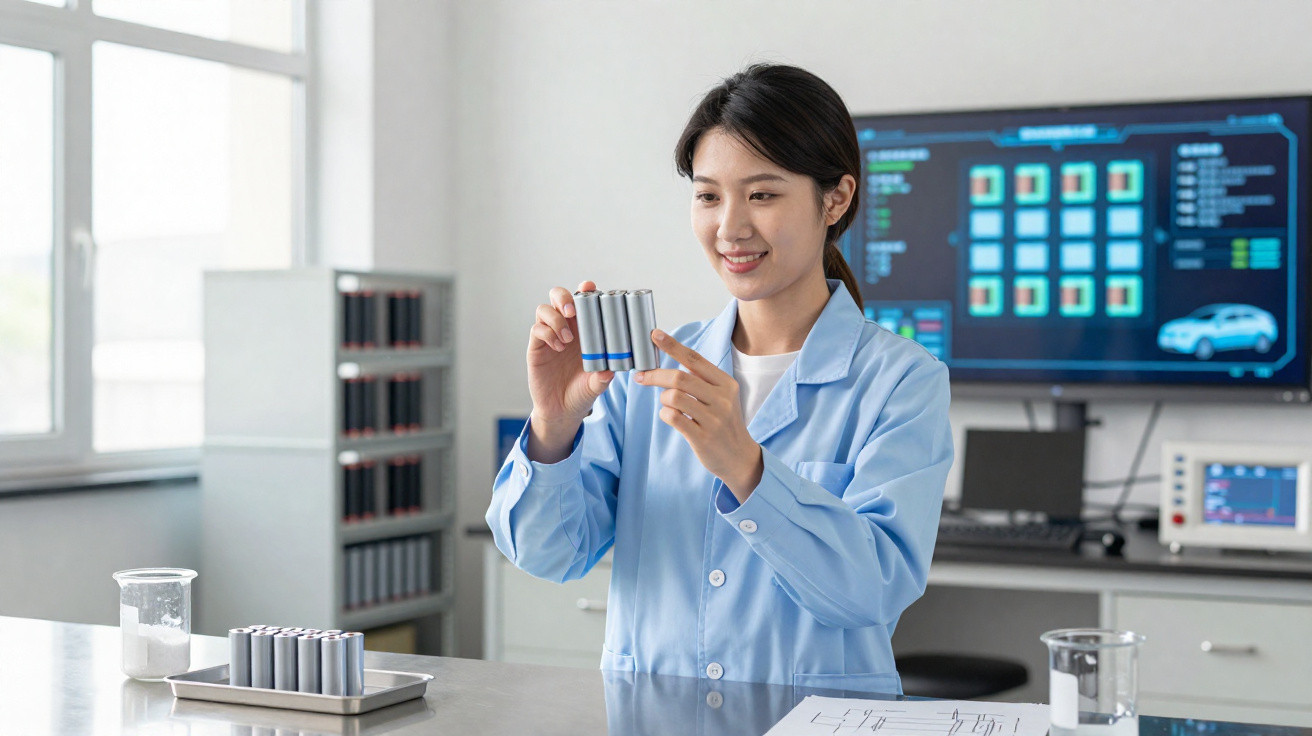
With almost half of China’s battery market under its control, CATL is aiming even higher. This year, the Chinese giant will begin mass production of sodium-ion batteries, becoming the first company in the sector to do so.
The announcement came from Wu Kai, the company’s chief scientist and a member of the Chinese Academy of Engineering, at the Industrial Equipment Forum. If confirmed, the move could represent a major step forward for the automotive industry.
CATL sodium-ion batteries enter mass production
CATL had already revealed that the Changan Nevo A06 saloon would be the first model to use its sodium-ion batteries. However, the company’s first major contract for this technology is headed for an entirely different application.
The battery giant has secured an order for 60 GWh of sodium-ion batteries from fellow Chinese company HyperStrong, for use in its energy-storage business. It is the largest order for this technology ever recorded globally.
For the automotive sector, CATL’s medium-term goal is to raise the energy density of its sodium-ion batteries, making them as competitive as the widely used LFP batteries.
What are the advantages of sodium batteries?
The key benefit of these batteries is their considerably lower cost, as they use sodium - technically, sodium compounds - along with other raw materials that are more plentiful and less expensive. Sodium can be obtained from seawater, just like ordinary table salt. Sodium-ion batteries also offer greater thermal stability and better performance in extremely cold conditions.
Their much lower price, even compared with lithium-ion batteries using LFP (lithium iron phosphate) chemistry, could speed up the wider adoption of electric mobility. This is because they could deliver the cost parity between combustion-engined and electric cars in lower market segments that the motor industry has been seeking.
They could also lessen reliance on critical raw materials and help stabilise costs in an industry facing growing pressure.
CATL looks beyond solid-state batteries
CATL’s plans extend beyond sodium and even beyond the solid-state batteries that have yet to reach the market. The company is investing in lithium-air technology, which uses oxygen from the atmosphere for the cathode rather than requiring a chemical element to be stored within the cell.
This could substantially reduce the overall weight and far exceed the energy density of solid-state batteries: they can reach 500 Wh/kg, while lithium-ion batteries currently achieve around 250 Wh/kg.
The potential of this technology, which remains under research, is significant, and CATL has presented it as a possible successor to today’s lithium-ion batteries.
Comments
No comments yet. Be the first to comment!
Leave a Comment