
While many manufacturers are dropping their smallest cars, Fiat is taking the opposite approach. The Italian brand is preparing a new city car positioned below the Grande Panda. Its internal project name is already circulating, initial technical details are emerging, and the proposed price in particular is generating plenty of discussion.
New entry-level Fiat aims to fill the gap below
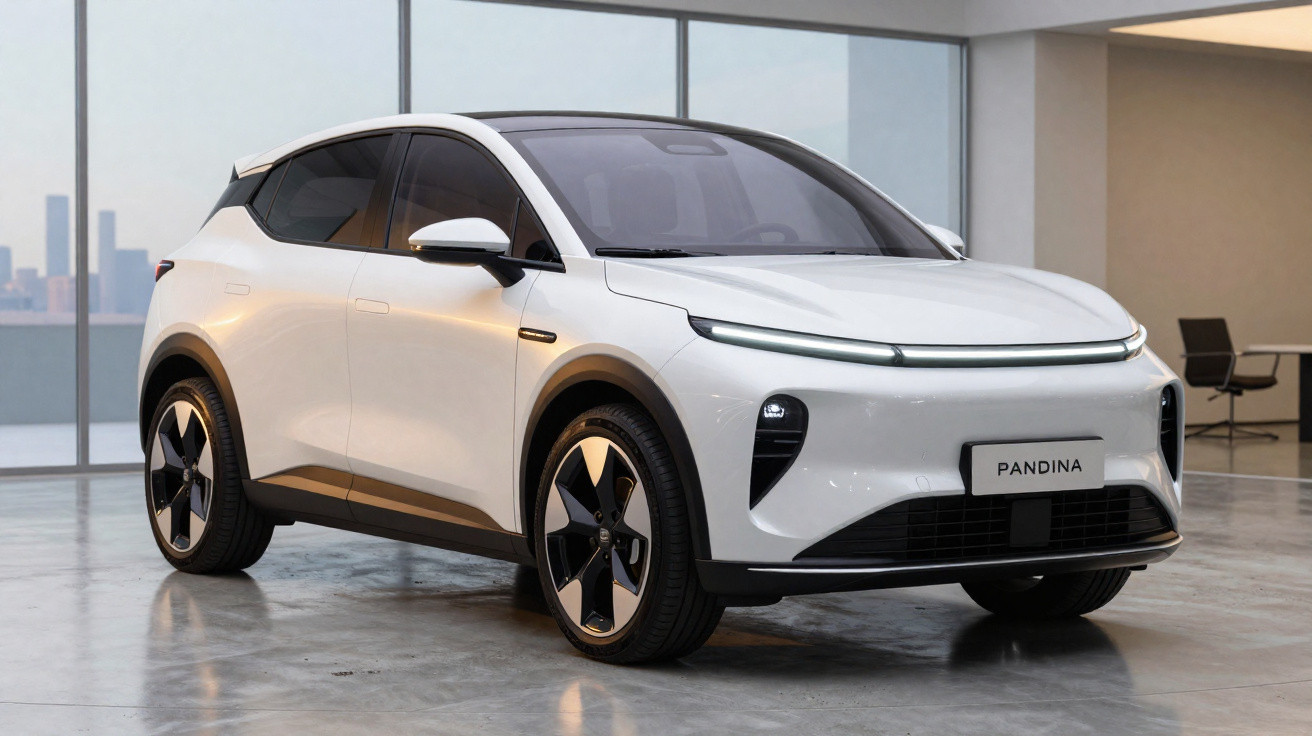
Fiat is on the verge of a major reshaping of its model range. Following the 500e, 600 and Grande Panda, it currently lacks a genuine entry-level model aimed primarily at cost-conscious buyers. That is where the forthcoming small-car generation is expected to come in, with current indications suggesting it will be called the “Pandina”.
Although the name is already used internally for a version of the current Panda, it is set to identify a standalone city car in future. It is intended for urban drivers, commuters, young motorists and anyone seeking a straightforward, agile second car without excessive prices or technology.
The new Fiat Pandina generation is expected to sit below the Grande Panda and become the most affordable way into the Fiat range.
Fiat itself has so far revealed little. There are no official images or firm specifications yet. What is clear, however, is that the marque is working intensively on several new models. This new city car is among the most intriguing parts of that programme, designed to be deliberately simple without appearing cheap.
Electrified, but not exclusively: the powertrain package
The choice of powertrains will be particularly interesting. Rather than relying on a single solution, Fiat reportedly intends to offer a broad range, allowing the car to suit both small towns in southern Italy and low-emission zones in Germany.
- Mild hybrid: a small petrol engine with 48-volt assistance to reduce fuel consumption
- Fully electric: a 100% electric drivetrain for city users and commuters
- Conventional combustion engine: a simple petrol version for markets with lower purchasing power
This variety fits Fiat’s current strategy. The Italian manufacturer is returning to combustion engines more strongly in some models rather than focusing solely on fully electric cars. The aim is not to re-educate customers, but to meet them where they are.
For the electric model, the priority is plainly everyday range rather than record-breaking figures. A realistic 200 to 300 kilometres, depending on battery size, is regarded as plausible within the industry. A compact, lightweight car does not need huge battery packs, helping to reduce both cost and weight.
The Fiat Pandina may share its foundations with Citroën
To keep the price down, Fiat is working closely behind the scenes with its sister brands within the Stellantis group. Citroën is a particular focus. It too is considering a returning city car, conceived as a spiritual successor to the former C1.
The future Pandina and a possible new Citroën city car are likely to share their platform, powertrains and numerous components.
The approach is familiar. The Citroën C3 and Fiat Grande Panda, for example, already use related technical underpinnings. Shared platforms lower development costs, which is crucial in the price-sensitive A- and B-segments.
Target price below €15,000: a challenge to the small-car segment
A pricing forecast from Italian media is especially striking: the new Fiat Pandina generation is expected to start at less than €15,000. At a time when many small cars are moving into price territory once occupied by family hatchbacks, that would be a genuine exception.
Depending on the powertrain, the following scenario appears possible:
| Version | Possible positioning | Target price (speculation) |
|---|---|---|
| Combustion engine | stripped-back entry-level version, focused on cost | below €15,000 |
| Mild hybrid | all-round model with lower fuel consumption | around €16,000–€17,000 |
| Fully electric | electric city car with a small battery | target of below €20,000 |
There are no confirmed list prices yet, but the direction is evident: the new small Fiat is intended to sit clearly below the Grande Panda and revive a true “people’s Fiat” feeling.
Rival for the Twingo E-Tech and others
The city-car market may appear to have contracted at first glance, but new niches are in fact taking shape. The electric Renault Twingo E-Tech is already waiting as a direct rival, while further affordable electric city cars from China are entering Europe.
The future Pandina could position itself between them: less expensive than many imported electric cars, more familiar than unknown brands, and backed by the reassurance of an established manufacturer. A plain, durable cabin focused on function rather than luxury would suit that positioning perfectly.
Paris debut, with market launch to follow later
Customers will still have some time to wait before seeing the car at a dealership. The project is expected to make its first public appearance at the Paris Motor Show. Fiat plans to display several concepts there, with one said to point directly towards the new city car.
The production version of the new Fiat Pandina generation is unlikely to be unveiled before the end of next year and is more likely to be widely available in 2027.
Initially, a concept car is expected, already carrying many of the design ideas: short overhangs, generous glass areas and clean lines. The final production version is likely to be somewhat plainer, however, in order to keep costs and manufacturing complexity low.
Why city cars are becoming appealing again despite the SUV boom
SUVs and crossovers currently dominate German roads. At the same time, rents, living costs and interest rates are rising. A substantial proportion of customers is once again paying closer attention to purchase budgets and running costs. This is precisely where manufacturers such as Fiat are stepping in.
A city car offers tangible advantages:
- lower purchase costs
- lower fuel consumption and lower insurance groups
- better chances of finding a tight parking space in town
- an easy-to-judge size, ideal for new drivers
The combination of combustion engine, mild hybrid and electric power is particularly interesting. Those living in rural areas may choose the simple petrol version. City residents with their own wallbox are more likely to opt for the electric model, while car-sharing operators could be interested in mild-hybrid fleets.
What prospective buyers should plan for now
Anyone considering an affordable Fiat city runabout should expect several typical characteristics. The cabin and material quality are likely to be pragmatic, while high-end infotainment will probably remain strongly centred on smartphone integration. Modern driver-assistance systems should nevertheless be available, at least as options: autonomous emergency braking, lane-departure warning and a reversing camera.
With the electric powertrain, it is worth checking grants and electricity tariffs. A small city car with a modest battery capacity recharges fully more quickly and uses less energy, but will be more limited on motorways. For the everyday journey to work or the supermarket, that will be entirely sufficient for many people.
It will also be interesting to see how Fiat manages the balance between retro charm and modern technology. The classic Panda represents simple, honest mobility. The new Pandina generation must bring that character into an era in which software, driver-assistance systems and electricity costs are almost as important as engine capacity and horsepower.
Comments
No comments yet. Be the first to comment!
Leave a Comment