
First and foremost, the achievement of the Mercedes-AMG GT XX deserves to be celebrated. It broke 25 records, among them the greatest distance covered by an electric vehicle in 24 hours (5479 km), as well as the shortest time for a potential trip around the world: 40 075 km - equivalent to the Earth’s circumference - in seven days, 13 hours, 24 minutes and seven seconds.
Those figures may feel somewhat abstract, but this one may be more striking: the GT XX lapped the Nardò high-speed ring (12.6 km) at 300 km/h, lap after lap. Stops? Only to recharge its batteries, quite literally, at 850 kW - far more power than is available on the public charging network.
And 300 km/h was not imposed by any limitation of the GT XX. According to AMG, it can exceed 360 km/h, helped by its combined 1000 kW (1360 hp) output and an exceptionally low Cx of just 0.19 - lower than that of a Tesla Model S Plaid or a Mercedes-Benz EQS.
Following numerous simulations and calculations, however, AMG engineers determined that 300 km/h was the optimum speed to balance track pace, energy consumption and charging stops in pursuit of the lowest possible overall time. It worked: 25 records fell. But…
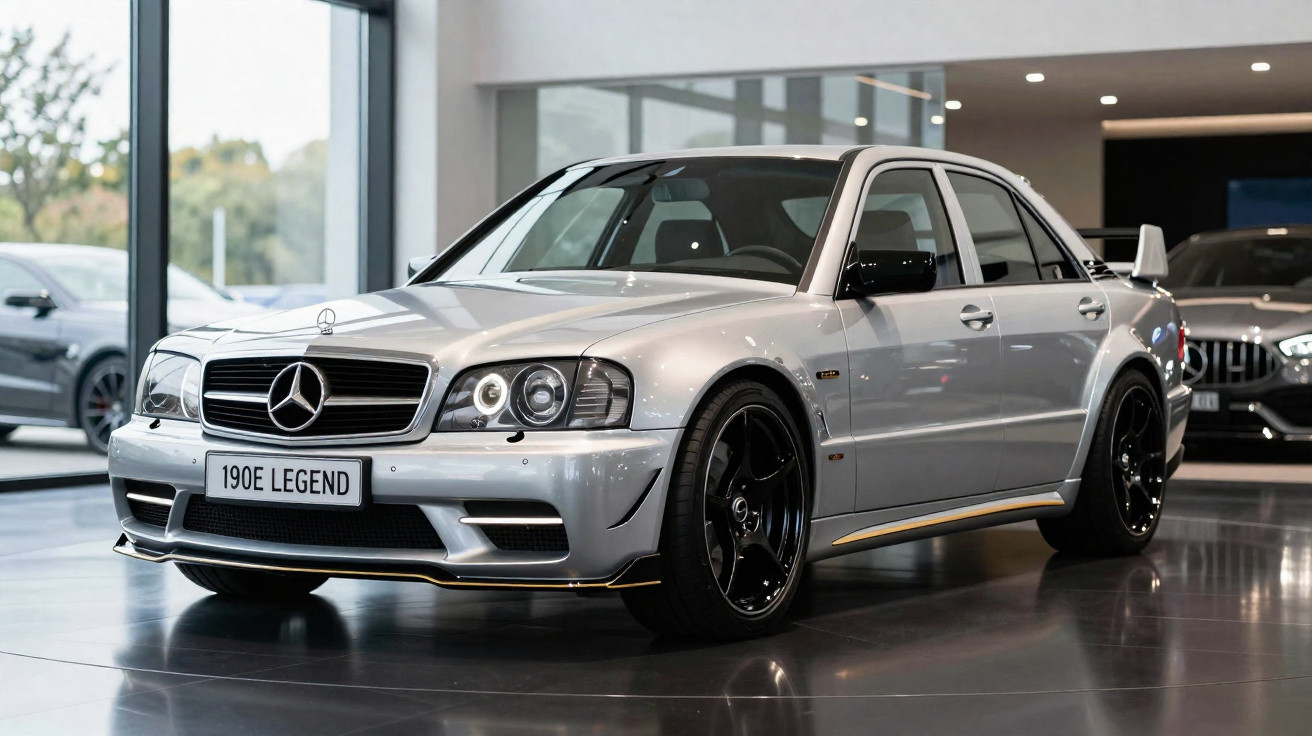
Spoiler: the Mercedes-Benz 190 had already done better in 1983
It may sound unbelievable, yet it is true. The “baby-Benz” visited Nardò 42 years ago for a very similar challenge. It covered a greater distance, 50 000 km, while setting a string of records in the process.
In the records that can be compared directly - 25 000 km and 25 000 mi (miles) -, it was considerably quicker than the AMG GT XX.
For the remaining distances, the times would have to be extrapolated, which could lead to inaccurate results. Yet the two directly comparable records are crystal clear.
Why the Mercedes-Benz 190 beat the AMG GT XX
The result is astonishing, not only because of the difference in times and average speeds, but also because of the enormous gap between the two cars’ specifications. On one side is a modest saloon with a four-cylinder, 185 hp engine; on the other, an electric “monster” producing more than 1360 hp. The standard 190 E 2.3-16 had a top speed of 230 km/h, while the GT XX claims more than 360 km/h.
Yet the facts are indisputable. The times are official and certified. How was it possible? First, it is worth clarifying the 190 E’s average speed of more than 247 km/h, despite the fact that its standard top speed had just been stated as 230 km/h.
The explanation is straightforward: the Mercedes-Benz 190 cars used received several modifications. These included a revised differential ratio and other aerodynamic changes - while output remained at 185 hp - which raised top speed from 230 km/h to a remarkable 265 km/h. Find out all about this 190 endurance test:
Charging time was the decisive factor
Now we can get to the heart of the matter, and the reason the 190 finished ahead of the GT XX in this exercise is easy to explain: time lost while charging. Even with 850 kW charging capability, AMG’s electric super-saloon still spent a vast amount of time replenishing its 114 kWh battery.
So how much time did the GT XX spend charging? Car and Driver reached some revealing conclusions after doing the maths. Of the more than 182 hours needed to cover 25 000 miles (40 233 km), the American publication estimates that 48.6 hours were spent charging - yes, more than two days. Put another way, every hour of driving required roughly 22 minutes spent stationary while charging.
It takes no genius to see that the 190 E 2.3-16 could refuel, change tyres and swap drivers in far less time. Although the GT XX was capable of much higher speeds at Nardò, the time it lost recharging the battery meant it was simply a matter of covering enough distance for the 190 E 2.3-16 to move ahead.
It remains a remarkable achievement
This unusual comparison takes nothing away from the Mercedes-AMG GT XX’s accomplishment. The reality is that recharging a battery takes far longer than filling a fuel tank. Next time, perhaps the same exercise could be attempted by swapping batteries rather than charging them - just a suggestion…
The purpose of such distance records has always been to demonstrate the durability of a model or technology, and these two Mercedes, despite being separated by more than 40 years, proved that beyond doubt.
In 1983, the “baby-Benz” covered 50 000 km to show that it was a Mercedes as “tough” as any other; in 2025, AMG completed a “trip around the Earth” to demonstrate that its electric technology can withstand prolonged punishment without - quite literally - melting.
Comments
No comments yet. Be the first to comment!
Leave a Comment