
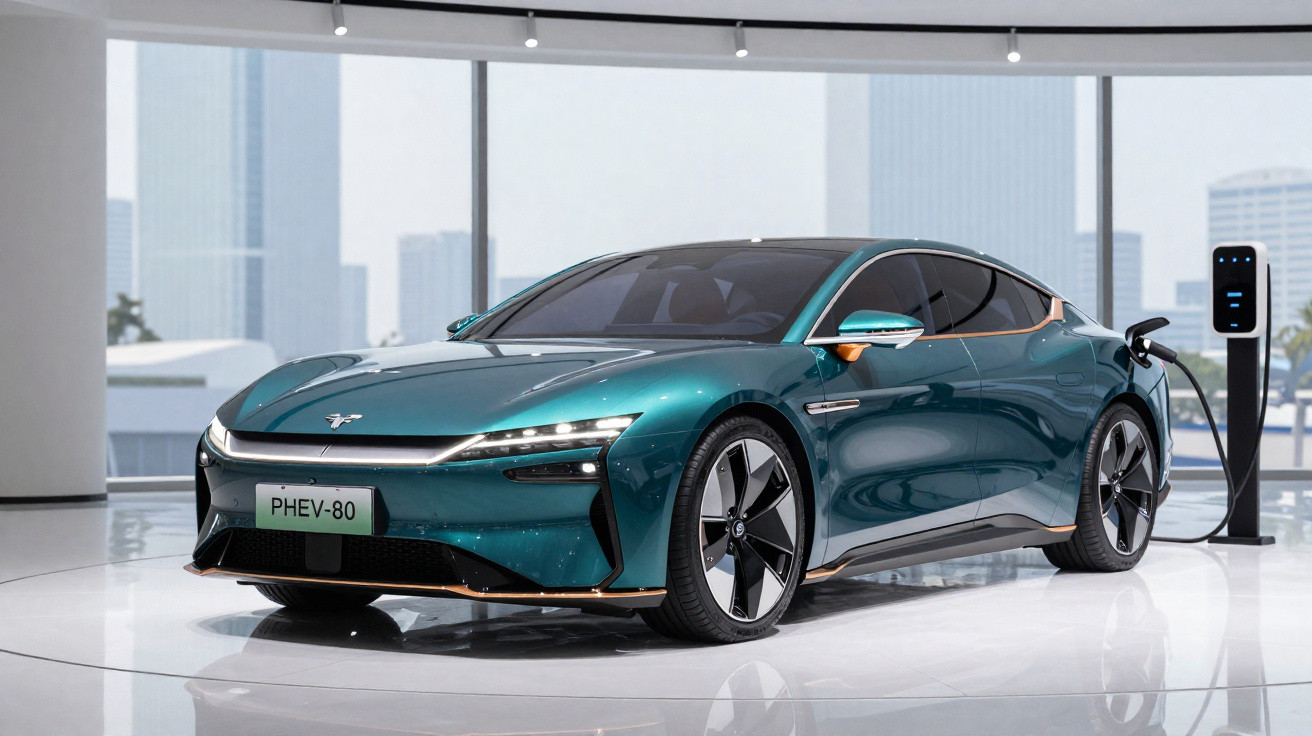
The owner stands beside the car, phone in hand, alternating between irritation and confusion. It was sold as the “best of both worlds”: electric power for the school run and petrol for longer journeys. Yet he is now awaiting a recovery truck while diesel hatchbacks pass by without trouble. This failure is not a one-off fault. New reliability figures are producing an uncomfortable view of plug-in hybrids, leaving many motorists feeling like reluctant beta testers. The polished promise of effortless, low-emission driving suddenly appears far less straightforward. Sticking with traditional petrol is beginning to seem understandable again. And the latest statistics contain one detail that reshapes the entire picture.
Plug-in hybrids: promises versus the harsh reality of breakdowns
Large reliability studies across the UK and Europe are increasingly reaching the same difficult finding: plug-in hybrids break down more frequently than petrol-only cars. The difference is not slight, either - some surveys record around 80% more reported faults, particularly among vehicles under five years old. Many buyers were cautious motorists who were not ready to move directly to a fully electric car. They saw the technology as a dependable bridge. Instead, it can look like complexity doubled. Having two powertrains in one vehicle creates twice as many possible problem areas, including charging equipment and software updates.
A leading UK recovery organisation found that plug-in hybrids needed recovery noticeably more often than equivalent straightforward petrol models. The accounts are consistent: charging electronics fail in a family SUV; a company car will not start after an over-the-air update; a saloon enters limp mode because the battery and engine cannot “agree” over which should take control. On a hectic Monday morning, advanced technology can quickly feel like a burden. Everyone knows the frustration of a trusted device freezing at exactly the wrong moment. Put that technology inside 1.7 tonnes of metal and the roadside mood is easy to imagine.
Mechanically, the reasoning is unforgiving. A petrol car requires fuel, ignition, air and some software to manage the process. A plug-in hybrid needs those components as well as a substantial high-voltage battery, one or two electric motors, a charger, power electronics, sensors coordinating both energy sources and, often, a confusing selection of driving modes. Each additional system creates another potential failure point. When a fault occurs, identifying the system that is causing trouble can become an investigation. Fuel savings and tax advantages are genuinely worthwhile for certain motorists. However, frustration is mounting in the gap between brochure claims and ownership reality.
Using a plug-in hybrid without losing your patience
The least frustrated drivers in these surveys are not necessarily those with the newest or most expensive vehicles. They are the people who view their plug-in hybrid not as a magical device, but as a machine with particular requirements. They charge it regularly, including before shorter journeys, so that the petrol engine is not repeatedly starting from cold. They work out which driving modes suit their everyday routines instead of leaving the car in “Auto” and relying on the software to decide. They also monitor software updates, asking the dealer what has changed rather than automatically pressing “accept” as they might on a phone.
The strongest grievances commonly come from company-car drivers who cannot charge at home, use petrol for most journeys and then question why both economy and reliability appear poor. It resembles buying an elaborate coffee machine but using only its kettle function. The hybrid system is then forced into awkward, demanding bursts of operation, repeatedly starting and stopping instead of moving quietly under electric power. Let us be honest: nobody manages this every day with the perfect discipline engineers may envisage. Even so, practical smaller habits - such as overnight charging twice a week and avoiding continual changes between driving modes in traffic - can meaningfully reduce pressure on the hardware.
A long-serving technician at a multi-brand dealership told me:
“Most of the plug‑in breakdowns I see are a mix of software quirks and people using them like old petrol cars. The tech is good, but it’s not idiot‑proof, and that’s where the gap is.”
The technician is not seeking to blame owners, but to point out a mismatch in expectations. Manufacturers promoted plug-ins as effortless eco-friendly cars, rather than vehicles needing some understanding and care. For many drivers, a simple mental checklist is more useful than any polished brochure:
- Charge frequently, even when you do not “need” to, ensuring the petrol engine remains a reserve rather than the standard power source.
- Stick consistently to one or two drive modes instead of changing settings on every journey.
- Arrange software inspections and recall appointments rather than dismissing unobtrusive warnings for months.
Should you buy a plug-in hybrid or remain with petrol?
For many people looking towards the 2030s and future restrictions on new petrol-only sales, this is the central issue. Is a plug-in hybrid a sensible transitional choice, or an overly complicated compromise that creates extra hassle? The latest data offers no simple yes-or-no answer. It points to a trade-off in risk. If your routine involves lengthy, high-speed motorway travel, you live far from a dependable dealer and rarely park close to a charging point, an uncomplicated petrol car may still feel like a faithful old friend. It may consume more fuel, but it demands less from its owner.
Conversely, a plug-in hybrid may still be a sensible option if you make many short, predictable journeys, can access affordable home charging and truly want to lower emissions and fuel costs. The important thing is to enter the showroom fully informed. Ask direct questions about fault rates, battery and electronics warranty protection, and usual repair times. Look through owner forums for the exact model rather than relying solely on the reputation of the manufacturer. That is where the candid experiences are found, among school runs, commuting journeys and late-night posts asking, “why is my car doing this?”
Vehicle technology is advancing more rapidly than motorists’ habits. Petrol engines have had a century to become dependably unexciting. Plug-in hybrids remain in an untidy adolescence, with substantial potential, changing moods and unexpected failures. The figure of 80% higher failures is not cause for panic, but it is a clear prompt to approach the purchase as carefully as a long-term contract, rather than as an impulse decision. Some motorists will gladly accept additional risk in exchange for sharply lower fuel costs and tax. Others will examine the recovery figures and decide: not yet, thanks. The significant change is that the old belief - “petrol is dead, hybrids are the safe middle” - no longer seems convincing.
| Key point | Details | Why it matters to readers |
|---|---|---|
| Failure rates are higher for plug-in hybrids | Recent UK and European reliability surveys indicate that plug-in hybrids report around 80% more breakdowns than comparable petrol cars, especially during the first 3–6 years of ownership. | It helps you assess the real-world chance of unexpected garage visits and time off the road before entering a plug-in finance agreement. |
| Repairs can be slower and pricier | Diagnosis frequently needs high-voltage specialists and manufacturer-specific software; components such as inverters, onboard chargers and battery modules may have lengthy lead times. | This affects how long you could be reliant on a courtesy car and how costly bills might become after the initial cover ends. |
| Usage patterns change reliability | Vehicles charged regularly and driven mainly on shorter electric trips tend to experience fewer engine-related problems than plug-ins used mostly as heavy petrol cars with depleted batteries. | It demonstrates that everyday habits can steer the same plug-in towards either a “trouble-free tool” or a “frustrating money pit”. |
FAQ
- Are plug-in hybrids genuinely less reliable than petrol cars? Large owner surveys and breakdown figures indicate that they are, with approximately 80% more reported faults in certain markets, chiefly involving electronics, charging systems and complex powertrain software.
- Which failures are most common in plug-in hybrids? Frequent issues include high-voltage-system fault codes, onboard charger failures, drive-mode software glitches, and carbon build-up where the petrol engine is seldom used.
- Can sensible charging habits lower the risk of a breakdown? Yes. Regular home charging, avoiding repeated deep discharges and not leaving the vehicle for weeks with an almost empty battery can reduce strain on both the battery and petrol engine.
- Is a plug-in hybrid still worthwhile if I cannot charge at home? If you depend entirely on public chargers, a plug-in can become an expensive, heavy petrol car; in that situation, a conventional petrol car or full hybrid may be simpler and cheaper in the long term.
- How long do warranties cover the battery and hybrid components? Many manufacturers provide 6–10 years or coverage up to a specified mileage for the high-voltage battery and principal hybrid components, whereas the remainder of the car commonly has a shorter 3–5-year warranty.



Comments
No comments yet. Be the first to comment!
Leave a Comment