
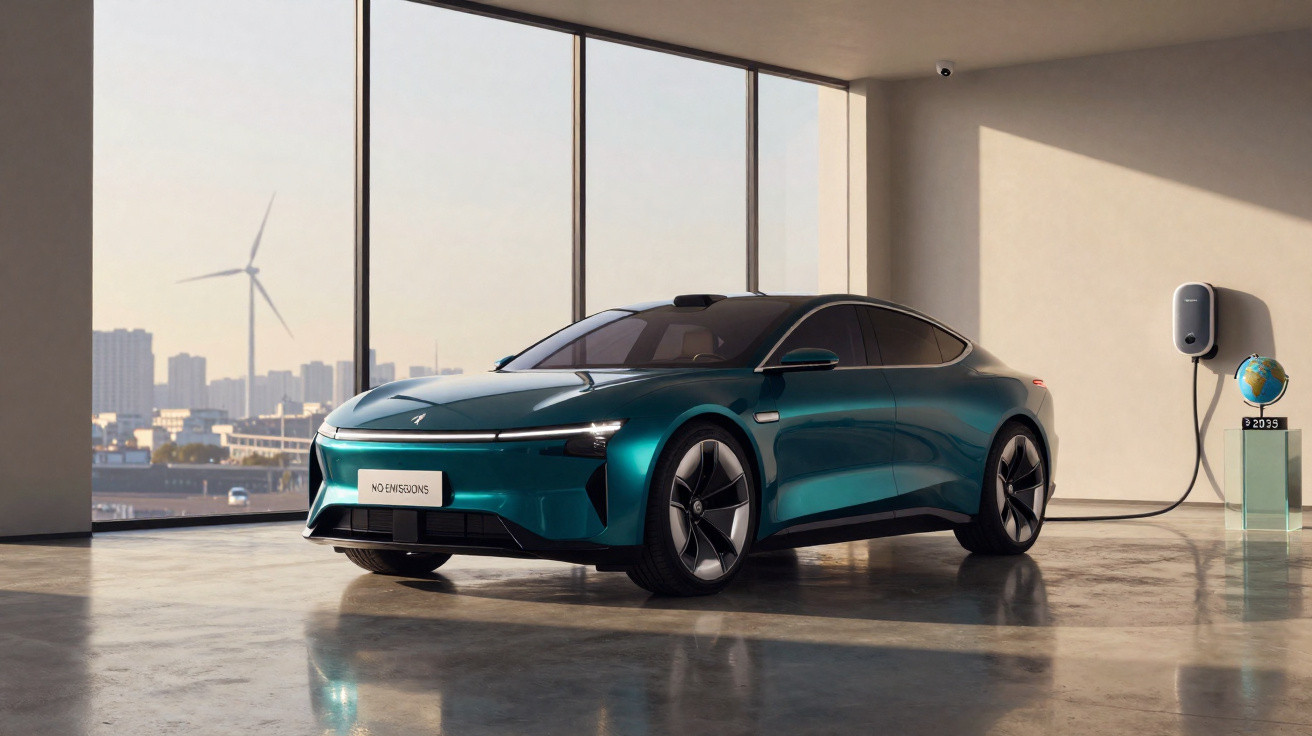
The United Kingdom is the latest country to announce that it will ban the sale of cars with combustion engines.
The measure had initially been scheduled for 2040, with the possibility later raised of bringing it forward to 2035. It now appears set to take effect as early as 2030. The British are not alone in making this decision, however.
In this article, we look at both the countries planning to ban the sale of cars with combustion engines and when those bans are expected to come into force.
United Kingdom: the best-known case
Perhaps the most widely known example in Europe, the United Kingdom has gradually moved its planned date for banning the sale of cars with combustion engines ever earlier. As mentioned, the ban is expected to begin in 2030 and will apply not only to petrol- and diesel-only models, but also to hybrid models.
The announcement was made by British Prime Minister Boris Johnson in an opinion column he wrote for the Financial Times.
In it, Boris Johnson said: “The time has come to plan a ‘green’ economic recovery with high-quality jobs that keep people safe and help make the country cleaner, greener and more beautiful”.
In Scotland, the ban will arrive later
Although it is part of the United Kingdom, Scotland intends to ban the sale of cars with combustion engines slightly later, in 2032.
Its plan is to prohibit the sale of every model with a combustion engine except plug-in hybrids. For all other models, the instruction will be clear: their sale will be banned.
What about the rest of Europe?
For now, European Union legislation does not allow an individual country to decide to ban the sale of cars with combustion engines. Denmark is evidence of this: after announcing a plan in 2018 to prohibit sales of these vehicles in 2030, it had to abandon those intentions.
Despite this “obstacle”, and although a Europe-wide ban does not currently appear to be on the horizon, several European countries are planning to follow the United Kingdom’s example. They are supported by Denmark’s call for the EU to give countries greater freedom on this issue.
As a result, while Denmark appears keen to revive its plan to ban the sale of cars with combustion engines in 2030, other countries also seem set to adopt the same date, including the Netherlands, Slovenia and Sweden.
In Norway - the country where fully electric vehicles have the world’s highest market share, reaching 52% cumulatively between January and October 2020 - the aim is to introduce the ban as soon as 2025. France and Spain, meanwhile, have set their target for 2040. In Germany, although some political groups are calling for an earlier ban, all indications currently suggest that it will be set for 2050.
Cities take the first step
While European countries have their “hands tied” on this matter, many cities have already started introducing restrictions - not on sales, naturally, but on the use of cars with combustion engines.
In Paris, the French capital, diesel cars, whether owned by residents or tourists, will be banned from driving in the city from 2024. Petrol cars will face the same restriction in 2030.
Amsterdam, the capital of the Netherlands, is going even further and wants to ban every vehicle with a combustion engine, including motorcycles, in 2030. You can find out more about this plan, which will be introduced in phases. You can learn more about this plan in this article.
And the rest of the world?
In Africa, only Egypt appears interested in introducing similar measures, targeting a 2040 ban on the sale of cars with combustion engines. Singapore and Sri Lanka also aim to ban sales of cars with combustion engines in the same year. Israel has set an earlier target of 2030.
In Canada, the ban is only expected to arrive in 2050. However, two of the country’s provinces do not want to wait that long: Quebec and British Columbia. The former wants to ban the sale of cars with combustion engines in 2035, while the latter is targeting 2040.
In the United States, nine of the 50 states have plans of this kind. These include New York, California and Massachusetts, with dates ranging from 2035 to 2050.
China, by far the world’s largest car market, appears more cautious. For now, only one province - Hainan - plans to ban the sale of cars with combustion engines from 2030. Although the idea has been discussed at national level since 2017, there is currently no sign that a consensus or decision is imminent.
Finally, in Portugal, despite comments by the Environment Minister regarding diesel engines, there is currently no fixed or even anticipated date for banning the sale of cars with combustion engines.
Source: Auto Motor und Sport.

Comments
No comments yet. Be the first to comment!
Leave a Comment