
F-16 and Saab Gripen E remain in contention
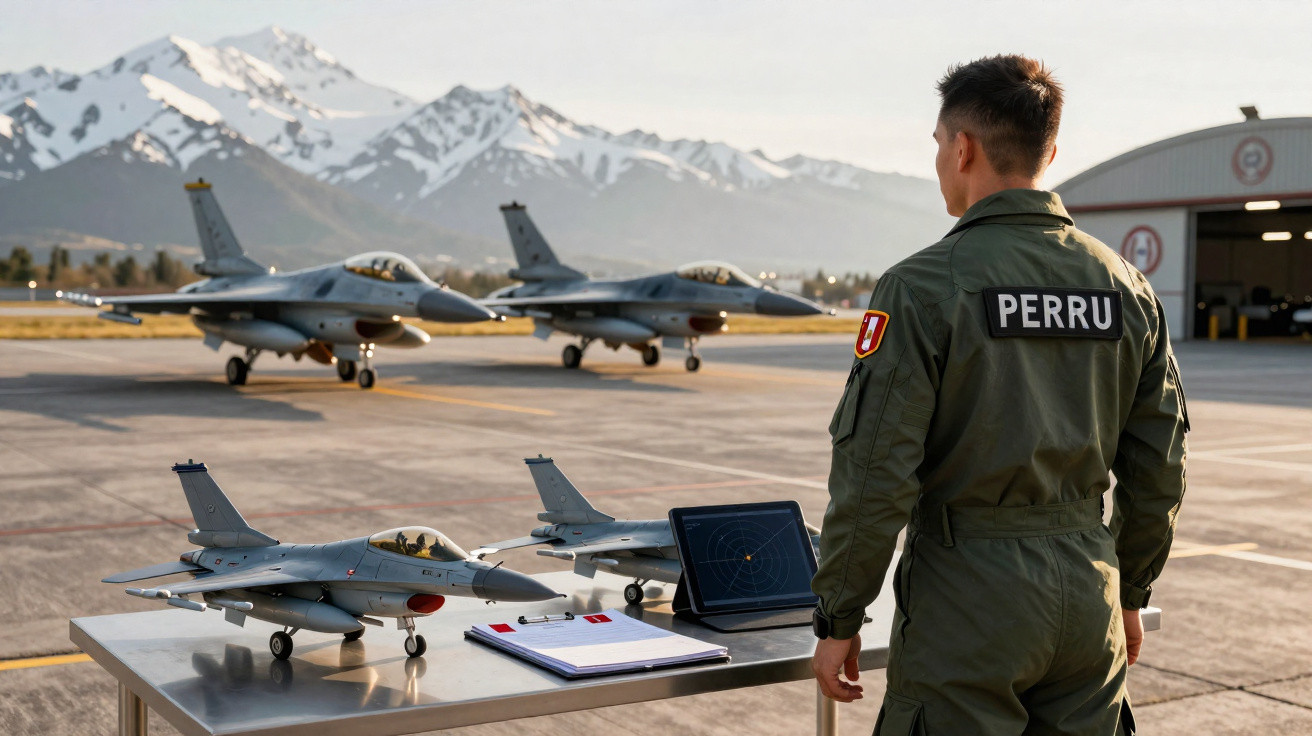
Despite persistent but unconfirmed rumours circulating in Lima that the Lockheed Martin F-16 has emerged as the central government's preferred choice for the Peruvian Air Force's next multirole fighter, no official statement has been made and the Saab Gripen E remains in the running.
At this final stage of the process, the US aviation industrial giant has suddenly gained substantial coverage across several local media outlets, which have highlighted the aircraft's capabilities. This has renewed significant interest in the matter following a lengthy period of silence. The contest now appears to concern not only the advanced capabilities that the selected new weapons system would provide, but also the geopolitical implications of this multi-billion-dollar acquisition.
Strategic and industrial benefits for Peru
Supporters of the Fighting Falcon place particular emphasis on the potential advantages of reinforcing a strategic alliance and creating new national-security opportunities through a purchase from the United States. The F-16 is certainly a sound option. Yet little is known about the industrial offsets that such a selection would include, particularly regarding technology transfer and the development of domestic industry to create jobs.
Saab, by contrast, has spent months setting out the national-interest areas in which it could support the development of strategic projects in Peru through the contract, with initiatives involving modern technology, knowledge creation and job generation.
These could include the aerospace sector, through technology transfer benefiting SEMAN and other local companies, as well as work in education, mining, the environment, healthcare and even public safety.
Delivery times and budget for the new fighter
One issue raised in recent weeks concerns the delivery date for the system's first aircraft, with possible delays for the Swedish supplier in relation to its Brazilian customer having been mentioned. Saab sources, however, state that the schedules would be almost identical: 36 months from contract signature for both the Gripen E/F and the F-16 Block 70.
Price is another crucial consideration. The State has already allocated a budget of US$ 3.5 billion for two dozen aircraft. This presents no difficulty for the Swedish aircraft, whereas the US fighter-bomber is somewhat more expensive.
What is clear is that the total will remain at 24 aircraft, that the final decision will be announced in the coming days, and that international relations will play a major role in the negotiations.
Meanwhile, the French alternative, the twin-engined Rafale F4 from Dassault Aviation, appears to be gradually falling away from this fast-moving scenario. Although, in Peru, you can never be sure.
You may also be interested in: Decision made? Peru may be considering selecting the F-16 Block 70 as its future multirole fighter
Comments
No comments yet. Be the first to comment!
Leave a Comment