
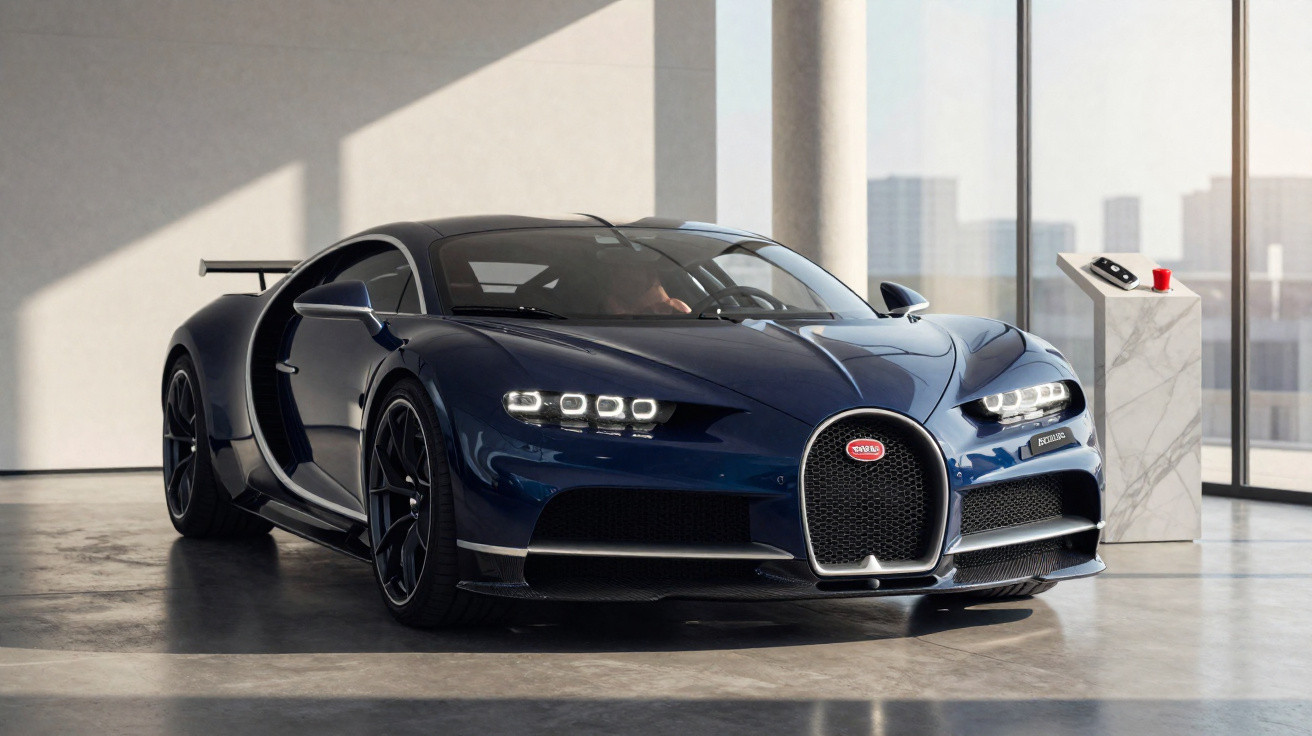
The life of car manufacturers is highly complicated - tariffs, electrification, emissions and new competitors - yet Bugatti appears unaffected by every challenge and pressure, with orders secured until 2029.
That is what the brand’s design director, Frank Heyl, told CarBuzz. As Bolide production is completed and Tourbillon production begins, Bugatti “will be quite busy until 2029 and sold out through to that same year”.
Naturally, a manufacturer such as Bugatti operates very differently from one such as Volkswagen. Even so, having business secured until the end of the decade is remarkable in such an uncertain market.
Bugatti orders secured until 2029
This stability gives the marque ample time to decide what will follow the Tourbillon and to “plan ahead” for its future, according to Bugatti’s design director.
“When you have this financial stability, everything works in a solid way. Everything is defined.”
Frank Heyl, Bugatti design director
Bolide and Tourbillon
The Bugatti Bolide and Tourbillon are exceptionally exclusive models, with each example built almost as though it were a work of art, without any great rush to complete it.
Bugatti Bolide production is restricted to a “mere” 40 cars, while the Tourbillon will be capped at 250 units. Revealed in 2020, the Bolide is track-only and is the most extreme Bugatti to use the iconic quad-turbocharged W16 engine, which here delivers 1600 hp.
The Tourbillon, meanwhile, replaces the Chiron and is Bugatti’s first hybrid hypercar. Its quad-turbocharged W16 has been replaced by an naturally aspirated 8.4-litre V16 paired with three electric motors. The outcome is 1800 hp and extraordinary performance: 0–100 km/h in 2.2 seconds and a top speed of 380 km/h.
Will waiting times fall?
While this order book is positive news for the manufacturer, the same may not be true for customers and prospective buyers. Those who have ordered a Tourbillon could face a wait of up to four years, while demand also greatly exceeds supply.
To ease the issue, Bugatti is building a new production facility at its site in France. However, the intention is not to radically increase production volumes, although it may allow for more reasonable waiting times.
The new building will cover just over 12 hectares - compared, for instance, with the nearly 162 hectares occupied by Volkswagen’s production facility in Wolfsburg, Germany.
Comments
No comments yet. Be the first to comment!
Leave a Comment