
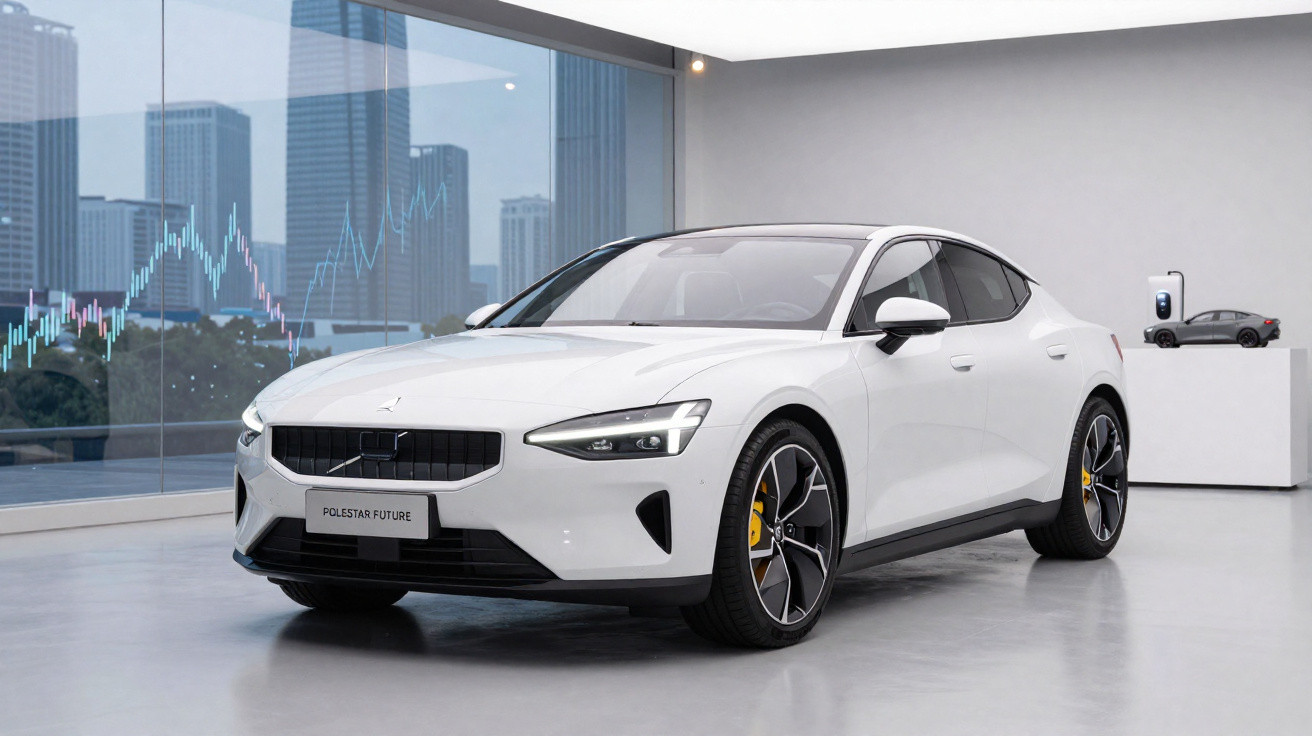
Since the middle of 2023, the first warning signs have emerged: demand for fully electric vehicles is slowing. Americans were the first to point this out, but the trend has now spread to Europe.
Combined with the price war currently affecting the key electric vehicle markets - Europe and China - this is putting further pressure on an industry that is investing heavily in the shift to electric mobility.
A number of car makers have already delayed their electrification-related investments, whether in new models or battery factories. Polestar, the young electric car manufacturer, is also feeling the consequences of this slowdown.
Difficult times for Polestar
Recent news about Polestar’s position has not been encouraging. It missed its 2023 sales target - selling 54,600 vehicles worldwide, rather than the expected 60,000 -; it has already announced a 15% reduction in its workforce, equivalent to 450 employees; and its share price has fallen by 87% since it began trading in the US in June 2022.
The premium electric car maker has also said it will require an injection of $1.3 billion (€1.2 billion) to reach break-even in 2025.
Volvo Cars, which holds a 48% stake in Polestar, recently announced that it would stop investing in the company and transfer its shareholding to parent company Geely. The impact of that decision has been clear: Volvo Cars shares have risen 30% since the announcement.
However, Volvo’s move will not affect Geely’s stake in the manufacturer, in which it holds 79%. Geely has publicly stated that it will continue to fully support Polestar as an independent brand.
“Putting Polestar directly under Geely’s umbrella could help spread this burden across a larger group, giving them more time to scale up.”
- Bill Russo, managing director of consultancy Shanghai Automobility
Polestar and industry consolidation
Polestar’s difficulty in scaling its business is shared by other electric vehicle start-ups, including Rivian, Fisker, Arrival, Xpeng and Lucid.
Polestar’s departure from Volvo’s direct sphere and move into Geely’s sphere is regarded as the right step to consolidate the young manufacturer.
Indeed, several analysts expect further “waves of consolidation” among companies, similar to the one that has just taken place between Polestar and Geely, amid this slowdown in electrification.

Comments
No comments yet. Be the first to comment!
Leave a Comment