
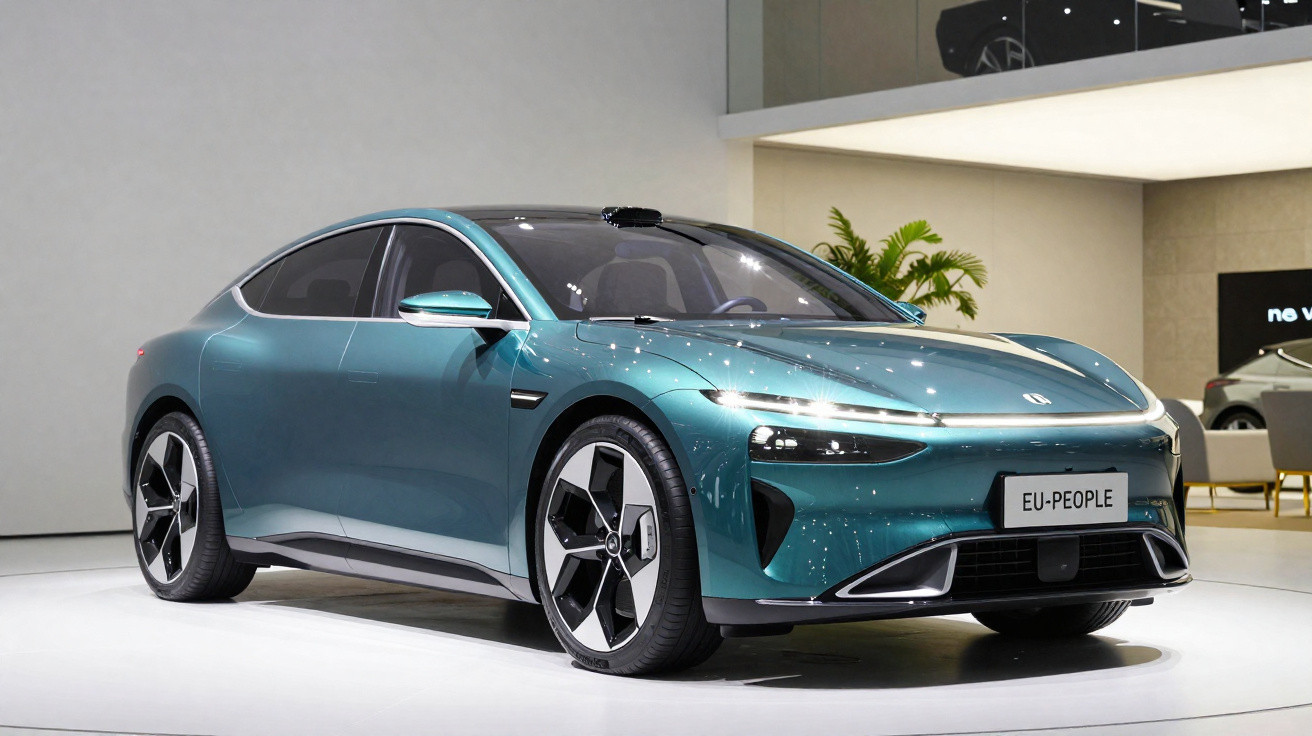
The European Union (EU) is committed to launching a scheme for small, affordable electric cars: a European version of a ‘people’s car’.
First announced in September, the initiative is expected to take clearer shape in December, when the European Commission unveils a package of fresh measures for the automotive sector.
During Automotive Industry Day in Paris on 4 November, Stéphane Séjourne, the European Commissioner for Industry, said that further details would be revealed on 10 December.
“Manufacturers want to introduce new compact cars priced between €15,000 and €20,000. Since the current rules have a major impact on the final price, we will create a new regulatory framework to make this possible,” the European Commissioner said.
New category for the European people’s car
So far, little is known about the rules that will shape this new category. What is known is that the vehicles will be compact and fully electric, sitting between quadricycles and conventional cars - effectively a European-style kei car.
These ‘people’s cars’ are expected to forgo some of the safety and technology equipment currently mandatory in vehicles, lowering costs and making production less complex. The aim is to make electric cars affordable for millions of Europeans without undermining sustainability.
According to Brussels, this represents a twofold challenge: delivering affordable electric mobility while strengthening local manufacturing and reducing reliance on external supply chains. The message was unambiguous: “We cannot allow China and others to capture this market”.
Industry pressure
The decision follows pressure from the industry, which has spent months calling for a more flexible legal framework for developing compact electric vehicles. Stellantis was among the first manufacturers to advocate a new category, referred to as the “e-car” or M0 class, for affordable electric urban vehicles.
François Provost, chief executive of the Renault Group, recently argued that Europe should slow the pace of new automotive regulations over the next decade. He says this would provide brands with greater stability and enable the return of small, affordable cars.
According to the French executive, repeated changes to emissions and safety rules have driven development costs sharply higher. This has made the task of building affordable yet profitable cars almost impossible.


Comments
No comments yet. Be the first to comment!
Leave a Comment