
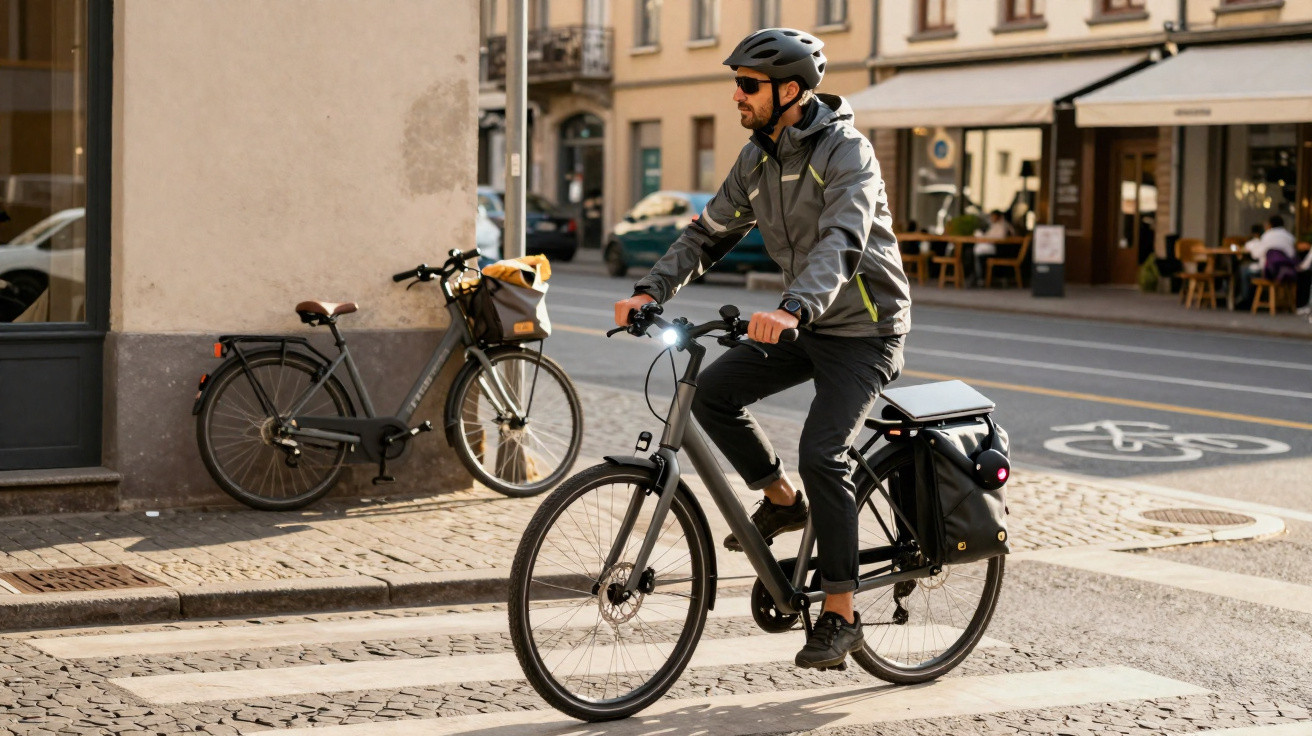
The first time I cycled to work on my brand-new electric bike, it felt as though I had found a way to beat the city. I did not arrive sweaty, I avoided the traffic, and I cruised past miserable commuters trapped in their cars. People looked at the streamlined frame and near-silent motor. I felt clever. I felt ahead of everyone else.
Two weeks afterwards, I became the person trudging along the pavement with a flat tyre, pushing a powerless e-bike whose front light had been stolen. My supposed “future of mobility” had become a costly, extremely heavy ornament.
That was when I understood what nobody mentions in the shop.
The bike is not the real thing you are buying.
The hidden cost of a “naked” electric bike
Electric bikes are marketed much like smartphones: a polished frame, a glossy display and impressive figures on the packaging. Range. Torque. Top speed. The salesperson explains power modes, battery cells and almost silent motors, and you listen, impressed.
What they seldom explain is that using an e-bike without essential accessories resembles buying a flagship phone but skipping the case, charger and mobile contract. It works in theory, until everyday life intervenes: rain, thieves, potholes and darkness. Before long, your “deal of the year” becomes a vulnerable purchase that causes stress.
The con is not the bike. It is the idea that the bike, on its own, will transform your life.
Consider Pierre, 34, who replaced his car with an electric bike in Paris last spring. He paid nearly $2,000 for an attractive urban model, but bought no rack, upgraded lock, proper lights or mudguards. “I’ll add things later,” he told himself.
Within three months, he had spent hundreds on repairs. A spoke snapped after he struck an unseen pothole at night. In the rain, he was hit from behind because the standard brakes faded and his cheap rear light could barely be seen. A theft attempt scratched the frame and wrecked the front wheel, because the lock supplied with the bike was, to put it politely, a joke.
By summer’s end, he had gone back to taking the metro. The electric bike remained at home: fully operational and hardly ridden.
Electric bikes create an odd misconception. Since they have a motor, we assume they are somehow more “complete” than ordinary bikes. We accept that a basic city bike needs add-ons, yet expect an e-bike to be an all-in-one miracle.
In reality, the motor simply intensifies what was already true. Greater speed means harder crashes. Weak lights make you invisible sooner. A poor lock turns your $2,000 toy into an especially appealing target for thieves.
An electric bike without smart accessories is not a vehicle, it’s a gadget waiting to fail in real life.
Electric bike accessories that determine freedom or frustration
Begin with the accessory nobody likes discussing: the lock. Not the little cable lock the shop includes for free, but a substantial, unattractive, theft-resistant lock that costs proper money and weighs as much as a small brick.
Experienced riders follow a straightforward rule: allocate around 10% of the bike’s value to your main lock. It may sound painful, but compare it with watching the entire bike disappear in 30 seconds from beneath your office window. Choose a hardened-steel U-lock or folding lock, and secure it to an object bolted into the ground.
Fit a basic GPS tracker inside the frame or beneath the saddle as well, and thieves will suddenly find your bike far less appealing.
Visibility comes next. This is not about being able to vaguely make out the road; it is about ensuring that a distracted motorist looking at their phone cannot fail to notice you. Standard lights on many electric bikes seem adequate in a showroom. On a wet avenue at 6 p.m. in November, they vanish.
Replace the front light with one offering meaningful lumen output and a broad beam, so you can identify potholes while travelling at speed. Pick a rear light that stays illuminated whenever the bike is moving rather than one you have to remember to activate. Tyres with reflective sidewalls and a reflective vest kept in your bag complete the arrangement.
Honestly, hardly anybody switches on tiny clip-on lights every day and checks their batteries.
Then consider protection. This does not only mean protecting your head, although a decent helmet is essential when you regularly travel at 25 km/h. Your battery needs safeguarding against theft, the motor needs protection from excessive water exposure, and the frame must withstand daily wear.
A basic frame bag or battery cover can help keep connectors dry and clean. Full mudguards make wet weather feel less like misery and more like another ordinary journey. A rack with panniers removes weight from your back, allowing you to steer and brake with better control at higher speeds.
“The difference between a good e-bike and a life-changing one is almost always the accessories,” confided an independent mechanic I met in Barcelona. “People arrive here saying ‘this model is trash’, but half the time, the bike is fine. The setup is just wrong for their real life.”
- Serious lock (U-lock or folding lock)
- Powerful, always-on front and rear lights
- Helmet rated for higher-speed cycling
- Mudguards and puncture-resistant tires
- Rear rack with panniers for daily loads
- Basic maintenance kit: pump, multitool, tire levers
- Simple GPS tracker or smart tag hidden on the bike
Why these “extras” are really central to the purchase
There is usually an identical story behind every e-bike abandoned in a hallway: early excitement, a frightening event, then ever-increasing inconvenience. One near miss after dark. One costly repair. One attempted theft. One drenched journey with mud sprayed up your back.
Accessories offer more than convenience. They lower the likelihood of having one of those “I’m never doing this again” experiences. A quality lock prevents the misery of a stolen bike. Effective brakes and bright lights help prevent an ambulance journey. Storage and mudguards help you avoid reaching work sweaty and filthy.
You are not simply purchasing items. You are buying a margin for error amid everyday chaos.
There is also a harsh financial reality. A capable accessory package may add 20–30% to the price of your e-bike, which feels substantial on the first day. However, every minor crash avoided, every theft prevented and every journey made by bike rather than car or train quietly repays that outlay.
The reverse outcome is familiar: people cut corners on accessories, endure three bad experiences, and decide that “e-bikes aren’t for me”. They sell their bike at a loss, then return to costly fuel or overcrowded buses. That is where the true expense lies.
The greatest waste of money is not buying the wrong bike, it’s buying a good bike you stop using after three months.
Comfort and identity matter too. Once your bike is configured around your actual life, it ceases to feel like a delicate toy and becomes your automatic choice. Your laptop goes in the pannier. The lock is fast to use. The lights are permanently prepared. Your clothes remain clean. Suddenly, taking the car for short journeys seems absurd.
One commuter told me, almost sheepishly, that after improving his accessories, he began using his e-bike “even when it rained, even when I was tired, even when I was late.” That is the meaningful change: not merely owning a motorised bicycle, but gradually altering your daily routine because the bike finally suits you.
The motor provides speed. The accessories build commitment.
An electric bike for real life, not your Instagram feed
Once you notice it, it becomes impossible to ignore. Look closely at that striking, minimalist e-bike advert: no mudguards, no rack, tiny lights and perhaps a discreet lock. It is designed for photographs, not for Monday morning. The unglamorous, fully equipped bike with panniers and reflectors is the one somebody genuinely rides 5,000 km each year.
If you are choosing between a pricier model and a cheaper one with dependable accessories, the latter will often be the better option. A mid-range motor paired with a strong lock, bright lights, puncture-resistant tyres and useful storage will improve daily life much more than a top-tier motor on a naked frame.
Ask yourself one simple question: “Would I still ride this setup in February, at night, in the rain?”
This is also where much of the guilt comes from. When an expensive e-bike begins collecting dust, people blame their own motivation, laziness or lack of discipline. But on closer inspection, their set-up was simply designed to make them fail. Nobody wants to arrive at a meeting with a soaked back, holding a flimsy lock and worrying all day whether their bike will still be there.
There is nothing wrong with wanting your transport not to cause daily stress. Considered equipment functions as psychological armour: once you know the bike is secure, visible and practical, you stop debating with yourself each morning. The excuses quietly disappear.
You need not purchase every accessory on the first day. Begin with theft protection and visibility, then add comfort and practicality as you cycle more. The important change is to stop treating these items as “extra spending” and view them as the genuine foundation that enables the motor to work its magic.
Perhaps you already have an e-bike and recognise some of this. Perhaps yours is partly forgotten in the garage. You may not need another model; you may only need the right equipment to allow it to fulfil the purpose for which it was made.
The bicycle industry promotes dreams of power and speed. Yet the quiet revolution often starts with something considerably less glamorous: a robust lock, bright lights, dry feet… and the straightforward decision to properly equip the machine you already own.
| Key point | Detail | Value for the reader |
|---|---|---|
| Protect the investment | High-quality lock and basic GPS or smart tracker | Drastically reduces theft risk and long-term financial loss |
| Ride safely every day | Powerful lights, helmet, reflective elements, better tyres | Fewer close calls, more confidence riding in real traffic |
| Turn a gadget into transport | Mudguards, rack, panniers, simple maintenance kit | Makes daily commuting practical, comfortable, and sustainable |
FAQ:
- Question 1 Are electric bikes really a scam if I don’t buy accessories?
- Answer 1 The bikes themselves are not a scam; the misconception is. Without essential accessories, many riders give up after a few poor experiences, making the original purchase seem like money wasted.
- Question 2 What are the first three accessories I should buy?
- Answer 2 A serious lock, powerful front and rear lights, and a helmet intended for higher-speed cycling. Together, these address the largest everyday risks: theft, invisibility and injury.
- Question 3 Can I just use the lock and lights included with the bike?
- Answer 3 In many cases, these are “marketing accessories” intended to complete the sale. They may be suitable for very brief, low-risk trips, but rarely provide enough security or visibility for daily urban cycling.
- Question 4 Is it better to spend more on the bike or on accessories?
- Answer 4 For most riders, a mid-range bike with well-chosen accessories is better than a high-end naked bike. Comfort, safety and practicality determine how frequently you will truly ride.
- Question 5 How much should I budget for accessories on top of the bike?
- Answer 5 Allow roughly 20–30% of the bike’s price for essential equipment. It may feel expensive on day one, but it often makes the difference between an “expensive mistake” and the “best purchase of the year”.
Comments
No comments yet. Be the first to comment!
Leave a Comment