
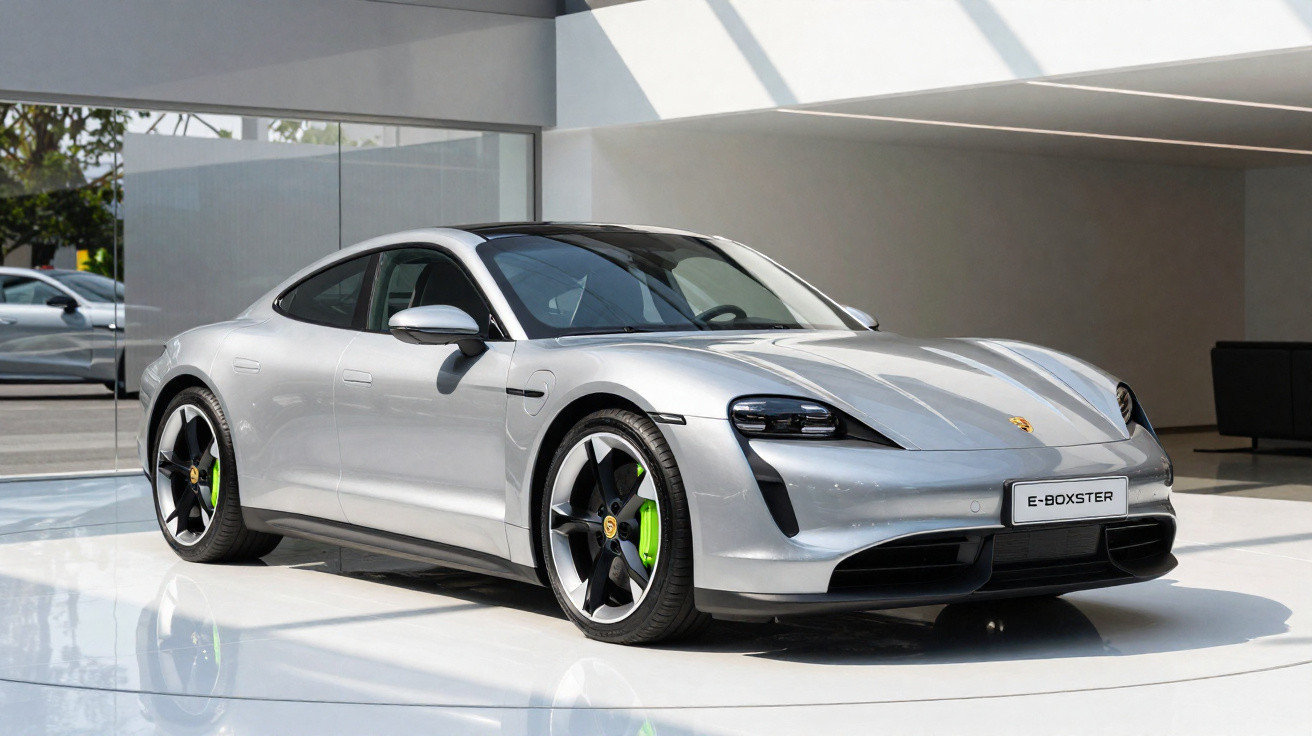
Porsche will not wait until 2035 - the year in which the EU has mandated a 100% reduction in CO2 emissions for new cars - to introduce its first fully electric sports car.
We will meet the electric successor, codenamed 983, to today’s 718 Boxster and 718 Cayman (982) as early as 2025, although its unveiling will very probably take place later this year.
Development prototypes are already undergoing dynamic testing, as these spy photographs show, with the forthcoming electric Boxster being put through the customary winter tests.
Furthermore, the prototype “caught” by the cameras wears less camouflage than others seen previously. This reveals the final front light units - featuring the characteristic four-point light signature - as well as the light bar running across the full width of the rear.
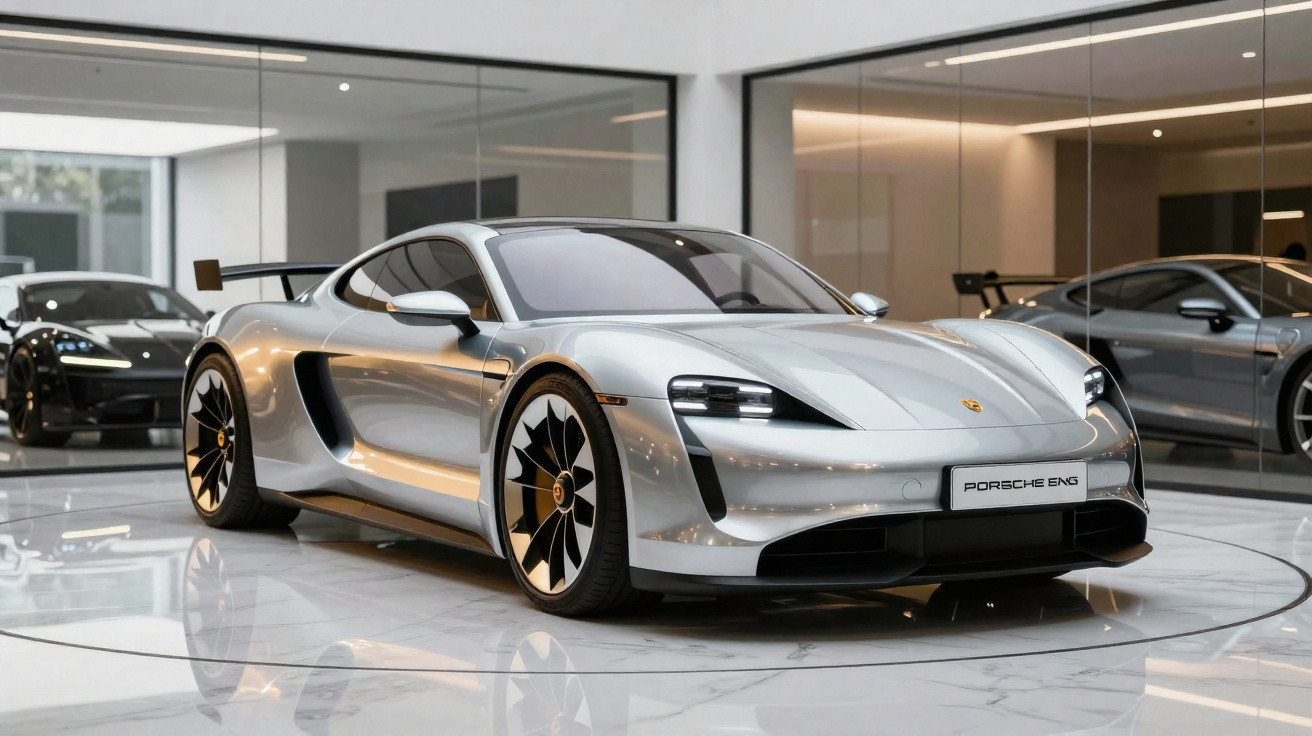
In visual terms, it is expected to closely resemble the Mission R concept revealed in 2021. Porsche presented the Mission R as a possible future direction for the Porsche Cup, but its shape and silhouette made it impossible not to see it as the successor to the 718 Boxster and 718 Cayman.
As well as exposing the lamps, the electric nature of its powertrain is underlined by the lack of exhaust outlets and of the air intakes that define the flanks of today’s combustion-powered 718 models. As an electric car, its cooling requirements are different and considerably lower.
Close to the new Macan
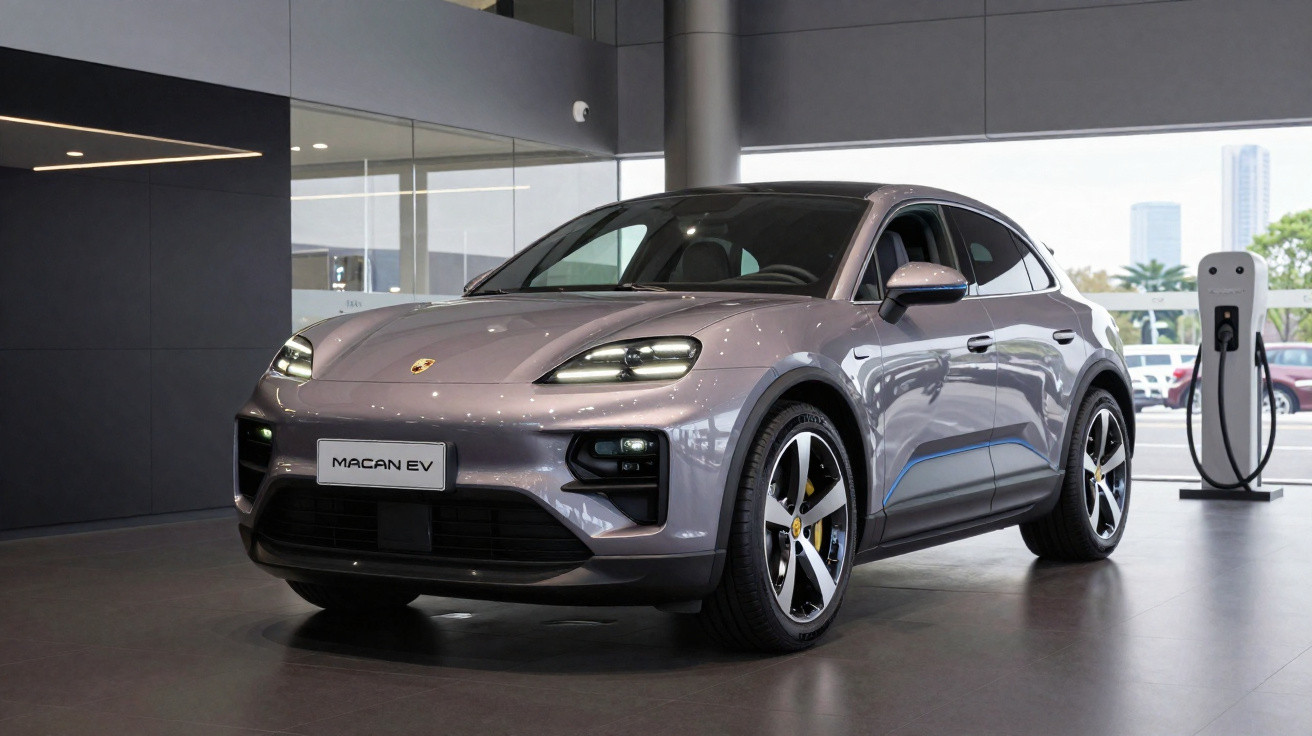
Few details are yet known about this unprecedented pair of Porsche electric sports cars. However, Germany’s Auto Motor und Sport reports that they will be technically closely related to the new Macan - itself exclusively electric - and the Audi Q6 e-tron.
This means they will use the PPE (Premium Platform Electric) platform as their foundation, although it will need extensive alterations or may only be used in part. After all, it must be substantially shortened, while the battery position will be entirely different.
Rather than sitting in the floor of the platform beneath the occupants, the battery will be placed behind them, between the rear axle and the passenger compartment. It will therefore occupy the same location as the combustion engine in current 718 models, with consequences for the cars’ dynamic characteristics.
This layout brings two immediate benefits: firstly, it allows the low driving position expected of a sports car; secondly, weight distribution will be very close to that of the combustion-powered 718.
Although the weight distribution may resemble that of the boxer-engined 718 models, the overall mass of these electric sports cars is unlikely to follow suit. Again, according to the German publication, the future electric Boxster and Cayman are estimated to weigh around 1600 kg, almost 200 kg more than the current generation.
That is a significant difference, though not an enormous one, suggesting that the battery capacity will not be “giant” either. Everything points to a range of 400 km. As with the Macan, the electrical architecture will operate at 800 V, promising ultra-rapid charging.
One or two electric motors?
The Porsche Mission R was introduced with two electric motors capable of producing nearly 1100 hp - expect more modest figures from the future electric Boxster and Cayman.
Rumours differ over the power outputs, ranging from 400 hp to nearly 700 hp, while there is greater certainty around the mechanical configuration.
As already seen with the Taycan, an entry-level model with a single rear motor is expected, alongside a flagship version with two motors, the second mounted on the front axle. They will therefore become the first Boxster and Cayman models with four-wheel drive.
Finally, the arrival of an electric Boxster and Cayman does not mean the combustion-powered equivalents will disappear immediately. They are expected to remain on sale alongside each other for some time.
However, that was also the plan for the Macan, but its incompatibility with cybersecurity regulations resulted in its premature withdrawal from the European market.
Comments
No comments yet. Be the first to comment!
Leave a Comment