
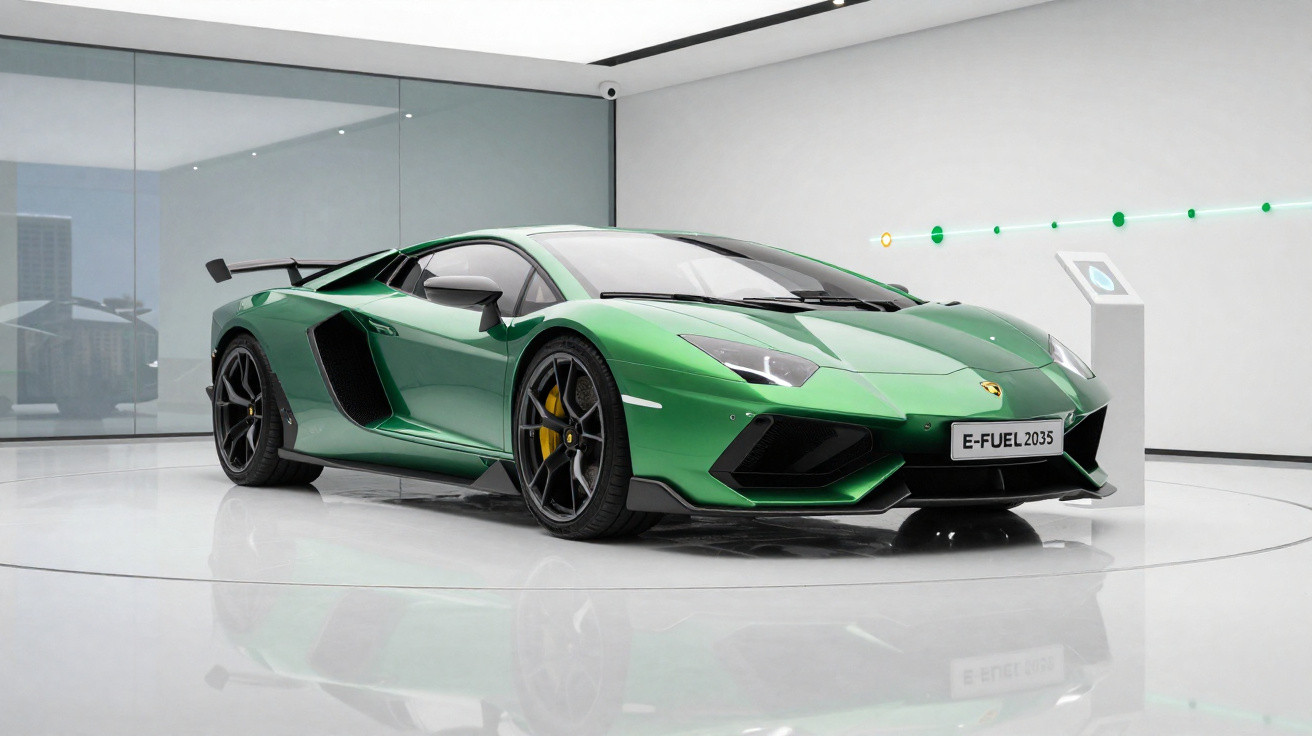
Following Porsche and McLaren, Lamborghini also appears to be considering synthetic fuels as an alternative to electric cars in the battle to reduce CO₂ (carbon dioxide) emissions.
EU rules and Lamborghini’s combustion-engine future
The European Union has approved the end of combustion engines in 2035. However, it has made an exception for smaller manufacturers selling fewer than 10,000 vehicles in Europe, extending the deadline for negotiating each manufacturer’s individual emissions derogation from 2028 to the end of 2035, giving them additional time to prepare.
In addition, the EU has not ruled out technologies such as synthetic fuels as a way of meeting emissions-reduction targets. Their usefulness must be proven by 2026 before they can be included in future legislation.
There are still many unanswered questions about what lies ahead, which is why these smaller manufacturers will continue to pursue the use of internal-combustion engines for as long as possible.
This is exactly the position Lamborghini finds itself in. Although it has already outlined its electrification plans, the Italian marque has also confirmed that the Aventador’s successor - its next all-new model - will retain a V12 engine, as tradition dictates, albeit paired with an electric system.
Synthetic fuels as an alternative to electric cars
Speaking to TechCrunch, Lamborghini chief executive Stephan Winkelmann said the Sant’Agata Bolognese-based company is assessing whether synthetic fuels could provide a carbon-neutral alternative to battery-electric vehicles.
“It is complicated, because the European Parliament decided this year that they will ban petrol and diesel engines in 2035, and smaller manufacturers such as Lamborghini in 2036. So we do not have to make a decision now,” said the head of the Italian brand.
“We still have the opportunity to perhaps move towards synthetic fuels in this type of car, but for that there has to be a change in legislation, which I cannot predict at the moment,” Winkelmann added.
Despite Lamborghini’s interest in alternatives, Winkelmann was equally clear about what will happen if this route is not viable: “If that does not happen, we will become fully electric by the beginning of the 30s”.
Lamborghini’s electric revolution is under way
Whatever ultimately happens, Lamborghini is not ignoring electrification and already has an electric revolution in progress.
Until now, the Sián FKP 37, Sián Roadster and Lamborghini Countach LPI 800-4 have represented the brand’s only concessions to electrification. Over the coming years, however, the Italian manufacturer will electrify its entire range.
As already mentioned, the first model to embrace electrification will be the Aventador successor, which will arrive in 2023 as a plug-in hybrid. The Urus will follow with a plug-in hybrid version in 2024, while the Huracán successor will also be electrified when it arrives in 2025.
As Winkelmann previously confirmed, “from 2025” Lamborghini will only “offer hybrid models in its range”. Its first fully electric model is expected in 2028, apparently as a four-seat crossover, followed by a fully electric Urus.
Source: TechCrunch
Comments
No comments yet. Be the first to comment!
Leave a Comment