
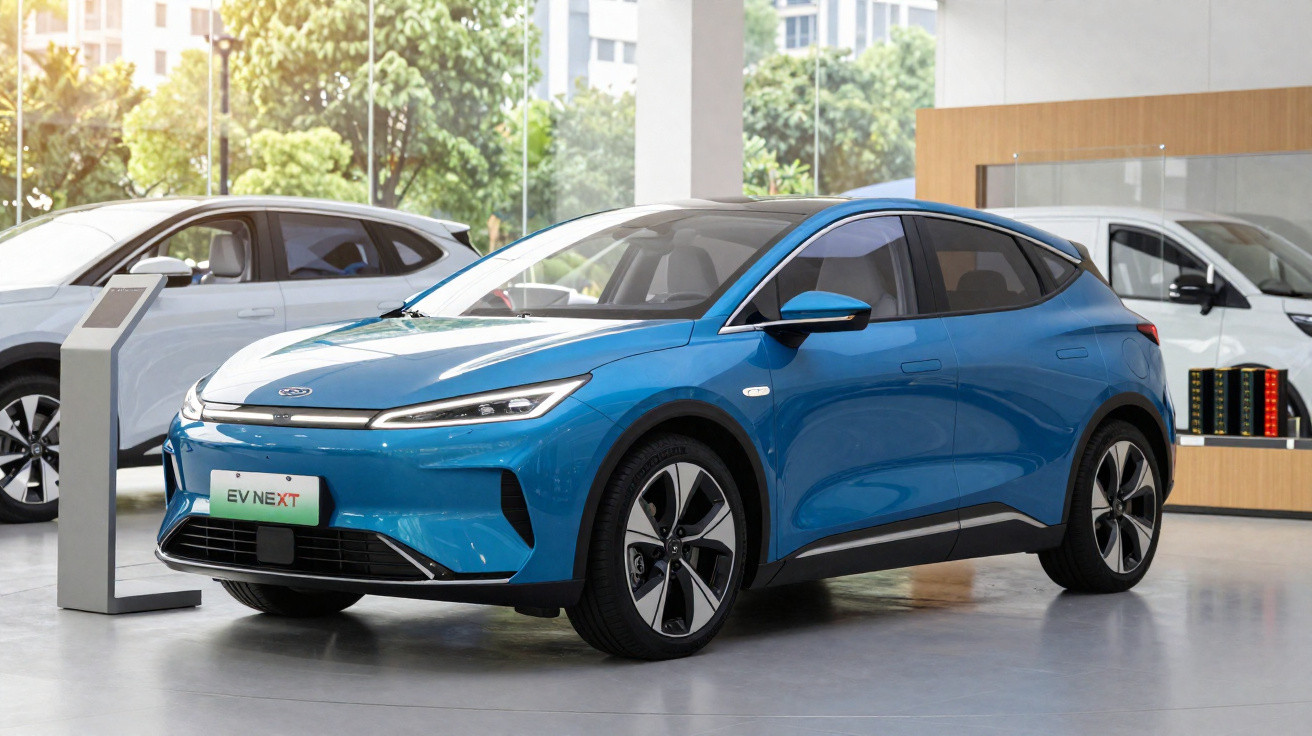
Following the release of its fourth-quarter 2023 results, Ford revealed that it is developing a new generation of smaller, more affordable electric vehicles.
This is not a new ambition for the Blue Oval. According to Ford chief executive Jim Farley, it was “a quiet bet” made two years ago, when the company assembled a team to create a dedicated platform for the project. It is intended to underpin several vehicles rather than just one model.
Ford is therefore seeking to reshape its strategy by moving away from larger electric vehicles, which also carry higher prices.
“High prices remain the biggest barrier to persuading ‘mainstream’ car buyers to switch to electric vehicles.”
- Jim Farley, Ford chief executive
To ensure this new generation of electric vehicles is profitable from launch, Ford made a major appointment two years ago to lead the programme: Alan Clarke, who spent 12 years on Tesla’s development team. At Ford, he serves as executive director of advanced electric vehicle development.
Smaller, more affordable Ford electric vehicles
The new platform and the vehicles based on it must be profitable, particularly in light of Ford’s 2023 results. Ford’s electric vehicle division, known as Model E, recorded a loss of $4.7 billion (around €4.3 billion) and expects losses to rise to $5.5 billion (around €5.1 billion) this year.
In total, Ford lost around $28,000 (€26,000) on every electric vehicle it sold in 2023, according to an analysis by Bloomberg.
Electric vehicles in the red, combustion and commercial vehicles in the black
This contrasts with the performance of Ford Blue, its combustion vehicle division, and Ford Pro, its commercial vehicle arm, which delivered profits of $7.462 billion (€6.93 billion) and $7.222 billion (€6.7 billion), respectively. The company says Ford Pro is expected to overtake Ford Blue this year and become its most profitable division.
Expectations are different for electric vehicles. Indeed, Ford’s target of achieving an 8% margin on its electric vehicles in 2026 is no longer expected to be met, according to the manufacturer’s chief financial officer, John Lawler.
Ford is not alone in struggling to make electric vehicles profitable. Several automotive groups, including Ford, have already chosen to reassess their ambitious electrification plans, given the cooling in demand and the saturation of certain market segments. This environment is driving a price war that is severely damaging margins.
In December, for instance, Ford chose to halve production of the F-150 Lightning while increasing output of the Ford Bronco and Ford Ranger, two models that are highly profitable for the manufacturer.
Ford continues its electric vehicle investment
Despite the less favourable backdrop, Ford remains committed to electric vehicles, as shown both by its decision to develop the new platform for smaller, cheaper electric vehicles and by the continued development of its existing electric models.
“We are nowhere near our potential. All our electric vehicle teams are focused on the costs and efficiency of our electric vehicles, as the ultimate competition will be Tesla and Chinese manufacturers.”
- Jim Farley, Ford chief executive
However, although the market performance of electric vehicles has fallen short of expectations, this has been offset by the commercial performance of its hybrid models, whose sales rose by 25% in 2023. They are expected to grow by a further 40% this year.
Source: Automotive News
Comments
No comments yet. Be the first to comment!
Leave a Comment