
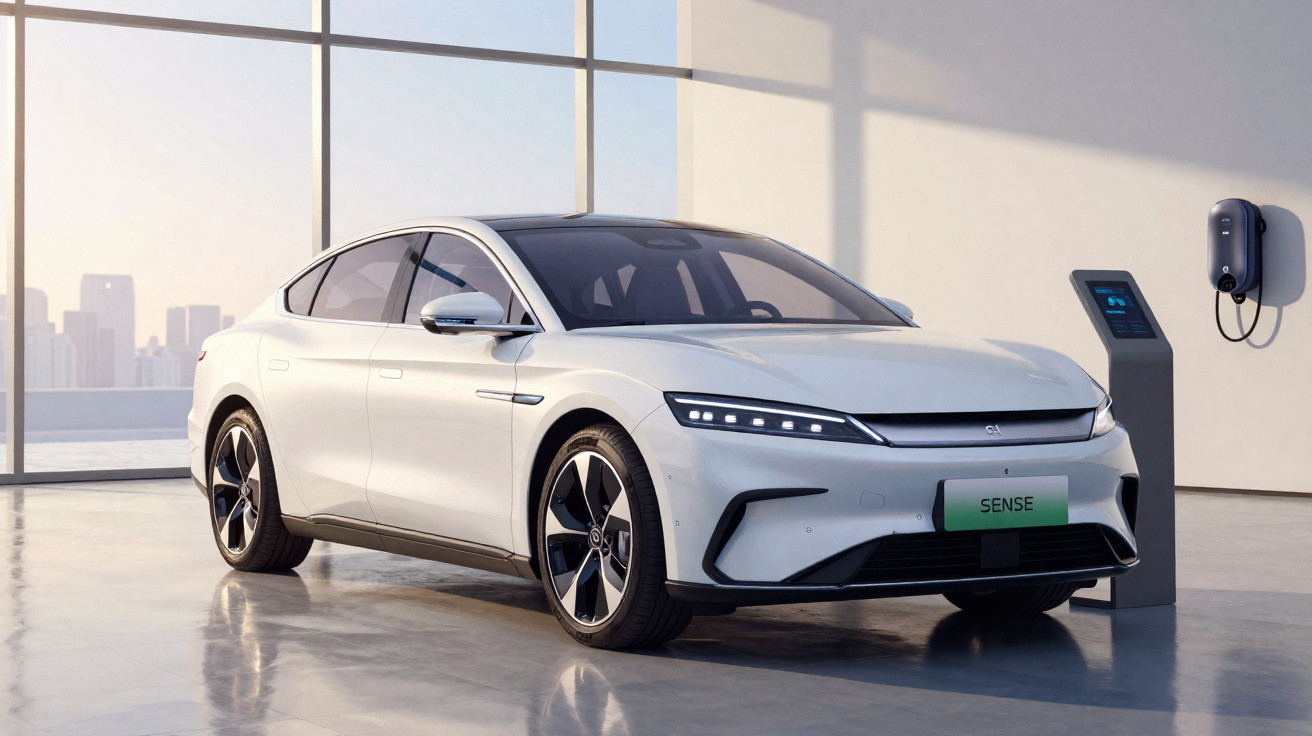
For years, the Diesel was the middle class’s engine. In truth, it still is. More than 4.5 million passenger cars on Portugal’s roads are Diesels, representing 60% of the country’s car fleet. But looking ahead, electric cars could inherit that position. Not as a status symbol - yes, owning a Diesel once carried that meaning - but as a tool for calculation and saving money.
That is exactly what defines the middle class: the part of society that buys vacuum cleaners built to last 10 years, phones that will receive more than three updates, and cars that must do everything - take the children to school, cover 60 km every day and still handle a trip to the Algarve in August.
The electric car and middle-class calculations
Do not misunderstand me. Lower-income households buy what they can afford. Higher-income households buy what they want. The middle class buys what makes the most sense, while it still has the purchasing power to do so. While it still has it…
This is where electric cars come in: not because of emotion, but because of reason. There is the cost per kilometre, tax incentives, access to low-emission zones, and “energy” that costs four times less than fuel for the same distance.
The arithmetic is appealing; cutting emissions, less so. As with Diesel, the environmental message is merely the coating over the real driver: saving, saving, saving.
Home charging remains the key barrier
Unlike Diesel, however, electric cars face a major obstacle. Charging an electric vehicle in the way that makes financial sense - at home - is not available to everyone. Lower-income households remain tied to the fuel tank and the lack of a garage. Electric cars require domestic infrastructure that not everybody has. Even saving money requires money…
And why not the higher-income groups? Naturally, they buy electric cars too. Yet when money is no object, they would rather exchange efficiency for convenience. In this respect, nothing surpasses the old combustion engine. Electric, yes, but usually as a second or third car.
Electric cars as the new Diesel
For all these reasons, I maintain that the electric car is likely to become the middle class’s new Diesel. It will probably be the choice for those who can still afford to do the sums, who still have a garage in which to park, and who can still imagine being able to buy.
As the used market fills up with the first models offering decent range for under €20,000, I am convinced that electric-car adoption will gain fresh momentum. Not among those excited by technology - or, in the case of companies, by tax incentives - but among people who can still reach the end of the month with a little enthusiasm left.
Comments
No comments yet. Be the first to comment!
Leave a Comment