
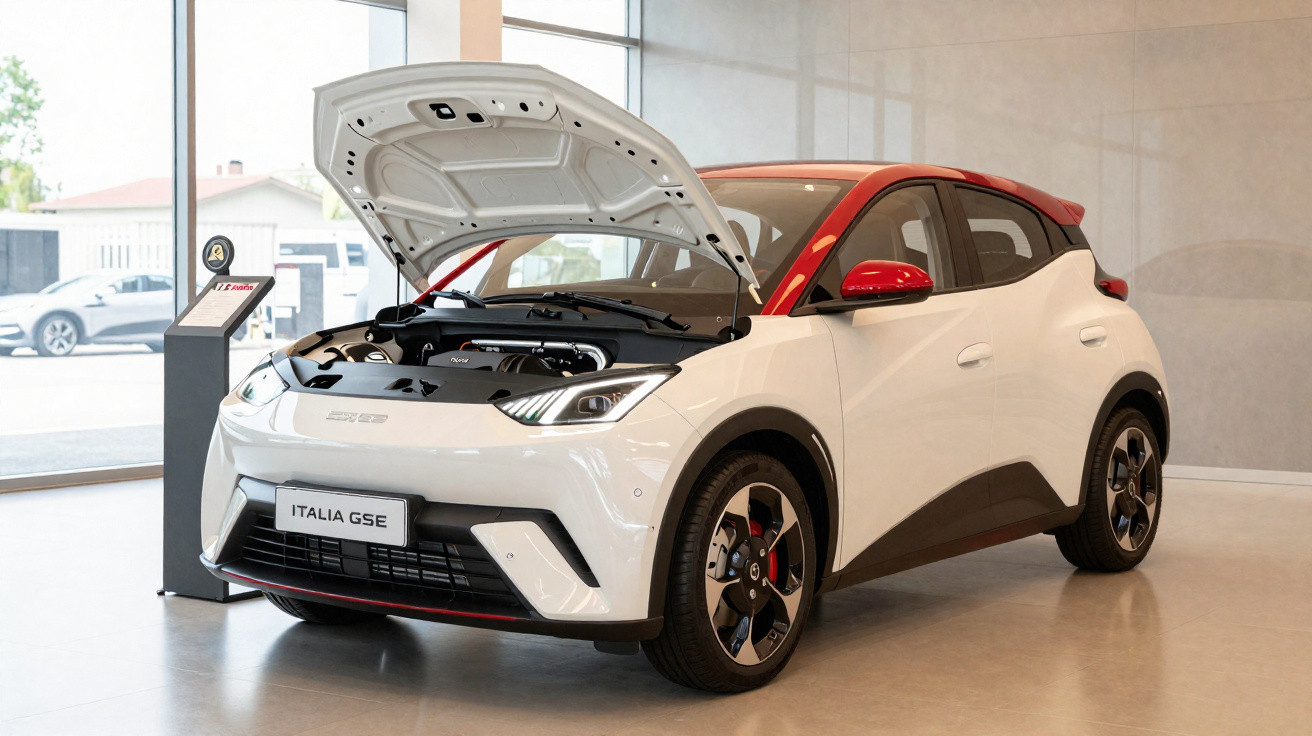
Stellantis may be on the verge of making a quiet yet structural shift in its European combustion-engine strategy. After relying for years on French-designed units - especially Peugeot’s PureTech engines - the automotive giant is expected to turn to an Italian alternative in future: FIAT Firefly engines, also called SGE (Small Gasoline Engine).
There has been no official confirmation so far, but comments made by Emanuele Cappellano, Managing Director of Stellantis Europe, at a round-table event held at MIMIT (the Ministry of Enterprises and Made in Italy) earlier this year appear to support the rumours. Cappellano stated that the group had decided to “invest in the future of GSE engines to ensure their use beyond 2030”. This suggests that the Firefly/GSE engine is no longer approaching the end of its European lifespan, as had seemed likely.
The move is unlikely to be accidental. Stellantis has not only made several improvements to its PureTech engines - a name that is no longer used - but has also launched a new generation of the 1.2 Turbo. Used in the Hybrid versions of several group models, this unit replaces the oil-immersed timing belt with a timing chain, a solution that has definitively addressed the problem. However, repairing the damage to its reputation and restoring customer confidence will be far more difficult.
FIAT Firefly engines take on a new role
This is where the Italian alternative comes in. Originally developed by FIAT, Firefly engines - also referred to as the GSE (Global Small Engine) family - are now taking on greater importance within the group.
These three- and four-cylinder units stand out for their simpler design and solutions regarded as more robust. They were also engineered from the outset to accommodate electrification, whether through mild-hybrid, hybrid or plug-in hybrid systems.
At present, in Europe, they are fitted only to the FIAT Pandina, the new 500 Hybrid - with its 1.0-litre three-cylinder engine - and the Alfa Romeo Tonale, which uses 1.3- and 1.5-litre four-cylinder versions. They are more widespread in South America, where they are used not only by FIAT, but also by Jeep, Peugeot and Citroën.
Production and strategic benefits for Stellantis
For Stellantis, the change offers several strategic benefits. On one hand, it could reduce powertrain-range complexity by focusing resources on a shared technical base. On the other, it could help address the image issues connected with the group’s other engines.
There is also an industrial argument. Production of these engines is already firmly established at Stellantis plants in Betim, Brazil, and Termoli, Italy, making their integration across different models and brands easier. Should the transition extend to many more models, production could be expected to expand to further factories.
The transition will be gradual
The switchover will not happen straight away. Firefly engines will first be adapted to the Euro 7 standard, which takes effect on 29 November 2026. The replacement of the 1.2 Turbo engines is then expected to proceed gradually, in line with each model’s normal renewal cycle.
The strategy marks a symbolic change within Stellantis. Since the company was formed in 2021, the French side of the group has carried greater weight in decisions over the platforms and powertrains used in compact models. Now, the centre of gravity could shift further towards Italy.





Comments
No comments yet. Be the first to comment!
Leave a Comment